NOCO AIR20 Tire Inflator Review: Worth It? (November 2026)
The NOCO AIR20 is a strong buy for drivers who top off tires often, because its 47 LPM airflow fills a tire from 0 to 40 PSI in about 2.5 minutes and its 15-minute duty cycle covers four tires in one run. Skip it if you need a cordless inflator you can carry without battery clamps.
On this page (8 sections)
The NOCO AIR20 is a strong buy for fast 12V tire inflation, and this noco air20 review focuses on whether its speed and duty cycle earn a place in your trunk. Its 47 LPM airflow fills a tire from 0 to 40 PSI in about 2.5 minutes, and a 15-minute duty cycle covers four tires in one run.
The catch is simple: it clamps to a 12V battery instead of running on its own cordless pack. If you want a self-contained inflator to grab without opening the hood, this isn't it.
If you want speed from a battery you already own, keep reading.
The NOCO AIR20 at a glance
The AIR20 is a 12V portable air compressor and tire inflator rated at 100 PSI maximum and 47 liters per minute of airflow. It's aimed at tires up to 35 inches and comes with a digital gauge, auto shut-off and a built-in LED flashlight.
NOCO AIR20 47 LPM 12V Portable Tire: Best for fast 12V inflation
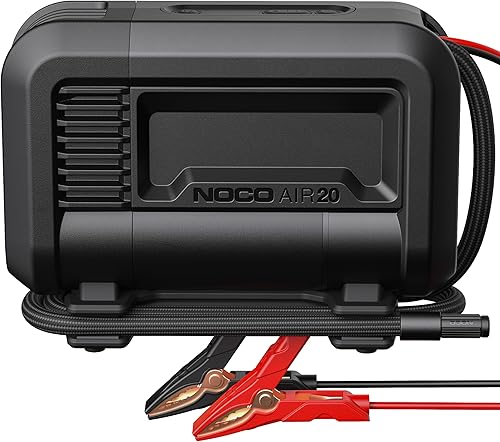
- 47 LPM airflow
- 0 to 40 PSI in 2.5 minutes
- 15-minute duty cycle
- Digital gauge 15 to 100 PSI
- 60-lumen LED flashlight
- 20-foot power cord with battery clamps
A 12V inflator built for speed: 47 LPM airflow, a 15-minute duty cycle and a digital gauge with auto shut-off. The trade-off is that it clamps to a battery rather than running on its own cordless pack.
Pros
- Very fast 0 to 40 PSI fill time
- 15-minute continuous duty cycle
- Smart pressure auto shut-off
- Digital gauge reads in PSI, kPa or bar
- Built-in 60-lumen LED flashlight
- Handles tires up to 35 inches
Cons
- Needs a 12V battery connection
- 20-foot power cord limits reach
- Manual mode needed below 15 PSI
NOCO builds it around speed and duty cycle rather than cordless convenience. The 20-amp, 280-watt motor and 0.38 hp rating back the airflow numbers, and the aluminum body keeps the footprint at about 5.8 by 9 by 11.8 inches.
NOCO rates the maximum current at 20 A and lists a 10.6 mm compatible hose diameter, so the hardware is sized to move a lot of air through a short run.
The kit arrives with the inflator, a 3-foot nylon-braided inflation hose, a 20-foot DC power cord with battery clamps, and three adapters: Presta valve, needle and inflatable toy. A microfiber storage bag and a 1-year limited warranty round out the box.
Our score weighs specs, features and buyer feedback against what you're shopping for. A 9.7 reflects a spec sheet that leads this class on fill time and continuous run time.
The spec sheet carries specifics that matter more than a generic 12V pump's marketing sheet, and the short list of cons is all about the power source, not the inflation hardware.
Who the NOCO AIR20 suits
This inflator suits drivers who check and top off tire pressure regularly, not just people waiting for an emergency. The 35 to 40 PSI top-off in under 25 seconds means a quick pressure correction costs less time than finding a gas station air pump.
That time saving compounds over a season of weekly checks.
It also fits anyone topping off a full set. The 15-minute duty cycle is long enough to walk around four tires without stopping to let the pump cool.
That's the real differentiator against slower 12V inflators that need a break between tires. NOCO rates the AIR20 to inflate four tires from 0 to 40 PSI in one duty cycle.
The 100 PSI ceiling widens the fit. Cars sit in the 30 to 40 PSI band, SUVs in 30 to 45, trailers in 35 to 60, light-duty trucks in 30 to 50 and pickup trucks in 55 to 80.
Motorcycles run 24 to 40 PSI. All of those fall well under the AIR20's maximum, so it covers a driveway with mixed vehicles.
It's less suited to people who want zero setup. Clamping to a battery takes a moment, and the 20-foot cord sets how far you can reach.
A cordless model is easier to grab for a bike tire or an air mattress in the driveway. It's also a poor match for anyone whose only 12V source is a battery that might be flat when a tire is low.
The specs that matter in daily use
Airflow and duty cycle decide how the AIR20 feels in real use, not the maximum pressure alone. 47 LPM is high for a 12V unit, and NOCO pairs it with a 15-minute run time that covers a four-tire session.
In standard units the same figure is about 1.66 CFM.
The 0 to 40 PSI time of 2.5 minutes is based on a 205-65R16 95H tire. Top-offs from 35 to 40 PSI take under 25 seconds, which is the number most drivers will actually live with.
A slow leak topped up weekly stays a two-minute job. The 20 A current draw and 280 W motor are what buy that speed, and they're the reason the clamps matter more than the hose.
Smart pressure is the other everyday feature. An integrated sensor pauses and resumes inflation as the pump reaches the set pressure, then shuts off to avoid over-inflation.
You set the target on the digital display and let it run. Dwell technology is the mechanism behind that pause and resume behavior.
The display takes settings from 15 to 100 PSI in PSI, kPa or bar. Below 15 PSI, manual mode takes over for basketballs, bike tires and inflatable toys.
The 60-lumen LED flashlight and its SOS mode help when you're kneeling at a wheel after dark. Low-pressure items like ATV and UTV tires, which run 5 to 15 PSI, are exactly where manual mode does the work.
Setting up the NOCO AIR20
Setup is clamp, set and start: connect the battery clamps to the 12V battery, attach the 3-foot braided hose to the valve stem and enter your target pressure. NOCO rates it for tires up to 35 inches.
The rectangular body and flat base mean it can sit on the ground or a fender while you work.
Start with the clamps. The 20-foot power cord gives you room to reach from the battery to each wheel on most cars and SUVs.
On a long trailer you may need to move the vehicle or the clamps rather than stretch the cord. The 14 AWG gauge of the cord is sized to carry the 20 A draw without excessive voltage drop over that length.
Then thread the hose onto the valve. The 10.6 mm compatible hose diameter and braided cover are meant for repeated use.
The Presta valve, needle and inflatable toy adapters cover bikes and balls when the tires are done. Keep the adapters in the storage bag so they don't rattle around the trunk.
Set the target on the digital display and start the pump. The sensor handles the stop.
Choose PSI, kPa or bar before you start so the target reads the way your tire placard does. The microfiber bag holds the hose and adapters, which keeps the trunk tidy between uses.
Care and storage for the AIR20
Care is mostly about the hose, clamps and duty cycle. Keep the braided hose coiled without sharp bends, and wipe grit off the clamps before they touch a battery terminal.
A dirty clamp is a poor connection, and a poor connection wastes the 20 A the motor needs.
Respect the 15-minute run time. It's generous for a 12V inflator and covers four tires, but it's still a limit.
Let the pump rest between long sessions rather than running it back to back. Four tires in one duty cycle is the rated ceiling, not the routine.
Store it in the microfiber bag away from moisture. The aluminum body is durable, but battery clamps left in a damp trunk can corrode.
A dry spot in the trunk or garage keeps the connections clean. The 3-foot hose is short enough to stay untangled in the bag.
Check the hose threads and the valve adapters now and then. A cross-threaded adapter leaks air and makes every fill slower.
The 1-year limited warranty covers manufacturing defects, so keep your receipt. The warranty is limited, so normal wear on the hose and clamps isn't the same as a defect.
The trade-offs of the NOCO AIR20
The main trade-off is the 12V battery connection. There's no internal battery, so you can't carry the AIR20 to a tire without a power source.
For a roadside flat on a car with a weak battery, that's a real limit. The pump pulls 20 A, so the 12V source needs to be able to supply it.
The 20-foot cord is the second. It reaches most wheels from the battery, but not every setup.
Long vehicles, trailers and rear-mounted spare tires may need repositioning. If you park nose-in to a wall, the clamps go under the hood and the cord runs back along the car.
The 15-minute duty cycle, while long for this class, still means a pause for heavy multi-vehicle use. Someone inflating a whole fleet in one sitting needs a different tool.
The dwell technology also means the pump pauses as it approaches the target, which is slower than a straight blast but keeps the pressure accurate.
Finally, the manual mode below 15 PSI is a separate step. It's fine for occasional bike and ball inflation, but it's not the set-and-forget experience you get on car tires.
If cordless convenience matters more than speed, the alternatives below are worth a look. The AIR20 is also rated for tires up to 35 inches, so anything larger needs a different class of compressor.
How the AIR20 compares to other inflators
The AIR20 wins on speed and run time, but cordless inflators win on portability. Here's where each type fits.
Airmoto Tire Inflator
The Airmoto tire inflator is the cordless pick. It runs on its own battery, so you can grab it and inflate without clamps or a power cord.
That's the opposite trade-off from the AIR20.
If you want a self-contained inflator for quick top-offs and emergency use, cordless is the easier habit. If you want the fastest fill from a battery you already have, the AIR20 stays ahead.
The Airmoto vs Fanttik X8 APEX comparison covers how the cordless options stack up against each other.
Cordless options vs a 12V compressor
A cordless inflator and a 12V compressor like the AIR20 solve different problems. Cordless means no clamps and no cord, but smaller batteries and shorter run times.
A 12V compressor means more airflow and a longer duty cycle, at the cost of a battery connection.
The AIR20's 15-minute duty cycle and 47 LPM airflow are the numbers a cordless unit struggles to match. In exchange, the cordless unit travels in a bag and inflates wherever you stand.
If you carry a jump starter in the trunk anyway, a cordless inflator pairs with it more naturally than a clamp-on pump.
Our guide to tire inflators vs air compressors explains where each type earns its place in a garage or trunk. The short version: a 12V compressor suits regular pressure checks on a car, while a cordless inflator suits occasional use and easy carrying.
A 12V compressor with clamps also avoids the slow self-discharge that a stored cordless battery suffers between seasons.
Milwaukee M12 vs M18 Tire Inflator
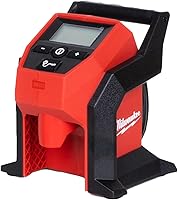
Milwaukee's cordless inflators are the tool-brand route. The Milwaukee M12 vs M18 tire inflator comparison covers the size and output difference between the two.
The AIR20 competes on fill speed and duty cycle rather than on sharing a battery platform with your power tools.
If you already own Milwaukee batteries, the platform argument is strong. If you don't, the AIR20's clamps mean no battery purchase at all.
That's the trade: tool-brand inflators tie you to a battery ecosystem, while the AIR20 ties you to a 12V source you already have under the hood.
Is the NOCO AIR20 worth it?
The NOCO AIR20 is worth it if you check tire pressure often and want the fastest 12V fill. The 2.5-minute 0 to 40 PSI time and 15-minute duty cycle make it a strong fit for a car, SUV or light truck, and the smart pressure shut-off takes the guesswork out of the gauge.
The 100 PSI ceiling covers trailer and pickup tire ranges too.
Buy it if you keep a 12V battery within cord reach and want four tires done in one run. The speed and duty cycle are the reasons to pay for it over a basic inflator.
The digital gauge with PSI, kPa and bar settings and the 60-lumen flashlight are practical extras rather than headline features.
Skip it if you want a cordless inflator you can carry anywhere without clamps. In that case a battery-powered model is the easier tool for quick top-offs and emergencies.
For everyone else, this noco air20 review lands on a clear buy.
Frequently asked questions
How fast does the NOCO AIR20 inflate a tire?
NOCO says the AIR20 fills a tire from 0 to 40 PSI in about 2.5 minutes and tops off a low tire from 35 to 40 PSI in under 25 seconds. That 0 to 40 figure is based on a 205-65R16 95H tire.
What size tires can the NOCO AIR20 handle?
The AIR20 suits tires up to 35 inches in diameter. Its 100 PSI maximum covers car, SUV, light truck and trailer tires, and manual mode serves lower-pressure items like bike tires and inflatables.
Does the NOCO AIR20 need a battery to run?
Yes. The AIR20 runs from a 12V power source through its 20-foot power cord and battery clamps.
It doesn't have an internal battery, so it works while clamped to a car battery.
What comes in the NOCO AIR20 box?
You get the AIR20 inflator, a 3-foot braided hose, a 20-foot power cord with battery clamps, Presta valve, needle and inflatable toy adapters, a microfiber storage bag and a 1-year limited warranty.
Is the NOCO AIR20 good for four tires in one session?
Yes. The 15-minute duty cycle lets it inflate four tires from 0 to 40 PSI in a single run, according to NOCO.
That makes it a fit for seasonal pressure checks across a full set of tires.