Tire Inflator vs Air Compressor: Which Is Better? (October 2026)
The tire inflator vs air compressor choice comes down to workload: choose a compact inflator for tire top-offs and a tank compressor for compatible air tools. Buy for your tire size, power access and hardest regular job.
On this page (9 sections)
- Tire inflator vs air compressor: what is the difference?
- Which one should you choose for car tires?
- Which type is better for air tools?
- Is a cordless inflator or a corded compressor easier to use?
- How much storage and setup space do they need?
- How do you set up each type for tire inflation?
- What care does each type need?
- What common buying mistakes should you avoid?
- Which should you buy: a tire inflator or an air compressor?
Choose a compact tire inflator for routine tire top-offs and a tank air compressor when you also need compatible air tools. The tire inflator vs air compressor decision starts with your regular workload, then your power source and storage space.
For a driver adding a few PSI before a trip, carrying a tank adds work without much benefit. For a garage using nailers, a small cordless inflator cannot replace a compressor with enough airflow.
These 3 options cover different needs: the Airmoto for car storage, the Metabo HPT for compatible nailers and the Ironton for light garage jobs. Choose the one that fits your work rather than the highest pressure number.


Tire inflator vs air compressor: what is the difference?
A tire inflator sends air straight into a tire, while a tank compressor stores an air reserve for use through a hose. Both compress air, but their designs suit different jobs.
A compact inflator usually combines a pump, short hose and pressure controls in one unit. A tank compressor typically uses a separate hose and attachment, with a regulator controlling outlet pressure.
Tire inflator vs air compressor: pressure and airflow
PSI measures pressure; CFM measures airflow. A machine can reach a high pressure slowly without moving enough air to run a tool.
Tires need enough pressure and enough air volume to reach their target. Air tools also need a continuing supply while they work, so compare their air demand with compressor output at the same pressure.
Tank size provides a buffer between the pump and the task. A larger reserve can support short bursts, but it cannot make up for too little pump output during long use.
This also explains why product names can mislead. A handheld unit called a “portable air compressor” may still be a tire-only choice, while a portable pancake compressor needs floor space and electrical access.
Which one should you choose for car tires?
Choose a portable inflator for car storage and occasional top-offs. A tank compressor makes more sense if it already serves other garage jobs or stays ready beside your parking space.
The Airmoto weighs 1.2 pounds and measures 6.1 x 2.4 x 1.59 inches. Its hose stores inside, and a pouch keeps the unit together between uses.
It has a digital gauge, automatic shut-off, a deflate button and an LED light. Those features suit a driver who wants to set a target and move from tire to tire without routing a power cord.
Airmoto estimates 3 to 5 minutes to raise a standard car tire from 28 to 35 PSI. The brand says a full charge can handle 4 such top-offs, with tire size, temperature and charge affecting results.
That makes it a sensible choice for small pressure corrections before a commute or trip. Skip it for heavy-load tires and large-volume jobs such as air mattresses or paddle boards, which fall outside its intended use.
Find your recommended cold pressure on the vehicle placard or in the manual. Our guide to what PSI your car tires should be explains how to use that number rather than the maximum printed on the tire.
Which type is better for air tools?
A tank compressor is the right type for pneumatic tools, provided it meets their airflow and pressure needs. Decide which tools you will run before choosing a compressor.
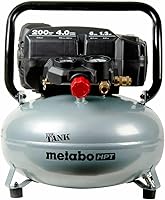
The Metabo HPT EC914S has a 6-gallon tank, a 200 PSI maximum and output of 4 CFM at 90 PSI. It is the better fit here for a workshop built around compatible nailers.
Metabo HPT says it supports 2 framing, 2 roofing, 2 siding, 3 finish or 5 brad nailers at once within each group. Those are specific combinations, not permission to connect any mix of tools.
The Ironton delivers 0.6 CFM at 90 PSI and 0.9 CFM at 40 PSI. Its lower output suits occasional light tasks, with more waiting when air demand exceeds what the pump replaces.
For either model, check the exact tool's requirement. A nailer uses brief bursts, while a sander or spray gun can draw air for much longer; a compressor suited to one may be a poor choice for another.
If 2 tools will run together, account for their combined demand. Follow the compressor's duty limits too, since recovery time and allowed run time affect your work pace.
See our guide to best pancake air compressors for more workshop options. If tires remain the main job, our portable tire inflator picks focus on smaller equipment.
Is a cordless inflator or a corded compressor easier to use?
A cordless inflator is easier to move around a parked car, while a corded compressor suits a fixed workspace. Consider where power will come from before comparing extra features.
The Airmoto uses a 2,000 mAh rechargeable battery and USB-C charging. Airmoto gives about 90 minutes for a full recharge and recommends charging before use.
A rechargeable unit needs a care habit: check its charge before trips rather than leaving it untouched until a tire is low. Cold weather and larger or higher-pressure tires can reduce the work available from one charge.
Both tank compressors here use corded electric power. Check the manual's outlet and circuit requirements, and follow its guidance on extension cords rather than assuming any long household cord will work.
Neither power source solves every roadside situation. If you prefer vehicle power, our comparison of cordless vs 12V battery-clamp tire inflators explains another route.
How much storage and setup space do they need?
A handheld inflator needs little storage space, while a tank compressor needs room for the machine, hose and attachments. Plan the working space as carefully as the shelf space.
The Metabo HPT measures 16 x 16 x 18.5 inches and weighs about 41 to 42 pounds. Think about stairs, lifting it into a vehicle and how often you will carry it across a driveway.
The Ironton weighs 20.6 pounds and has a fold-down handle, cord wrap and hose retainer. It is easier to move than the larger model, though it still needs a suitable place to sit during use.
Keep compressors on a stable surface with the ventilation clearance their manuals require. Route hoses away from walking paths and sharp edges, and avoid placing the unit where water can reach electrical parts.
Also check what comes in the box. For a tank compressor, plan for a compatible air hose, fittings, tire chuck and gauge instead of assuming a complete tire-inflation kit is included.
How do you set up each type for tire inflation?
Start with the vehicle's cold-pressure target, then connect the equipment and add air gradually. The setup differs, but both types need the correct units and a sound valve connection.
Setting up a compact tire inflator
- Park safely and check the tires before driving, following the vehicle's cold-pressure guidance.
- Check the inflator's charge and select the right pressure unit, such as PSI.
- Connect the hose squarely to the valve so air does not escape around the connection.
- Set the target, start inflation and stay nearby while it runs.
- Disconnect, verify pressure with a separate gauge and replace the valve cap.
Support the inflator so its short hose does not pull hard on the valve stem. Pause as the manual requires if the unit or hose becomes hot during repeated fills.
Our step-by-step guide to using a portable tire inflator covers the process in more detail.
Setting up a tank compressor
- Place the compressor securely and inspect the hose and fittings before connecting them.
- Follow the manual's startup steps and allow the tank to fill.
- Connect a suitable tire chuck and gauge, then adjust the outlet regulator for the task.
- Add air in short bursts, checking pressure between them.
- Shut down, release pressure and drain the tank as directed.
A regulator controls air leaving the tank; it does not automatically stop at your tire's target. Do not assume either pancake compressor offers the same set-and-stop tire controls as the Airmoto.
What care does each type need?
Rechargeable inflators need charge checks; tank compressors need tank care. Both also need clean storage, sound hoses and attention to their run-time limits.
For a cordless unit, follow the manual's storage temperature guidance and avoid leaving it in extreme heat. Keep charging ports clear of dirt, and check the hose and adapters before packing it for a trip.
Let a hot hose cool before putting it away. Store small adapters together so a missing valve adapter does not stop a bike or sports-equipment job.
Compressed air creates moisture that can collect inside a tank. Follow the compressor manual's draining procedure and schedule, keeping your face away from the discharge.
The Ironton's oil-free pump avoids oil checks and changes, but its manual drain still needs attention. “Oil-free” describes the pump, not a tank that can be ignored between jobs.
Inspect cords, couplers and hoses for damage or leaks. Release pressure as directed before removing fittings, and never use compressed air to clean your skin or clothing.
What common buying mistakes should you avoid?
Avoid choosing by maximum PSI alone, and separate everyday top-offs from larger inflation jobs. The right purchase handles your regular work without adding needless setup.
Confusing a top-off with filling an empty tire
Adding a few PSI takes much less air than filling an empty tire. A battery estimate based on top-offs should not become a promise that the unit can refill several flat tires.
A tire that has been driven flat, shows damage or loses pressure quickly needs inspection. Adding air does not repair the cause or make continued driving safe.
Assuming every truck or RV tire is suitable
Larger and higher-pressure tires need more air and may demand longer run times. Check suitability for the actual tire rather than relying on a broad “cars and trucks” description.
For these jobs, use our guide to choosing an inflator for a truck or RV before settling on a compact model.
Treating a small tank as unlimited air
The Ironton's 3-gallon tank and 110 PSI maximum do not make it a continuous-duty workshop supply. Buy it for light work that fits its airflow, not a future collection of air-hungry tools.
For regular tool use, check demand first and leave room for the compressor to recover. A tank stores a limited reserve; the pump must replace what each task consumes.
Overlooking the whole setup
A bare compressor may still need accessories, storage and a suitable outlet. Count those needs before deciding that a tank machine is the simpler option for tires alone.
If you're starting from scratch, our guide on how to choose a tire inflator helps narrow the format. The best portable tire inflators for cars, trucks and SUVs guide covers options for different vehicle needs.
Which should you buy: a tire inflator or an air compressor?
For the tire inflator vs air compressor decision, choose by your hardest regular task and where you will do it. An occasional job you might try later should not outweigh the equipment you need each month.
- Choose the Airmoto for routine car-tire top-offs and compact vehicle storage. Skip it for heavy-load tires, large inflatables or pneumatic tools.
- Choose the Metabo HPT for compatible nailers and garage work where airflow matters. Skip it if tire top-offs are your only use and carrying space is tight.
- Choose the Ironton for occasional light garage inflation and fastening within its output limits. Skip it when your tools need sustained airflow or a faster work pace.
A garage owner may reasonably keep a tank compressor at home and a compact inflator in the car. If you only need one, buy for the place you most often add air.
Before ordering, confirm the tire pressures or tool airflow you need, then check power and accessory requirements. Our guide to choosing a tire inflator can help you make that final choice.
Frequently asked questions
Is a tire inflator the same as an air compressor?
A tire inflator is a type of air compressor built mainly for tires and small inflatables. A tank compressor stores compressed air for inflation and compatible pneumatic tools; names overlap, so choose by design, power source and airflow rather than assuming every portable air compressor serves the same jobs.
Can you use an air compressor to inflate car tires?
Yes, a tank air compressor can inflate car tires with a suitable hose, tire chuck and pressure gauge. Adjust the outlet regulator, add air in short bursts and check against the vehicle's recommended cold tire pressure; tank pressure is not the pressure you should put into the tire.
Can a tire inflator run air tools?
Compact tire inflators are generally unsuitable for pneumatic tools because those tools need more airflow and suitable connections. Choose a compressor that meets the tool's CFM requirement at its working pressure; a high maximum PSI does not replace the steady air supply needed by a sander, wrench or nailer.
Which is better for a car emergency kit?
A compact tire inflator is the better fit for a car emergency kit because it is easier to store and carry to a tire. Keep a rechargeable model charged and follow its storage limits; an inflator adds air, but it cannot make a damaged tire safe or repair a leak.
Does a bigger air compressor inflate tires faster?
A compressor with more usable airflow can inflate tires faster, but tank size alone does not determine speed. Tire volume, starting pressure, hose restrictions and compressor output all matter; stored air can help with an initial fill, while pump output affects how well the compressor keeps up as pressure falls.