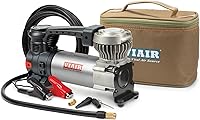
Airmoto Tire Inflator Review: Worth It? (October 2026)
The Airmoto Tire Inflator suits occasional top-offs on cars, bikes and motorcycles when compact storage and cordless use matter most. Choose a larger pump for repeated truck-tire inflation or a dual-power model if you want a car-plug backup.
On this page (8 sections)
- The Airmoto tire inflator at a glance
- Who should buy the Airmoto, and who should skip it?
- How much work can the Airmoto battery handle?
- Which alternative fits your tires and charging habits?
- How do you set up the Airmoto for a car tire?
- Which common mistakes cause poor results?
- How should you care for and store the pump?
- Should you choose the Airmoto tire inflator?
The Airmoto tire inflator suits occasional car, motorcycle and bicycle tire top-offs when you want a small cordless pump. Buy it for routine pressure corrections, with space and charging habits in mind.
A compact inflator saves you from routing a power cord around the vehicle, but it still needs enough charge for the job. Drivers with large tires, several vehicles to maintain or frequent inflation needs should compare the alternatives below.
The Airmoto tire inflator at a glance
The Airmoto's main appeal is small storage size with simple pressure control. It weighs 1.2 lb and measures 6.1 x 2.4 x 1.59 in, so check that footprint against your intended glove-box or trunk space.
Airmoto Tire Inflator: Best for occasional car top-offs

- Cordless 2000 mAh battery
- Auto shutoff
- Up to 120 PSI
- PSI, kPa, BAR and KG/CM units
Choose this compact pump for routine pressure corrections when you want to move between tires without a power cord. Larger tires and repeated inflation call for more battery capacity.
Pros
- Small body for glove-box or trunk storage
- Stops at your chosen pressure
- Digital gauge with four pressure units
- Includes bike and sports-ball adapters
Cons
- Not intended for heavy-load tires or large inflatables
- Cold weather can reduce battery efficiency
- Needs charging before use
Its digital gauge, pressure buttons and automatic shutoff handle the basic top-off process. You select the target, connect the hose and press Start, then stay nearby until the job finishes.
The 8.8 score reflects its fit for compact, occasional use: useful controls and adapters in a small body. Battery limits and restrictions on heavy-load tires keep it from being the right choice for every vehicle.
What the Airmoto tire inflator includes
The kit contains a hose with a Schrader fitting, Presta adapter, needle adapter, general nozzle, USB-C charging cable, pouch and manual. The hose stores inside the pump, helping keep the kit together.
Schrader fittings serve car, motorcycle and many bicycle tires; Presta valves need the included adapter. Use the needle for compatible sports balls and the general nozzle for small items such as air pillows.
Keep those small adapters in the pouch rather than loose in the glove box. An inflator is much less useful on a bike ride if the adapter you need is elsewhere.
Who should buy the Airmoto, and who should skip it?
Buy the Airmoto if you want routine pressure maintenance without a power cord and will keep it charged. It fits a driver who checks tires regularly and usually needs to add a modest amount of air.
It's also a sensible shared tool for a car, motorcycle and bicycle, provided each job falls within its limits. Before buying for a bike, check valve type and the tire's required pressure.
Skip it as your main pump for repeated pickup-tire inflation, heavy-load tires or large inflatables. Those jobs require more air, more sustained operation or a different kind of pump.
Airmoto's 120 PSI maximum is a pressure ceiling, not a measure of how quickly it fills a tire. A larger tire needs more air than a smaller one at the same pressure.
Start with your tire size, typical pressure loss and number of tires per session. Our guide to the best portable tire inflators helps compare compact pumps with options suited to larger jobs.
How much work can the Airmoto battery handle?
Plan around small top-offs from a full charge, rather than assuming the pump can refill every tire on demand. Its built-in battery has a 2000 mAh capacity.
Airmoto says one full charge can raise 4 standard car tires from 28 to 35 PSI. The brand gives about 3 to 5 minutes for that pressure increase on one standard tire.
Those examples describe a particular amount of work. Starting much lower, using larger tires or working in cold weather changes the demand on the battery.
Airmoto also says it can inflate 1 completely flat standard car tire under optimal conditions. Treat that as an emergency capability, rather than your routine plan for a deeply underinflated set of tires.
A full recharge takes about 90 minutes, according to Airmoto. Charging before a planned pressure check avoids discovering a low battery halfway through the vehicle.
Our guide to Airmoto battery life and charging explains how to plan around these limits. If you dislike managing a separate battery, a model with vehicle power is a better match.
Which alternative fits your tires and charging habits?
Choose the Fanttik for awkward valve access, the ETENWOLF for repeated truck inflation or the DeWalt for a car-plug backup. Each solves a different reason to move beyond Airmoto.
Fanttik X8 APEX EV: for awkward valve positions
The Fanttik gives you more freedom to position the pump without pulling the hose tight. That matters when the valve ends up high on the wheel or the ground beside it is uneven.
Fanttik claims a 74-second fill for a 26.4 in tire going from 36 to 42 PSI. That differs from Airmoto's pressure example, so the figures don't support a direct speed comparison.
Choose it when placement flexibility outweighs compact carrying size. Skip it if Airmoto's smaller body already meets your needs and hose reach isn't a problem.
Read Airmoto vs Fanttik X8 APEX for a closer comparison of their features and use cases.
ETENWOLF Vortex S6: for repeated truck inflation
The ETENWOLF is the stronger fit for pickup owners who need sustained inflation. Its dual-cylinder design and dedicated cooling system target a different workload from a small glove-box pump.
ETENWOLF claims it can fill all 4 F150 tires sized 245/70 R17 from empty to 35 PSI without cooling breaks. That makes it worth comparing for repeated work, though your tire size and pressure needs still matter.
Skip it if you mainly correct a few PSI on a small car and want minimal storage bulk. See our truck tire inflator guide for options matched to heavier vehicle use.
DeWalt 12V Digital Inflator: for a second power source
The DeWalt suits drivers who want cordless convenience plus another way to power the pump. Its included 10 ft accessory cord lets you use a suitable vehicle outlet.
Its battery takes 6 hours to charge, so the cord adds practical value when you haven't prepared ahead. Check your vehicle's outlet requirements and follow the inflator's power instructions.
Skip it if you only need a charged cordless pump for bikes away from the car. Our cordless vs 12V plug-in inflator guide explains how power choice changes everyday use.
How do you set up the Airmoto for a car tire?
Start with a charged pump and the vehicle's recommended cold tire pressure. Check the driver-side door label or owner's manual, including whether the front and rear targets differ.
Use these steps for a routine top-off:
- Park safely, secure the vehicle and remove the valve cap.
- Choose the correct pressure unit on the pump.
- Connect the hose securely without forcing the valve fitting.
- Read the starting pressure and set the correct target.
- Press Start, stay nearby and allow automatic shutoff to finish.
- Disconnect the hose, check the final pressure and replace the valve cap.
Airmoto offers PSI, kPa, BAR and KG/CM units. Match the display to your reference pressure before setting the number, since choosing the right number in the wrong unit can cause a serious error.
Don't use the maximum pressure on the tire sidewall as your normal car inflation target. Our guide to what PSI your car tires need explains how to find the correct value.
The built-in LED helps you see the connection in low light. Place the pump where the hose reaches comfortably, with the body supported rather than hanging from the tire valve.
For more detail on connecting valves and checking the result, see how to use a portable tire inflator.
Which common mistakes cause poor results?
The most common avoidable mistakes are starting with little charge, choosing the wrong target and expecting too much air volume. Check those points before blaming the pump.
Treating automatic shutoff as a reason to walk away
Automatic shutoff stops at the selected target, including a target entered incorrectly. Stay close enough to spot a loose connection, escaping air or an unexpected reading.
If the final reading seems wrong, verify it with a separate tire gauge before adding more air. Repeatedly restarting the pump without checking can compound a setting error.
Using an adapter as proof of compatibility
A nozzle that fits doesn't make every inflatable suitable for the pump. Airmoto excludes air mattresses, paddle boards and heavy-load tires, even though it includes a general nozzle.
Small, high-pressure tires and large, low-pressure inflatables have different air needs. Choose the pump for the job, then confirm the valve connection.
Expecting inflation to repair a damaged tire
Adding air doesn't repair a puncture or confirm that a flat tire is safe. Visible damage, rapid air loss or a tire driven while flat calls for inspection before driving.
If a tire repeatedly loses pressure, address the cause instead of making top-offs part of every trip. The inflator helps maintain pressure; it doesn't replace tire repair.
How should you care for and store the pump?
Recharge after use and keep the hose, adapters and cable together so the kit is ready for the next pressure check. Before a longer trip, confirm that it powers on and has charge.
Follow the manual's storage and temperature instructions. Cold weather can reduce battery efficiency, so allow extra margin when planning a winter top-off.
Keep dirt away from hose ends and adapters, and inspect the hose for damage before connecting it. Let warm parts cool before packing the pump away, following any rest instructions in the manual.
Airmoto's operating noise is 78 dB, so choose a suitable place and time for routine checks. Avoid enclosing the running pump in its pouch or covering openings to soften the sound.
Use its deflate button for small pressure corrections when needed, then check the result. Don't bleed air from a warm tire simply to match a cold-pressure target.
Should you choose the Airmoto tire inflator?
Choose the Airmoto tire inflator for occasional top-offs if you'll keep it charged and value a small storage footprint. It fits routine pressure maintenance better than repeated recovery of deeply underinflated tires.
Pick Fanttik when valve access makes hose reach a priority, ETENWOLF for repeated truck inflation or DeWalt when a car-plug power option matters. Let your largest regular job guide the choice.
Before ordering, write down your tire size, normal pressure and usual number of tires per session. Use those needs to narrow our best cordless tire inflators guide to a pump you'll be ready to use.
Frequently asked questions
Is the Airmoto tire inflator good for car tires?
The Airmoto suits routine car tire top-offs, especially when compact storage matters. Airmoto says a full charge can top up 4 standard tires from 28 to 35 PSI, though tire size, temperature and battery level affect results; use your vehicle's recommended cold tire pressure.
Can the Airmoto inflate a completely flat tire?
Airmoto says it can inflate 1 completely flat standard car tire on a full charge under optimal conditions. That capacity doesn't confirm the tire is safe to drive on, so arrange an inspection if it lost air quickly, has visible damage or was driven while flat.
How long does the Airmoto take to inflate a tire?
Airmoto says raising a standard car tire from 28 to 35 PSI takes about 3 to 5 minutes. A larger tire or lower starting pressure means more air is needed, so allow extra time and battery capacity rather than treating that example as a fixed filling time.
Can the Airmoto inflate an air mattress?
No, Airmoto isn't designed for large-volume items such as air mattresses or paddle boards. Its general nozzle serves small items such as cushions and air pillows, so choose a high-volume pump matched to the inflatable's valve and pressure needs instead of relying on the included adapter alone.