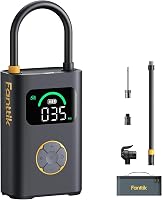
How to Charge a Portable Tire Inflator
Charge a portable tire inflator by matching the power source to its battery: plug the USB-C cable into a 5V adapter for cordless models, or run it from a 12V car outlet for a corded one. Let it cool first if it ran hot, and stop when the battery indicator shows full.
On this page (8 sections)
- How do you charge a portable tire inflator with a USB cable?
- Can you charge a portable tire inflator from a car outlet?
- What charger rating does each inflator need?
- How long does a full charge take, and how many tires will it fill?
- Why won't my portable tire inflator charge?
- How do you keep the battery healthy between trips?
- Which portable tire inflator is easiest to keep charged?
- What should you do before your first charge?
Charge a portable tire inflator by matching the power source to its battery: plug the USB-C cable into a 5V adapter for cordless models, or run it from a 12V car outlet for a corded one. Let it cool first if it ran hot, and stop when the battery indicator shows full.
The steps are short. The mistakes are the part that shortens battery life, and most of them come from the wrong charger or from charging a pump that is still warm.
How do you charge a portable tire inflator with a USB cable?
Use the cable that came with the pump and the adapter rating the maker asks for. For most cordless inflators that means a 5V USB adapter, not a fast-charge brick built for a phone.
- Let the pump cool if you just filled a tire.
- Plug the USB-C end into the inflator's charging port.
- Plug the other end into a 5V adapter, a car USB port or a power bank.
- Watch the battery indicator and stop when it shows full.
- Unplug and store the cable with the pump.
The OlarHike TIC3V401 asks for a 5V 2A or 5V 3A adapter and warns against unbranded or high-power chargers. The AstroAI L7 wants a 5V 1A adapter.
A charger that pushes more current than the pump expects is the fastest way to shorten the battery's life.
The included cables differ by model, so don't assume your phone's cable will do. The DeWalt DXIF1201 ships with a USB Type-C cord and a 10 ft cigarette lighter cord.
The AstroAI L7 includes a USB cable, and the OlarHike TIC3V401 comes with a Type-C charging cable. Match the plug on the pump to the cable in its own box.
If you are still deciding whether a battery pump is worth the extra cost, our guide to are cordless tire inflators worth it lays out when the cordless version pays off.
Can you charge a portable tire inflator from a car outlet?
Yes, on models built for it. A 12V car accessory plug is the simplest way to top up on the road, because the car supplies the power and the pump's own battery stays out of the equation.
The DeWalt DXIF1201 is the clearest example here. It runs from a 12V DC car plug through a 10 ft cigarette lighter cord, and it also charges from a 5V USB power adapter.
That dual path means you can top it up in a parking lot without hunting for an outlet. The OlarHike TIC3V401 offers the same two routes, with a 12V DC power cord and a USB-C charging cable in the box.
Two things to watch. Keep the plug and the outlet dry, and don't run the pump from a car outlet while the engine is off for long, since you can drain the car battery instead of the pump's.
A running engine keeps the 12V supply steady. The DeWalt's extra fuse in the box is there for a reason, so keep it with the pump in case a 12V circuit trips.
What charger rating does each inflator need?
Match the adapter to the pump's own rating, not to the fastest charger you own. The table below covers the three pumps we checked.
| Inflator | Battery | Charge path | Adapter rating |
|---|---|---|---|
| DeWalt DXIF1201 | 2600mAh | 5V USB or 12V car plug | 5V USB adapter |
| OlarHike TIC3V401 | Three 2000mAh cells | 5V/3A USB-C or 12V DC | 5V 2A or 5V 3A |
| AstroAI L7 | 4000mAh | USB-C | 5V 1A |
The DeWalt's battery is the smallest of the three, and the maker lists a 6-hour charge time. The OlarHike packs three 2000mAh batteries, which is why it can top up more tires per charge.
The AstroAI's 4000mAh battery sits in the middle.
A bigger battery takes longer to fill on the same charger. That is normal, not a fault.
If a pump feels warm mid-charge, stop and let it rest rather than pushing through.
What happens if you use the wrong charger?
The pump either slows down or refuses the charge. The OlarHike's own instructions say to avoid unbranded or high-power chargers and to charge only with a 5V 2A or 5V 3A adapter.
A pump rated for 5V 1A, like the AstroAI L7, may not accept a higher-current brick. The safest habit is to keep one adapter marked for the pump in the same bag.
How long does a full charge take, and how many tires will it fill?
Expect a few hours on a USB adapter and less on a 12V car plug. The DeWalt DXIF1201 lists 6 hours for a full charge.
Smaller pumps usually fill faster.
Charge time matters less than what the battery does when full. The OlarHike TIC3V401 handles up to 18 passenger car tires from 30 to 35 PSI on one charge.
The AstroAI L7 handles up to 8 tires from 30 to 36 PSI. The DeWalt's 2600mAh cell is built for shorter top-offs.
Those counts assume a top-off near 30 PSI, not a flat tire at 0 PSI. A tire that is completely flat takes much longer and pulls far more out of the battery.
The OlarHike's own notes put a full 0 to 35 PSI fill on a passenger car tire at around 6.5 minutes when the battery is full. Charge fully before a road trip, not the night before you leave.
Why won't my portable tire inflator charge?
Heat is the usual answer. A pump that just inflated a tire gets warm, and many models block charging until they cool down.
The AstroAI L7 won't charge until it cools for 10 minutes after its overheat protection activates.
If the pump is cool and still won't charge, check three things in order. First, the cable: use the one that came in the box.
Second, the adapter rating: a 5V 1A pump on a 5V 3A brick may refuse the charge. Third, the outlet: try a different one before you assume the battery is dead.
On the DeWalt, also check the extra fuse that ships in the box.
Storing the pump in a hot trunk all summer shortens battery life. Keep it in the cabin or the house, and charge it before you need it rather than leaving it empty for months.
The DeWalt's built-in cooling fan helps during use, but it does not remove the need to let the pump rest before charging.
How do you keep the battery healthy between trips?
Charge to full, then unplug. Leaving a pump plugged in for days after it shows full adds heat without adding charge.
Store it partly charged if it will sit for months.
- Charge it before a long drive, not after.
- Keep it out of direct sun and hot trunks.
- Use the maker's cable and adapter rating.
- Don't charge and inflate at the same time.
- Recharge every few months so the battery doesn't sit empty.
The DeWalt DXIF1201 also works as a power bank for phones and other devices. That is handy on a trip, but it means the pump's battery drains while you charge a phone.
Top the pump up again before you need it for a tire. The OlarHike TIC3V401 and the AstroAI L7 offer the same USB output, so the same rule applies to all three.
For the tire side of the job, our guide on how to use a portable tire inflator covers setting the target pressure and using the auto shut-off. If you own the DeWalt model, what battery a DeWalt tire inflator uses goes deeper on its power setup, and how to use a DeWalt tire inflator walks through its presets.
Which portable tire inflator is easiest to keep charged?
The OlarHike TIC3V401 is the easiest to keep charged for most drivers, because its dual power path gives you two ways to top it up. Its three 2000mAh batteries take a 5V 2A or 5V 3A adapter at home or a 12V DC plug in the car.
The larger battery and the dual charge path mean fewer surprises. Its 24 liters per minute airflow and 160 PSI ceiling also cover more of the everyday jobs around a car.
The DeWalt DXIF1201 is the pick if you want a branded pump that runs from either a 12V car plug or a 5V USB adapter. Its 2600mAh battery is smaller, so expect more frequent top-ups.
It weighs 0.63kg and has a built-in LED light for low-light work.
The AstroAI L7 fits drivers who want a light pump with a 4000mAh battery and USB-C charging. It asks for a 5V 1A adapter, so use a modest charger rather than the fastest one in the drawer.
At just over a pound, it is the easiest of the three to carry in a bike rack or backpack.
Our score weighs specs, features and the fit for what you're shopping for. A pump that is easy to charge is worth more than one that fills a tire a few seconds faster.
What should you do before your first charge?
Read the maker's adapter rating, then charge the pump fully before you use it. A new pump often ships partly charged, so a full top-up first tells you the battery and cable both work.
Once it's charged, set your target pressure and let the auto shut-off do its job. Our category page on portable tire inflators covers the models we rate and the specs that matter.
Check the included accessories too, since each pump ships with its own set of adapters for balls, bike valves and inflatables.
So the rule for how to charge a portable tire inflator is simple: match the charger to the pump's rating, let it cool after inflating, and stop when the indicator shows full. Pick the OlarHike if you want the easiest charging routine; pick the DeWalt if you prefer its dual 12V and USB path; pick the AstroAI for a light pump with a big battery.
Frequently asked questions
Can you charge a portable tire inflator with a phone charger?
Yes, when the charger meets the inflator's rating. The OlarHike TIC3V401 asks for a 5V 2A or 5V 3A adapter, while the AstroAI L7 calls for a 5V 1A adapter.
Use the cable that came with the pump and avoid unbranded or high-power chargers.
How long does a portable tire inflator take to charge?
It depends on the battery and the charger. The DeWalt DXIF1201 lists a 6-hour charge time through a 5V USB adapter or a 12V car plug.
Smaller batteries fill faster, so check the pump's own rating before you assume a full charge overnight.
Can you charge a portable tire inflator while it is inflating?
Don't do it. Charging and inflating at the same time heats the pump and can trip its overheat protection.
Unplug the charger, let the unit cool, and only then start filling a tire.
Why is my portable tire inflator not charging?
Heat is the most common reason. The AstroAI L7 won't charge until it cools for 10 minutes after overheat protection kicks in.
Check the cable and the adapter's rating next, then try a different outlet before assuming the battery is bad.
Do you need a wall charger for a cordless tire inflator?
Not always. The OlarHike TIC3V401 comes with a 5V/3A USB-C charging cable but no wall charger, so you use your own 5V 2A or 5V 3A adapter.
A car's USB port or a 12V socket works for the models that accept either source.