Are Cordless Tire Inflators Worth It?
Cordless tire inflators are worth it for routine top-ups if you'll keep the battery charged. Choose a compact pump for passenger cars, a larger cordless unit for truck tires, or a 12V compressor if you prefer vehicle power.
On this page (7 sections)
- Are cordless tire inflators worth it for everyday drivers?
- Which cordless inflator suits your tires?
- When is a 12V tire inflator a better choice?
- What should you check before buying?
- How do you set up and use a cordless tire inflator?
- How do you keep it ready and avoid common mistakes?
- Are cordless tire inflators worth it for your routine?
Cordless tire inflators are worth it for routine top-ups if you'll keep the battery charged. They make pressure checks easier by letting you move between tires without connecting a power cable to your vehicle.
Their value comes from matching the pump to the job. A compact unit suits small pressure corrections, while truck tires and repeated fills call for more air capacity.
Are cordless tire inflators worth it for everyday drivers?
Yes, especially if convenient setup helps you check pressure regularly. A cordless pump lets you add air in your driveway or parking space without first finding a vehicle power connection.
It also works independently of which car you're checking. That helps households with several vehicles, though the battery still needs enough charge for the whole session.
The strongest reason to buy one is regular maintenance rather than rare emergencies. A pump you charge and use often is easier to keep ready than one forgotten in the trunk.
For help finding your target pressure, read what PSI your car tires should be. The vehicle placard or owner's manual sets the target; the inflator's maximum pressure does not.
When are cordless tire inflators not worth it?
Skip cordless if you won't maintain its charge or your usual workload exceeds its capacity. A small rechargeable pump is a poor match for repeated large-tire fills, even if its maximum PSI looks high enough.
You may also have little need for one if you already use a suitable compressor where you park. Buy cordless when easier access solves a real problem in your routine.
An inflator also can't replace a tire repair kit, spare tire, or roadside assistance. Adding air won't fix a puncture or make a damaged tire safe.
Which cordless inflator suits your tires?
Choose a compact pump for passenger-car top-ups and a larger unit for more demanding tire work. These two cordless options serve different buyers, so choose by workload before comparing extra features.
Airmoto: for occasional passenger-car top-ups
The Airmoto Tire Inflator suits drivers who want a small pump for modest pressure corrections. It weighs 1.2 lb and includes automatic shutoff, a digital gauge, an LED light, and adapters for bicycle valves and sports balls.
Airmoto says a full charge can top up 4 standard car tires from 28 to 35 PSI. It gives about 3 to 5 minutes for that pressure change on one tire, with results varying by tire size, weather, and charge.
Its 2,000 mAh battery charges through USB-C, with about 90 minutes quoted for a full recharge. Read how long an Airmoto battery lasts if charge planning is your main concern.
Skip this model for heavy-load tires or large-volume inflatables such as air mattresses and paddle boards. Airmoto excludes those uses, so this is a compact maintenance tool rather than an all-purpose air source.
ETENWOLF Vortex S6: for pickups and repeated top-ups
The ETENWOLF Vortex S6 suits pickup owners and drivers filling several tires who want cordless power. Its dual-cylinder design and cooling system support a larger workload than a pocket-size pump.
ETENWOLF says a full charge can top up 18 F150 tires, sized 245/70R17, from 30 to 35 PSI. It also states that the pump can inflate four of those tires from empty to 35 PSI without breaks.
Those are different tasks, not interchangeable battery-capacity figures. Use the example closest to your normal pressure change when judging whether the pump fits.
The S6 weighs 6 lb and has automatic stop, pressure memory, and 45W USB-C charging. Skip it if you want glove-box storage or only need occasional small corrections on a passenger car.
For more choices, compare the best cordless tire inflators.
When is a 12V tire inflator a better choice?
Choose 12V if you prefer vehicle power and don't want another battery to recharge. It suits drivers who accept a power connection in exchange for avoiding a separate inflator charge schedule.
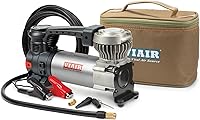
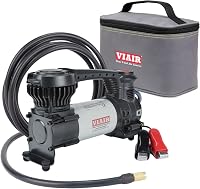
The VIAIR 88P connects directly to the vehicle battery with clamps and requires the engine running. Its 16 ft air hose and 10 ft power cord provide reach around the vehicle.
VIAIR supports tires up to 33 inches and specifies a 25-minute duty cycle at 30 PSI. Follow its operating and cooling instructions rather than assuming vehicle power allows unlimited runtime.
The 88P uses an on/off switch and built-in gauge, so you must stop inflation yourself. Skip it if automatic shutoff is essential or you don't want to access battery terminals.
Use an engine-running compressor outdoors, away from enclosed spaces. Check your vehicle manual for battery access and connection guidance before choosing a clamp-powered model.
Our cordless vs corded tire inflator comparison explains the setup differences further.
What should you check before buying?
Match tire size, pressure change, power, and reach before choosing extra features. These checks tell you more about suitability than a headline maximum PSI.
- Normal workload: Decide whether you're adding a few PSI or regularly filling tires from much lower pressure.
- Tire support: Check the pump's vehicle and tire-size guidance, especially for trucks, trailers, and RVs.
- Charging plan: Confirm that you can recharge it where you store or use it.
- Hose reach: Picture the valve near the top of the wheel, not only near the ground.
- Controls: Look for clear pressure units, readable buttons, and a target you can set without guesswork.
- Storage: Leave room for the pump, hose, charger, and adapters together.
Maximum PSI measures pressure capability, not filling speed. Airflow figures measured at zero pressure also don't show how quickly a pump will finish a tire already near its target.
Don't compare battery mAh figures alone across different inflators. Motor demand, battery voltage, tire size, and operating conditions all affect useful runtime.
For larger vehicles, start with what size inflator a truck or RV needs. Tire diameter alone doesn't describe every high-pressure application.
How do you set up and use a cordless tire inflator?
Start with a charged pump, cold tires, and the correct target pressure. Read the inflator's instructions before the first use so you know its controls, charging method, and cooling limits.
- Park on level ground away from moving traffic and apply the parking brake.
- Find the recommended cold-tire pressure on the vehicle placard or in the manual.
- Select the correct pressure unit before entering the target.
- Connect the hose securely without pulling sideways on the valve stem.
- Start inflation and stay beside the pump, even with automatic shutoff.
- Disconnect, check the final pressure with a separate gauge, and replace the valve cap.
Keep the pump supported so its weight doesn't hang from the valve. If air escapes continuously at the connection, stop and refit the chuck before continuing.
Don't release air from warm tires just to reach the cold-tire target. Check them again when cold and adjust then.
For more detail on connections and controls, follow how to use a portable tire inflator.
How do you keep it ready and avoid common mistakes?
Check charge before trips, store the accessories together, and follow the pump's cooling limits. Let the hose and compressor cool before packing them away, and keep the unit dry.
Follow the manual's storage-temperature guidance rather than leaving it in extreme heat or cold. Airmoto notes that cold weather reduces battery efficiency, which makes a charge check especially useful before winter travel.
Avoid these mistakes:
- Choosing by maximum PSI: Pressure capability doesn't show whether the pump suits repeated large-tire fills.
- Using the wrong units: Confirm PSI, bar, or kPa before setting a target.
- Leaving it unattended: Automatic shutoff helps, but you still need to watch the connection and tire.
- Ignoring repeated pressure loss: A tire that keeps losing air needs its tire and valve checked.
- Packing a hot pump: Allow cooling time before closing it inside a pouch or storage bin.
For seasonal pressure changes, read why the tire-pressure light comes on in cold weather. Don't assume every warning is only a temperature change.
Are cordless tire inflators worth it for your routine?
Cordless tire inflators are worth it when easier setup leads to regular use and you can keep them charged. Choose Airmoto for occasional passenger-car top-ups, or the ETENWOLF Vortex S6 for pickup tires and larger cordless workloads.
Choose the VIAIR 88P if vehicle-battery power fits your habits better and you're comfortable with clamps and manual pressure control. Your charging habits matter as much as the tires you drive on.
Before ordering, decide where the pump will live and when you'll check that it's ready. Then compare the best portable tire inflators for cars, trucks, and SUVs for the type of tire work you actually do.
Frequently asked questions
Are cordless tire inflators worth buying?
Yes, cordless tire inflators are worth buying for routine top-ups if you keep the battery charged; they let you move between tires without a vehicle power cord. Choose the size around your tires and workload, and consider a 12V compressor if managing another rechargeable battery won't fit your routine.
How many tires can a cordless inflator fill on one charge?
There isn't one fixed number because tire size, pressure change, temperature, and battery charge affect capacity; compare brand claims that use similar starting and ending pressures. Adding a few PSI to several tires takes less air than filling those same tires from empty, so top-up counts aren't full-inflation counts.
Is a cordless tire inflator better than a 12V one?
Cordless is better for moving between tires without a power cable; 12V suits drivers who prefer vehicle power over charging a separate battery. Check the connection before buying: the VIAIR 88P uses battery clamps and requires the engine running, so it needs more setup than a self-contained cordless pump.
Can a cordless tire inflator inflate a flat tire?
Some cordless inflators can fill an empty tire, but capacity varies by model and tire size; Airmoto says its pump can inflate 1 empty standard car tire on a full charge under optimal conditions. A tire with visible damage, rapid air loss, or damage from driving flat needs inspection.