How Do You Use a Portable Tire Inflator?
Here's how to use a portable tire inflator: find your vehicle's recommended cold tire pressure, connect power and the hose, then inflate to that target. Stop and verify the pressure with a separate tire gauge.
On this page (8 sections)
- How do you use a portable tire inflator step by step?
- Where do you find the right tire pressure?
- Which power source and inflator fit your tires?
- How do you attach the hose and set the pressure?
- What mistakes cause poor results or unsafe inflation?
- What should you do if the tire is very low or flat?
- How do you care for the inflator and troubleshoot problems?
- Which portable tire inflator setup should you choose?
Here's how to use a portable tire inflator: find your vehicle's recommended cold tire pressure, connect the power and hose, then add air to that target. Stop and verify the result with a separate tire pressure gauge.
The main differences between inflators are their power connections, pressure controls, and running limits. A compact cordless pump suits routine top-ups, while larger tires call for a model built to move more air.
How do you use a portable tire inflator step by step?
Check, connect, inflate, and recheck in that order. Start on level ground away from traffic, set the parking brake, and gather your inflator and tire gauge.
- Find the recommended cold pressure on the vehicle's tire information label or in its owner's manual.
- Check the tire's current pressure and inspect it for damage.
- Remove the valve cap and keep it somewhere clean.
- Connect the inflator's power as its manual directs.
- Secure the hose connector to the valve stem.
- Select PSI and set the target pressure if the inflator has that control.
- Start inflation and watch the gauge, even with automatic shutoff.
- Stop, disconnect, and verify pressure with a separate gauge before replacing the cap.
Check each tire against its own target rather than assuming all 4 need the same amount of air. Include the spare in your maintenance routine, using its specified pressure.
How to use a portable tire inflator without auto shutoff
Stop in short intervals near the target and check pressure with the compressor switched off. Add smaller amounts as you approach the correct reading so you don't repeatedly overshoot and release air.
Stay beside the pump throughout the job. A manual switch needs your attention, and automatic stopping doesn't replace a final pressure check.
Where do you find the right tire pressure?
Use the vehicle maker's recommended cold tire pressure, usually on a label inside the driver's door area. The tire sidewall shows a pressure limit, not the everyday setting for your vehicle.
Front and rear tires may have different targets. Your manual may also give separate guidance for carrying passengers or a heavy load.
Check cold pressure before driving, after the vehicle has been parked for at least 3 hours. Driving warms tires and raises pressure, so don't bleed warm tires down to the cold target.
See what PSI your car tires should be for help finding the correct setting. Our guide to tire pressure lights in cold weather explains why a temperature drop can trigger a warning.
Which power source and inflator fit your tires?
Choose by tire size, access to power, and how much air you usually add. Maximum PSI tells you a pressure ceiling, but it doesn't tell you how quickly a pump will fill a large tire.
For occasional car tire top-ups, compact storage and simple controls matter most. For repeated truck tire fills, prioritize airflow, running limits, and enough hose reach to avoid awkward connections.
Check that your chosen setup can reach every valve before you need it roadside. Our cordless versus battery-clamp inflator comparison helps you choose between charging a pump and connecting to vehicle power.
Airmoto: for compact storage and routine top-ups
Choose the Airmoto Tire Inflator for small pressure corrections on car tires and convenient storage. Its rechargeable battery removes the need to route a power cord around the vehicle, and its LCD and automatic shutoff simplify setting a target.
At 1.2 pounds, it suits drivers who want a pump they can easily carry between tires. Use the plus and minus controls to select the pressure, then press the middle Start button after connecting the hose.
Skip it for heavy-load tires or large-volume items such as air mattresses and paddleboards. Airmoto recommends a full charge before each use, and larger tires and cold weather can reduce battery endurance.
VIAIR 88P: for drivers comfortable with battery clamps
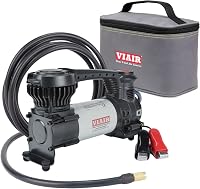
Choose the VIAIR 88P 12V Compressor if you prefer vehicle power and don't mind opening the hood. It supports tires up to 33 inches and pairs a 16-foot hose with a 10-foot power cord.
VIAIR directs you to attach the clamps, start the engine, connect the hose, and operate the on/off switch while watching the built-in gauge. Confirm clamp polarity in the manual, and keep cables away from belts, fans, and hot parts.
Skip it if you want a cordless pump or automatic target-pressure stopping. Its 25-minute duty-cycle rating at 30 PSI is a defined operating limit, so follow the manual's cooling instructions for your task.
ETENWOLF Vortex S6: for larger tires and repeated fills
Choose the ETENWOLF Vortex S6 for pickup tires and larger inflation jobs when you want cordless operation. Automatic stopping, 7 preset modes, and pressure memory help with repeated adjustments.
ETENWOLF says its dual-cylinder system can inflate 4 F150 tires sized 245/70R17 from 0 to 35 PSI without breaks. That makes it the stronger fit here for substantial fills, subject to the manual's operating limits.
Skip it if glove-box storage and light weight are your main goals: it weighs 6 pounds. It supports air mattresses and pool floats, but it isn't intended for stand-up paddleboards.
How do you attach the hose and set the pressure?
Make a straight, secure valve connection, then confirm the pressure units before starting. For car tires, use the Schrader connector; bicycle Presta valves require the correct adapter.
Press or twist the connector into place as directed without pulling the valve sideways. Position the pump so its weight doesn't hang from the valve, especially when the hose is short.
If air keeps escaping, stop and reseat the connector rather than forcing more air through a leak. A brief hiss during removal can happen, but check the final pressure instead of judging by sound.
Confirm that the screen shows PSI rather than kPa or bar, and check any preset before accepting it. A stored setting may belong to a different tire or vehicle.
For other controls and connection steps, read how to use a DeWalt tire inflator or how to use a Milwaukee tire inflator.
What mistakes cause poor results or unsafe inflation?
The main mistakes are using the wrong target, ignoring heat, and treating air loss as a repair. Avoid these habits even when the pump has automatic controls.
- Using sidewall pressure: follow the vehicle's target instead.
- Trusting a preset without checking: confirm both the number and the units.
- Walking away: stay close enough to notice a leak, slipping connector, or abnormal operation.
- Ignoring running limits: take cooling breaks when the manual requires them.
- Repeatedly topping up a leaking tire: arrange an inspection to find the cause.
If a cold tire ends up above its target, release air in small amounts and recheck. Don't use that same approach to lower a warm tire to its cold-pressure setting.
Keep any running vehicle outdoors. Never operate its engine in a garage or other enclosed space to power an inflator.
What should you do if the tire is very low or flat?
Inspect before inflating, because a pump cannot repair tire damage. Don't drive on a flat tire to reach a safer parking spot or an air source.
Cuts, bulges, exposed cords, or a tire that has slipped off its rim call for roadside assistance or a tire professional. A tire driven while flat may have hidden damage even if it holds air afterward.
A small pump may also lack enough battery capacity for a full refill. Choose equipment for your actual tire size and starting pressure rather than assuming a top-up claim covers an empty tire.
How do you care for the inflator and troubleshoot problems?
Keep it charged or connection-ready, clean, and dry, following its storage instructions. After use, let the pump and hose fittings cool before packing them away.
Inspect the hose, connector, and power cable for damage, and keep adapters together so they're available when needed. Check a cordless pump's charge before a trip rather than leaving readiness to chance.
If it won't add air, check power, the hose seal, pressure units, and the selected target. A target below the tire's current pressure can prevent an automatic model from starting inflation.
Stop if the unit becomes unusually hot, smells abnormal, or runs without building pressure. See why a tire inflator won't turn on for power and startup checks.
Which portable tire inflator setup should you choose?
Choose Airmoto for compact top-ups, VIAIR 88P for vehicle-powered inflation with manual monitoring, or ETENWOLF Vortex S6 for larger cordless jobs. Skip any model whose size, power connection, or intended tire use doesn't fit your vehicle.
Knowing how to use a portable tire inflator starts with the correct target and ends with a pressure check. Before your next fill, confirm what PSI your car tires should be, or compare more sizes in our guide to portable tire inflators for cars, trucks, and SUVs.
Frequently asked questions
How do you use a portable tire inflator?
Find the vehicle's recommended cold tire pressure, connect power as directed, and secure the hose to the valve stem. Select the correct units and target pressure if available, then inflate while watching the gauge; stop, disconnect, verify with a separate tire gauge, and replace the valve cap.
Should I use the PSI on the tire sidewall?
No, use the recommended cold tire pressure on the vehicle's tire information label or in its owner's manual. The sidewall number is a tire pressure limit, not your vehicle's everyday target; check for different front and rear settings, and follow any vehicle guidance for carrying a full load.
Can I use a portable inflator on a completely flat tire?
Only if the tire is suitable for reinflation and the inflator can handle the job. Don't inflate a tire with visible damage or one that has slipped off its rim; a tire driven while flat needs professional inspection because adding air won't reveal or repair hidden damage.
Do I leave the car running while using a tire inflator?
Follow both manuals because the answer depends on the power connection; the VIAIR 88P requires the engine to run, while cordless models use their own battery. Keep a running vehicle outdoors, away from enclosed spaces, and keep the inflator's cables clear of hot surfaces and moving engine parts.