How to Use a Bullseye Tire Inflator
To use a Bullseye tire inflator, thread the hose onto the valve stem, set your target pressure, and press start. The pump runs until it reaches that number and then shuts off, so you only remove the chuck and check the gauge.
On this page (10 sections)
- What do you need before you start inflating a tire?
- How do you connect a Bullseye inflator to the valve?
- How do you set the target pressure on a Bullseye inflator?
- How do you start the pump and let auto shut-off finish the job?
- How do you check the pressure after inflating?
- What are the most common mistakes when using a Bullseye inflator?
- How do you store and maintain a Bullseye inflator?
- How do you inflate a bike tire or sports ball with a Bullseye inflator?
- What PSI should you set on a Bullseye tire inflator?
- The bottom line on using a Bullseye tire inflator
To use a Bullseye tire inflator, thread the hose onto the valve stem, set your target pressure, and press start. The pump runs until it reaches that number and then shuts off, so you only remove the chuck and check the gauge.
The steps below work for the corded and cordless Bullseye models, since the controls and hose setup are the same. The main differences are where the power comes from and how long you can run the pump before it needs a rest.
What do you need before you start inflating a tire?
Have the tire's target pressure, a power source, and a few minutes in a safe spot. Park on level ground, set the parking brake, and turn on the hazard lights if you're roadside.
Find the recommended PSI on the sticker inside the driver's door jamb. Don't use the number molded into the tire sidewall, which is a maximum, not the pressure your car wants.
Check the hose and chuck for cracks or missing seals. A loose connection leaks air and makes the pump run longer than it should.
If your model runs on a 12V plug, the engine should be running so the car battery isn't drained. A cordless pump just needs a full charge.
How do you connect a Bullseye inflator to the valve?
Remove the valve cap and push or thread the chuck fully onto the stem. Most Bullseye chucks are lever-lock or screw-on, so match the type on your model.
Clear dirt from the valve first, since grit can stop the chuck from sealing. Keep the cap somewhere safe; a lost cap lets debris into the valve core.
For a lever chuck, flip the lever down to lock it. For a screw-on chuck, turn it until it feels snug, not forced.
Tug the hose gently to confirm the seal. If you hear hissing, reseat the chuck before starting the pump.
How do you set the target pressure on a Bullseye inflator?
Use the plus and minus buttons to dial in the PSI from the door sticker, then confirm the unit. Many Bullseye models also switch between PSI, kPa, BAR, and kg/cm².
The display should hold the number you set. On models with presets, choose the car or bike mode and adjust from there.
Add about 1 PSI if you plan to check with a separate gauge afterward, since gauges can differ slightly. Don't add more than that; overfilling is harder to correct than a small top-off.
If you overshoot, use the deflate button or bleed valve and recheck. Let out air in short bursts.
How do you start the pump and let auto shut-off finish the job?
Press the start button and let the inflator run hands-free until it stops. Bullseye pumps with auto shut-off cut power once the target pressure is reached.
Keep the hose clear of the tire and hot engine parts while it runs. Don't stand over the pump or hold the trigger down on models with a manual lever.
Most passenger tires gain a few PSI in a couple of minutes, so stay nearby. The Airmoto tops a standard car tire from 28 to 35 PSI in about 3 to 5 minutes, according to the brand.
If the pump sounds strained or the housing gets hot, stop and let it cool. Cheap pumps aren't built for continuous duty on large tires.
How do you check the pressure after inflating?
Pull the chuck off and read the pressure with a separate gauge. The inflator's own display is handy, but a second gauge confirms the number the tire actually holds.
Screw the valve cap back on finger-tight. A missing cap isn't dangerous, but it lets dirt into the valve core over time.
Compare the reading with the door sticker. If it's low, reconnect the hose and top off; if it's high, bleed a little air.
Repeat for each tire. Pressure drifts with temperature, so check when the tires are cold, before a long drive.
Our guide to how to use a portable tire inflator covers the same check on other pump brands.
What are the most common mistakes when using a Bullseye inflator?
The usual errors are a loose chuck, the wrong target PSI, and running the pump too long without a rest. Each one either wastes time or risks damage.
A partly seated chuck leaks air and makes the pump chase a number it can't reach. Always tug the hose after connecting.
Using the sidewall maximum instead of the door sticker overfills the tire. The sidewall number is a limit, not a recommendation.
Running a small pump nonstop on a big tire can overheat the motor. Let it cool between tires if it gets warm.
Finally, don't trust the inflator's gauge alone. A separate check takes seconds and catches drift.
Which pump should you buy for this job?
The Airmoto is the easiest pick for most drivers. It's cordless with a 2000 mAh battery, a digital gauge, auto shut-off, and an LED light for night work.
Its 120 PSI rating covers car, bike, and motorcycle tires, and the hose stores inside the body.
Which pump suits garage and roadside use?
The Craftsman Dual Power runs from a 12V car plug or a 120V wall outlet. That makes it a home-and-road pump, and its custom mode allows settings up to 125 PSI.
It also has auto shut-off and an LED work light.
Which pump has the fastest fill?
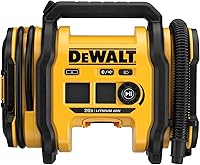
The DeWalt 12V Digital Inflator reaches 150 PSI and inflates a 195/65 R15 tire from 30 to 36 PSI in under a minute, according to DeWalt. It runs on a 2600 mAh battery or a 12V car plug and doubles as a power bank.
Five presets cover car, motorcycle, bike, ball, and custom settings.
The DeWalt battery setup differs from its tool batteries; see what battery a DeWalt tire inflator uses before you buy. If you already own a DeWalt pump, our DeWalt tire inflator guide walks through its presets.
Milwaukee owners can follow how to use a Milwaukee tire inflator for that brand's controls.
How do you store and maintain a Bullseye inflator?
Coil the hose loosely, charge the battery, and keep the pump out of direct sun and damp. A pump that lives in a hot trunk loses battery capacity over time.
Wipe dirt off the chuck after each use. A clean chuck seals better and lasts longer.
Check the hose for cracks every few months. A leaking hose makes the pump run longer and can throw off the gauge.
Charge a cordless model to full before long trips. For a 12V model, check the fuse and keep the plug clean.
Store the pump in its pouch or case, away from tools that could crush the hose. Our portable inflator guide covers storage for other brands too.
How do you inflate a bike tire or sports ball with a Bullseye inflator?
Swap the chuck for the Presta adapter or needle, then set a lower target pressure. The steps are the same, but the numbers and adapters change.
For a Presta bike valve, use the Presta adapter and open the valve nut first. For a Schrader bike valve, the standard chuck works as is.
For balls and inflatables, push the needle or cone adapter into the valve and set the pressure low. Most sports balls want far less than a car tire.
Don't overfill inflatables; they burst easily. Add air in short bursts and check by feel.
What PSI should you set on a Bullseye tire inflator?
Use the pressure on the door jamb sticker, not the tire sidewall. Most passenger cars want 30 to 36 PSI, but the exact number depends on the model and load.
Check the sticker for front and rear differences. Some cars want more pressure in the rear when loaded.
For trailers, RVs, and bikes, check the tire or the owner's manual for the right figure. A Bullseye pump rated to 120 PSI handles most of these, but large RV tires may need a heavier compressor.
Recheck pressure monthly and before long trips. Small leaks are easy to miss until a tire looks low.
The bottom line on using a Bullseye tire inflator
The whole process is connect, set the target PSI, press start, and let auto shut-off finish. Learning how to use a Bullseye tire inflator comes down to those four steps, plus a separate gauge check when it stops.
Pick the Airmoto for a compact cordless pump you can keep in the car. Pick the Craftsman Dual Power if you want one pump for the garage and the road.
Pick the DeWalt 12V Digital Inflator for the fastest top-off and five presets. Whichever you buy, set the pressure from the door sticker and confirm with a second gauge.
Frequently asked questions
Do I need to keep the engine running while I use a Bullseye tire inflator?
Run the engine if the inflator plugs into the 12V socket, so the car battery isn't drained during a long fill. A cordless model doesn't need the engine, but charge it fully first.
Either way, park safely and set the parking brake before you start.
How do I know the pressure is right when using a Bullseye inflator?
Use the digital gauge on the inflator and compare it with the sticker inside the driver's door jamb. Set the target to the door sticker value; recheck with a separate gauge instead.
Recheck with a separate handheld gauge after the pump shuts off.
Can a Bullseye tire inflator inflate a completely flat tire?
Yes, on most passenger tires, though a fully flat tire takes longer and may need a second session. Seat the hose firmly and let the pump rest between runs if it gets hot.
Check for a puncture first, since inflating a damaged tire won't hold air.
What should I do if the Bullseye inflator won't start?
Check the hose connection at the valve and the power source first. For a 12V model, confirm the plug is fully seated and the fuse is intact.
For a cordless model, charge the battery.
If the display stays dark, the battery or fuse is the usual cause.
Should I deflate a tire with a Bullseye inflator?
Yes, many Bullseye models have a deflate button or a bleed valve on the chuck. Use it when you overshoot the target pressure.
Deflate in short bursts and recheck with the gauge, since it's easy to let out more air than you intend.