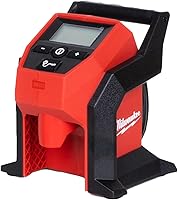
Milwaukee M18 Tire Inflator Review: Worth It? (November 2026)
The Milwaukee M18 inflator is the right buy only if you already own M18 batteries and want one tool to top off car, truck and bike tires in the garage. For occasional roadside fixes or a first inflator, a 12V-compatible pump costs less and does the same job.
On this page (8 sections)
- What the Milwaukee M18 inflator is and who it's for
- How the Milwaukee M18 inflator performs in daily use
- The specs that matter in daily use
- Setting up the Milwaukee M18 inflator
- Care and cool-down rules for the M18 inflator
- Where the Milwaukee M18 inflator falls short
- Alternatives worth comparing
- Verdict: is the Milwaukee M18 tire inflator worth buying?
The Milwaukee M18 inflator is a buy for people already inside the M18 battery system, and a skip for everyone else. It tops off car, truck and bike tires without a cord, and its preset auto-stop makes repeat checks simple.
For a first inflator or an emergency kit, a 12V pump that plugs into the car socket costs less and fills the same tires. The Milwaukee earns its place when the batteries are already on your shelf.
What the Milwaukee M18 inflator is and who it's for
The Milwaukee 2848-20 is a bare cordless inflator built for the M18 battery platform. It runs on the 18V packs Milwaukee uses across its drills, saws and impact drivers, so the pump shares batteries with tools you may already own.
That shared platform is the whole point. If you own M18 tools, adding an inflator means one more bare tool and no new charger, no new battery type and no extra cords in the garage.
The pump is a light draw on the packs by power tool standards, so it fits naturally into the rotation you already run. The digital gauge and auto-stop are set up for the job owners repeat most: checking four tires before a drive and topping them back to spec.
If you don't own M18 tools, the math changes. You'd buy the pump plus a battery plus a charger, and that bundle pushes the cost past what a corded or 12V pump asks for the same job.
The pump itself is not the expensive part. The entry ticket to the platform is.
The people who get real value here are home mechanics, cyclists who run tubeless tires, and truck or trailer owners who check pressures weekly. They inflate often enough that cordless convenience pays off, and they already have the power source.
Someone who inflates twice a year is paying for capability they won't use.
How the Milwaukee M18 inflator performs in daily use
Milwaukee rates the 2848-20 to inflate a 195/65/R15 tire from 29 to 36 psi in about one minute, which is a top-off pace. That is the job most owners do: bring a slightly low tire back to spec before a drive.
Four tires in a loop take minutes, not an afternoon. The digital gauge reads to ±1 PSI and the preset auto-stop shuts the pump off at your target, so you set the number once and let the tool stop.
There's no crouching to watch a needle and no overfill to bleed back down. The tolerance also means you can trust the reading when you compare it against the door sticker.
A flat tire from zero takes longer. Expect several minutes on a passenger tire and more on a large truck tire, with a cool-down break in between.
The pump is a maintenance tool first and a rescue tool second. That split is worth knowing before you buy, because roadside rescue is where buyers expect more than this class of pump delivers.
The built-in light helps in a dark garage or at the roadside. The hose stores in slots on the unit, which keeps the trunk or shelf tidy between uses.
For a garage-first owner, the cordless format is the real feature. You grab the pump, walk to the car and don't hunt for an outlet or wrestle a cord around the bumper.
The specs that matter in daily use
Three specs decide whether this pump fits your routine: battery platform, pressure range and fill speed. Milwaukee's M18 packs cover the first.
The pump's 150 psi ceiling covers the second, which is more than enough for car tires, bike tires and most trailer and light truck rubber. Passenger cars typically sit in the 30s, and the ceiling leaves headroom for higher-pressure applications without working the pump at its limit.
Fill speed is the one buyers underestimate. A pump that takes one minute per tire is fine for four tires, while a pump that takes six minutes per tire turns a quick pressure check into a chore.
The one-minute top-off figure is the number to weigh against your own habits. If you check pressures weekly, that pace is comfortable; if you fill from flat often, plan for longer runs and cool-downs.
The digital gauge with auto-stop is the feature you'll notice most. It removes the guesswork and the crouching, and it keeps you from overfilling on a hot day when pressures creep up.
Pair it with a cold-tire reading and the numbers stay honest across seasons. The tool's size and weight suit a garage shelf or a truck bed, and it's built to be carried to the vehicle rather than mounted in one spot, which is the advantage over a corded garage compressor.
Setting up the Milwaukee M18 inflator
Setup is short: charge an M18 battery, thread the chuck onto the valve and set your target pressure. The pump reads the current pressure as soon as the chuck seats, with no calibration step and no separate gauge to cross-check.
Start with the tire cold, before a drive, so the reading matches the door sticker. Hot tires read higher and will leave you underinflated once they cool.
This is the one habit that keeps every fill accurate, and it costs nothing but timing. Set the target on the digital gauge, press start and let auto-stop finish the job.
Move to the next tire and repeat. The whole loop takes minutes for four tires at top-off pressure; on a truck or trailer with six or more tires, work in pairs and give the pump a short pause between them.
The chuck fits Presta and Schrader valves, so bike tires need no adapter. A needle adapter covers balls and inflatables.
Our guide to using a Milwaukee tire inflator walks through the full sequence if you want the steps in order. Keep the battery charged and swap packs rather than running one to cutoff, since a low pack slows the motor and adds heat during a fill.
Care and cool-down rules for the M18 inflator
Let the pump cool fully after long runs, and never store it hot. A top-off on four tires won't heat it much, but filling a truck tire from flat will.
The heat is what shortens the life of a small compressor, not the number of fills. Milwaukee's manual gives a duty cycle for continuous use, so treat it as a hard limit, not a suggestion.
The cool-down is the cheapest maintenance you can do. Plan fills so a big job gets a break in the middle rather than one long run to the target.
Wipe the hose and chuck after use so grit doesn't reach the valve core. Store the hose in its slots rather than coiled tight around the body, since a hose that kinks in storage develops weak spots that leak later.
Check the chuck seal now and then. A worn seal leaks air and makes every fill take longer.
If a tire that held pressure starts dropping again right after a fill, the chuck is the first thing to inspect. Store the pump indoors where temperatures stay moderate, and keep the battery out of a freezing trunk between jobs.
Where the Milwaukee M18 inflator falls short
The biggest trade-off is the battery you have to own. As a bare tool, the pump is only good value if M18 packs are already in your garage; start from zero and the total climbs past what the job really needs.
The second is speed on big tires. One minute for a passenger top-off is good, but a truck tire from flat is a slow job with breaks, and a dedicated garage compressor does it faster.
The pump's duty cycle also means a long fill is a planned session, not a quick stop.
Then there's the cost of the platform itself. M18 batteries and chargers are priced for power tools, and an inflator is a light-duty use for them, so you're paying for capability the pump barely uses.
That's fine if the packs already earn their keep elsewhere, but it's a poor first purchase if the pump would be your only M18 tool.
Finally, it's a cordless tool, so it's only as good as the pack you feed it. A tired battery on a cold morning gives a slow fill, while a corded pump doesn't care.
If your inflator lives in the trunk, a cold pack in winter is the weak link.
Alternatives worth comparing
The Milwaukee is not the only way to get cordless inflation. Two other options change the math.
Milwaukee M12 vs M18: which platform fits you?
The M12 inflator suits lighter duty and smaller batteries, while the M18 brings more power and shares packs with the bigger tools. Pick the M12 if you only top off bike and car tires and want a compact pump; pick the M18 if you already own M18 packs or fill truck tires.
The M12 is the easier entry point for someone starting from zero, because the platform is smaller and the pump is sized for light jobs. The M18 wins when the batteries are already in the garage and the pump joins a tool rotation.
Our Milwaukee M12 vs M18 tire inflator comparison breaks down the pressure range, size and battery fit for each.
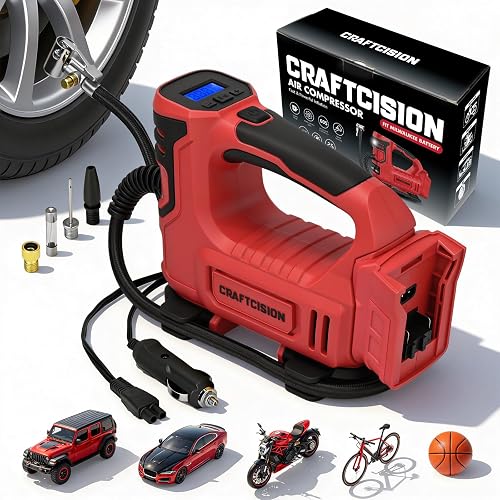
CRAFTCISION compatible pump: the flexible second option
The CRAFTCISION pump runs on Milwaukee M18 batteries and a 12V car socket, so it works with or without a pack. It hits 150 psi, fills at 30 liters per minute and has preset auto-stop to ±1 PSI.
It also adds a built-in deflation button for releasing air from overfilled tires and for flattening pool floats and other inflatables for storage. The 12V cord runs 9 feet to a car socket, which covers a roadside fix when no battery is charged.
The pump measures 8.67 by 2.76 by 6.89 inches and weighs 0.75 kg, so it fits a trunk or a shelf without much space. Hose storage slots on both sides keep the cord and hose tidy.
It needs a full cool-down after 20 minutes of continuous use and runs at 80 db, which is loud in a closed garage. If you want a pump that lives in the trunk and doesn't depend on a charged battery, this is the more flexible choice.
It also covers deflating pool floats, which the Milwaukee doesn't do as directly. For an M18 owner who wants a second pump for the car, the dual power supply is the deciding feature.
Airmoto: the pocket-sized option
The Airmoto is a small handheld inflator for light top-offs on car and bike tires. It's easy to keep in a glovebox and simple to use, but it fills more slowly and suits occasional checks more than weekly maintenance.
Read our Airmoto tire inflator review for the pressure range and battery details.
Verdict: is the Milwaukee M18 tire inflator worth buying?
Buy the Milwaukee M18 inflator if you already own M18 batteries and check tire pressures often enough that cordless convenience matters. It's a well-built pump that shares power with tools you have, and its auto-stop makes repeat fills quick.
The one-minute top-off pace and ±1 PSI accuracy cover the weekly check that most owners actually do. Skip it if you don't own the platform.
A 12V pump like the CRAFTCISION compatible model covers the same tires, works without a battery and costs less to get started. It also adds deflation for floats and balls, which the Milwaukee treats as a secondary job.
That's the honest split in this Milwaukee M18 tire inflator review. The pump is good, but the value depends on what's already in your garage.
For the full spec breakdown on the Milwaukee itself, see our Milwaukee M18 inflator review.
Frequently asked questions
Does the Milwaukee M18 tire inflator come with a battery?
No. The bare tool is sold without a battery or charger, so you need at least one M18 pack you already own.
Factor that cost in if you are starting from zero, because a kit with a battery raises the total.
How fast does the Milwaukee M18 inflator fill a tire?
Milwaukee rates the 2848-20 at roughly one minute to take a 195/65/R15 tire from 29 to 36 psi. That is a top-off pace, not a full fill from flat.
A large truck tire from empty will take several minutes and one or two cool-down breaks.
Can the Milwaukee M18 inflator inflate bike tires and sports balls?
Yes. It ships with a Presta and Schrader chuck plus a needle adapter for balls and inflatables.
Set the target pressure on the digital gauge and let auto-stop handle the rest, which is easier than watching a needle by eye.
Is the Milwaukee M18 inflator worth it over a cheaper 12V pump?
Only if you already own M18 batteries and want cordless freedom in the garage. If you just need to top off tires now and then and do not own the platform, a 12V pump like the CRAFTCISION compatible model covers the same jobs for less money.