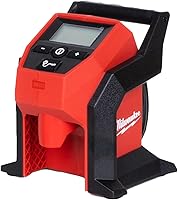
Milwaukee M18 Inflator 2848-20 Review: Worth It? (October 2026)
The Milwaukee M18 inflator is a strong fit for M18 battery owners who need routine car and light truck tire top-offs. Choose an alternative with vehicle or wall power if keeping a tool battery charged doesn't suit your routine.
On this page (9 sections)
- What does the Milwaukee M18 inflator offer?
- How does Milwaukee compare with the alternatives?
- What should you check before buying an M18 inflator?
- What does the pressure limit mean for your tires?
- How should you set up and use the inflator?
- Which attachments should you use?
- How do you care for the tool and avoid common mistakes?
- Should you choose the Milwaukee M18 inflator?
- Sources
The Milwaukee M18 inflator is a strong choice for M18 battery owners who want to maintain car and light truck tire pressure. Its appeal is simple: use the battery system you already keep charged and bring the inflator to each wheel.
Drivers starting without tool batteries have a different decision. Consider where you'll get power, what else you want to inflate and how much space you can spare before choosing Milwaukee over the alternatives below.
What does the Milwaukee M18 inflator offer?
The 2848-20 offers cordless inflation for passenger, light truck and other medium-duty tires. Its main buying strengths are hose reach and compatibility with an existing M18 setup.
Milwaukee M18 2848-20 Inflator: Best for M18 tool owners

- 18V battery powered
- 150 PSI maximum pressure
- 36 in hose
- Schrader chuck, Presta chuck, needle and nozzle
A tire-focused choice for drivers who already keep M18 batteries charged. Its hose reach suits routine pressure checks around a car or light truck.
Pros
- Designed for passenger, light truck and medium-duty tires
- 36 in hose
- Includes Schrader chuck, Presta chuck, needle and nozzle
- 150 PSI maximum pressure
Cons
- Requires a compatible M18 battery
- 7.7 lb weight adds bulk to an emergency kit
Milwaukee says it can top off 33-inch light truck tires in under 1 minute. That claim describes a top-off, so don't use it to estimate how long a nearly empty tire will take.
The 36 in hose gives you room to place the unit beside a wheel without holding it against the valve. Position the inflator on a firm surface and leave slack so the hose doesn't pull sideways on the stem.
The unit measures 14.7 x 7 x 8.3 in and weighs 7.7 lb. Measure the actual compartment where you'll store it, allowing extra room for the hose, attachments and battery.
Who should buy the Milwaukee M18 inflator?
Buy it if you regularly check tires at home and already have compatible batteries ready for other tools. Adding tire care to an existing charging routine is easier than creating a new routine for one device.
It also suits drivers who want to move around a vehicle without routing a power cord between wheels. The useful question is how you'll handle four tires on an ordinary morning, not just whether the inflator fits in the trunk.
Skip it if you want vehicle or wall power as a backup. Also look elsewhere if your main jobs involve large air mattresses, air tools or sustained compressor work.
How does Milwaukee compare with the alternatives?
Battery ownership and the jobs beyond tires should decide this comparison. DeWalt and Craftsman offer more power choices, while Makita makes sense for drivers already using LXT tools.
| Inflator | Power choices | Main reason to choose it |
|---|---|---|
| Milwaukee M18 2848-20 Inflator | M18 battery | Tire care within an existing Milwaukee setup |
| DeWalt DCC020IB 20V MAX Inflator | 20V MAX battery, 12V DC or 110V AC | Tires plus high-volume inflation and deflation |
| Makita DMP181ZX Inflator | 18V LXT battery | LXT compatibility and adjustable inflation speed |
| Craftsman V20 Inflator | V20 battery, AC wall plug or 12V vehicle adapter | Moving between household and vehicle tasks |
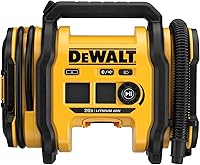
DeWalt DCC020IB: choose it for camping gear and flexible power
The DeWalt suits buyers who want one inflator for tires and larger inflatables. Its high-volume inflation and deflation modes give it a clear role when packing an air mattress for a trip.
High-pressure mode has automatic shutoff, and a threaded chuck secures the tire connection. An LED light helps illuminate the work area, while onboard storage keeps accessories with the unit.
Its maximum pressure is 80 PSI, so compare that limit with your vehicle's needs before ordering. The battery, charger and AC power adapter are sold separately, although a 12V DC power cord is included.
Skip it if your tire requirements exceed that pressure limit. Our DeWalt vs Milwaukee tire inflator comparison explains the choice in more detail.
Makita DMP181ZX: choose it for an existing LXT setup
The Makita suits LXT owners who split inflation jobs between vehicle tires, bicycles and sports balls. Three speed settings let you select a pace for the task, and an air-release button helps correct excess pressure.
It has automatic stop at the preset pressure, a backlit pressure display and an LED work light. Those controls are useful when moving between items with different pressure targets.
Its maximum pressure is 160 PSI, with a 25.5 in hose and a stated weight of 4.6 lb. Higher pressure capacity alone isn't a reason to leave a battery system you already use.
Skip it if you want a vehicle-powered backup or need more room between the inflator and valve. Starting another battery platform only makes sense if its controls solve a real need.
Craftsman V20: choose it for household and vehicle jobs
The Craftsman suits buyers who want several ways to power one inflator. Use a V20 battery, an AC wall plug or a 12V vehicle adapter according to where the job takes place.
A digital PSI gauge and automatic shutoff support tire work. The included large volume hose, ball needle, Presta adapter and small inflatable adapter also suit mixed household tasks.
Its stated weight is 3.8 lb, which makes carrying weight worth comparing if you'll move the unit often. Battery and charger are sold separately, so account for them if cordless use matters.
For higher-pressure tires, confirm suitability before choosing this model. Skip it if you only need tire top-offs and already have charged M18 batteries with no reason to add another system.
For more options across battery platforms, see our best cordless tire inflators.
What should you check before buying an M18 inflator?
Check battery fit, storage space and your main inflation task before comparing small feature differences. Those choices affect every use.
Battery compatibility comes first
The Milwaukee uses an 18V battery through an M18 connector. Another brand's battery is not interchangeable just because its voltage sounds similar.
Confirm the package contents before ordering, especially if you need both a battery and a charger. Think about where you'll charge it and whether that location fits your normal routine.
A cordless inflator stored in a car still needs a charging plan. If you'll rarely remember to charge a tool battery, our cordless vs 12V plug-in inflator guide can help you choose a better power arrangement.
Match the pump to the task
Routine top-offs, filling a nearly empty tire and inflating an air mattress are different jobs. Tire pressure capacity doesn't describe how quickly a pump moves the large amount of air needed by a mattress.
For a truck or RV, check the required tire pressure and the tool's operating guidance for repeated inflation. Don't treat a high maximum PSI as proof that a compact inflator suits every large tire.
An inflator also doesn't replace a shop compressor for air tools. Our tire inflator vs air compressor guide explains which type fits those jobs.
Plan where the tool will sit
Consider valve position as well as hose length. A valve near the top of the wheel may require moving the vehicle slightly or choosing a closer spot for the inflator.
Keep the unit supported on the ground rather than hanging it from the valve. Leave the hose free of kinks and away from sharp edges.
What does the pressure limit mean for your tires?
The Milwaukee's 150 PSI maximum is a tool limit, not your tire pressure target. Use the vehicle's recommended cold tire pressure from its placard or owner's manual.
The tire sidewall maximum serves a different purpose and shouldn't replace that recommendation. Front and rear targets can differ, so read the full placard rather than assuming every tire needs the same setting.
Check pressure before driving, when the tires are cold. Don't bleed air from warm tires simply to match a cold-pressure target.
Maximum pressure also doesn't tell you inflation time or battery runtime. Tire size, starting pressure and the amount of air needed all affect the job.
If you're unsure which number to use, read what PSI your car tires should be before connecting the inflator.
How should you set up and use the inflator?
Start with a charged compatible battery, the correct attachment and a known pressure target. Read the tool's operating instructions before your first use.
- Park on level ground in a safe location and apply the parking brake.
- Check the hose, chuck and battery for damage before connecting them.
- Remove the valve cap and keep it where it won't roll away.
- Connect the chuck squarely to the valve without forcing it sideways.
- Check the starting pressure and add air according to the tool's instructions.
- Stop and verify the final pressure with a suitable gauge, then replace the valve cap.
Persistent hissing at the connection calls for reseating the chuck. Pushing harder while it sits at an angle can strain the valve and waste air.
Stay nearby during inflation, including when using an alternative with automatic shutoff. Follow the model's run-time and cooling guidance when working through several tires.
Our Milwaukee tire inflator use guide covers the operating steps in more detail.
Which attachments should you use?
Use the attachment that matches the valve, then follow the pressure instructions for the item. The included accessories serve different connections.
The all-brass Schrader chuck handles the valve type commonly found on car tires. The Presta chuck is for Presta valves, often found on bicycles.
The inflation needle is for compatible sports balls, while the nozzle serves suitable inflatables. Insert attachments carefully and follow the item's instructions rather than forcing a tight fit.
Small items can gain pressure quickly. Add air in short stages when appropriate, and never use a vehicle tire target for a ball or inflatable.
Keep the attachments together in a small pouch near the tool. Having the right adapter available matters more than remembering that it came in the box.
How do you care for the tool and avoid common mistakes?
Keep the hose clean, the connections clear and the battery ready. Basic storage habits make the inflator easier to use when a tire needs attention.
Let warm parts cool before packing the unit away. Coil the hose loosely and keep heavy objects from crushing it in a vehicle compartment.
Follow Milwaukee's storage guidance for the tool and battery, including temperature limits. Remove the battery before cleaning or inspecting the unit, and avoid getting moisture into electrical connections.
The most common buying mistake is choosing by maximum PSI alone. Choose by your tires, power source and carrying needs instead.
Another mistake is treating repeated pressure loss as a routine inflation job. If one tire keeps needing air, arrange a check for a puncture, valve problem or other leak.
A portable inflator cannot repair tire damage. A visibly damaged tire or one that won't hold pressure needs attention before normal driving resumes.
Should you choose the Milwaukee M18 inflator?
Choose the Milwaukee M18 inflator if tire maintenance is your main job and charged M18 batteries are already part of your routine. Its hose reach is useful, but make sure its size fits your planned storage spot.
Choose DeWalt for camping inflatables and flexible power, Makita for an existing LXT setup with speed controls, or Craftsman for mixed home and vehicle use. Starting from scratch makes the complete power setup more important than the badge on the tool.
If you're choosing between Milwaukee systems, read our Milwaukee M12 vs M18 tire inflator comparison. Pick the system you can keep ready, then build a habit of checking cold tire pressure before it becomes a roadside job.
Sources
Milwaukee's product page covers the 2848-20, and NHTSA explains recommended tire pressure and cold-pressure checks.
Frequently asked questions
Is the Milwaukee M18 2848-20 good for car tires?
Yes, the Milwaukee M18 2848-20 is designed for passenger, light truck and other medium-duty tires; it makes particular sense for routine top-offs if you already use M18 batteries. Set your target from the vehicle's cold tire pressure instructions, and check any tire that repeatedly loses air.
Does the Milwaukee M18 inflator include a battery?
Don't assume a battery or charger is included; confirm the package contents before ordering. The 2848-20 needs a compatible M18 battery, so buyers starting without Milwaukee tools should account for both battery and charging needs; a similar voltage number on another brand's battery does not make it compatible.
What accessories come with the Milwaukee M18 2848-20?
It includes an all-brass Schrader chuck, a Presta chuck, an inflation needle and an inflator nozzle. Use the attachment that matches the valve, then follow the item's pressure limit; having a nozzle that fits does not make every inflatable suitable for the same pressure or inflation method.
How does the Milwaukee M18 compare with the DeWalt DCC020IB?
Choose Milwaukee for tire-focused use within an existing M18 setup, and DeWalt for more power options plus high-volume inflation and deflation; DeWalt also offers automatic shutoff in high-pressure mode. Compare the complete power setup and your tire pressure needs before choosing between them, rather than deciding by voltage alone.