Why Does the Tire Pressure Light Come On in Cold Weather?
A tire pressure light in cold weather usually means cooler air has lowered tire pressure. Check all tires cold, add air to the vehicle's recommended PSI, and investigate any tire that keeps losing pressure.
On this page (7 sections)
- Why does cold weather turn on the tire pressure light?
- What should you do when the light comes on?
- Which inflator suits winter tire top-ups?
- How do you set up an inflator without common mistakes?
- What if the light stays on after you add air?
- How can you prevent repeated winter pressure warnings?
- Which choice makes sense for a cold-weather tire pressure light?
A tire pressure light in cold weather usually means cooler air has lowered tire pressure. Check each tire when cold and add air to the pressure on your vehicle's door-jamb label.
An overnight temperature drop can trigger the warning without a puncture. A tire that keeps losing pressure still needs attention, so treat the light as a reason to measure rather than guess.
Why does cold weather turn on the tire pressure light?
Cooling air lowers the pressure inside your tires, which can trigger the tire pressure monitoring system, or TPMS. The warning tells you to check pressure; it doesn't identify why the pressure fell.
Seasonal cooling often affects all four tires. One tire reading much lower than the others points toward a separate problem, such as a puncture or leaking valve.
The light may disappear once driving warms the tires, but that doesn't confirm the cold pressure is correct. Check again before your next drive instead of waiting for another warning.
Does a cold-weather tire pressure light mean a leak?
The light alone can't distinguish cooling from a leak. Compare all tires when cold, then record the readings after correcting them.
If one tire falls again while the others stay near their targets under similar temperatures, arrange an inspection. Repeated top-ups can hide a problem without solving it.
What should you do when the light comes on?
Park safely and check every tire, then correct low pressure using your vehicle's cold PSI targets. If a tire looks flat or damaged, get help before continuing.
- Find the recommended pressures on the driver-side door-jamb label or in the owner's manual.
- Check all road tires with a gauge.
- Add air to tires below their targets.
- Recheck after disconnecting the inflator.
- Follow the vehicle's TPMS instructions if the warning remains.
For a cold reading, check before driving after the vehicle has been parked for at least 3 hours. “Cold” describes the tire's resting condition, not freezing weather.
Front and rear targets can differ, so read the whole label. The maximum pressure on the tire sidewall is not the recommended setting for your vehicle.
Check the spare separately if your vehicle carries one, using its own pressure requirement. Don't assume the dashboard monitors it or that it uses the same PSI as the road tires.
For help finding the correct target, see what PSI your car tires should be.
Should you release air from a warm tire?
Don't bleed a warm tire down to the cold target. Driving raises tire temperature and pressure, so doing this can leave it underinflated after cooling.
If a tire appears low while you're traveling, address it promptly rather than driving on it until it cools. Recheck cold later to set the final pressure accurately.
Which inflator suits winter tire top-ups?
Choose by tire size, power source, and how many tires you need to fill. A small rechargeable pump suits occasional car top-ups, while larger tires or repeated fills call for more capacity.
Maximum PSI alone won't tell you which pump fits the job. Airflow, battery demands, hose reach, and allowed running time matter when several tires need air.
These 3 options solve different needs; none repairs a puncture or clears a TPMS fault.
Airmoto: for occasional car top-ups
Choose Airmoto for small storage spaces and routine car pressure adjustments. Its 1.2 lb body is easier to carry than the larger options here, and cordless operation avoids routing a power cable around the vehicle.
It includes an LCD gauge, automatic shutoff, and a deflate button. Set the vehicle's target pressure, connect the hose securely, and start inflation.
Airmoto estimates about 3–5 minutes to raise a standard car tire from 28 to 35 PSI. Larger tires, colder conditions, and battery charge affect that time.
Skip it for heavy-load tires or frequent large-tire fills. Airmoto excludes those uses, along with high-volume items such as air mattresses and paddle boards.
Fully charge it before use, especially before a winter trip. Airmoto notes that cold reduces battery efficiency; our Airmoto battery-life guide explains how fill size affects charge needs.
VIAIR EVC88P: for drivers who prefer vehicle power
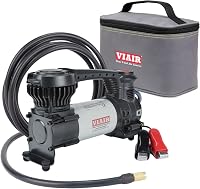
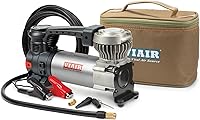
Choose the VIAIR EVC88P if you'd rather connect to a vehicle battery than maintain a rechargeable pump. It supports tires up to 33 inches and includes a 16 ft air hose plus a 10 ft power cord.
Its digital controls let you select a target pressure, and automatic shutoff ends inflation at that setting. The brass twist-on chuck suits drivers who prefer a threaded valve connection.
VIAIR's setup calls for connecting the battery clamps, starting the engine, attaching the chuck, and setting the pressure. Follow both manuals, keep cables clear of moving parts, and run the engine outdoors where exhaust can't collect.
Skip it if battery access is awkward or you want a pocket-size cordless unit. Confirm the approved connection points before buying, especially if your vehicle has special jump-start terminals.
Observe its 25-minute duty cycle at 30 PSI and the manual's cooling instructions. Vehicle power removes the charging chore, but it doesn't remove operating limits.
ETENWOLF Vortex S6: for repeated truck-tire inflation
Choose the Vortex S6 for larger tires and repeated cordless fills. Its dual-cylinder design and cooling system suit a heavier workload than occasional commuter-car top-ups.
ETENWOLF says its 19,200 mAh battery can top up 18 F150 tires, size 245/70R17, from 30 to 35 PSI per full charge. Use that specific example to judge workload, rather than assuming every tire gets the same result.
The brand also says its 100% duty cycle allows continuous inflation of four tires in that size from empty to 35 PSI. That describes compressor capability, not permission to reinflate a damaged tire and drive.
Skip it if compact storage is your priority. At 6 lb, it asks for more carrying and cargo space than Airmoto.
Its pressure memory can save setup time, but check the stored target whenever you change vehicles. Charge it ahead of trips and avoid using its device-charging function when you need to preserve inflation capacity.
How do you set up an inflator without common mistakes?
Start with the correct PSI and a secure valve connection. Automatic shutoff helps, but a wrong preset still produces the wrong pressure.
Select PSI if that's the unit on your vehicle label. Don't confuse PSI with bar or kPa, and don't use a generic vehicle mode without checking its target.
Remove the valve cap and attach the chuck without pulling the valve sideways. If air keeps hissing at the connection, stop and reseat it before inflating.
Keep the pump stable with its vents clear, and stay nearby while it runs. Stop if it behaves abnormally and follow its cooling instructions before continuing.
Check the final pressure with a separate gauge after disconnecting, then replace the cap. Keep the hose ends, adapters, and charging connections clean and dry before storage.
Read how to use a portable tire inflator for the full sequence. If power setup is the deciding factor, compare cordless and vehicle-powered tire inflators.
What if the light stays on after you add air?
Confirm the cold pressures before resetting anything. Some vehicles clear the warning after driving; others need a procedure described in the owner's manual.
Don't reset the system just to hide the light. If one tire drops again, a tire shop should check for a puncture, valve leak, or wheel leak.
A flashing warning can indicate a TPMS fault, depending on the vehicle. Follow the manual's explanation and arrange diagnosis if the warning persists despite correct pressures.
A tire that looks flat, has visible damage, or loses pressure quickly shouldn't be driven on. Use roadside help or the vehicle's approved spare procedure.
If the pump itself won't run, see why a tire inflator may not turn on.
How can you prevent repeated winter pressure warnings?
Check pressure monthly and after major temperature drops, plus before long drives. Measure before driving so your readings are comparable.
Keep a gauge accessible and check your inflator's readiness before cold weather arrives. Recharge cordless models according to their instructions and inspect hoses and cables for damage.
Don't add extra pressure as a winter buffer. Use the vehicle's specified target and check again as temperatures change.
Which choice makes sense for a cold-weather tire pressure light?
For a tire pressure light in cold weather, measure first and choose equipment around your normal workload. Buy Airmoto for occasional car top-ups, VIAIR for direct vehicle power, or the Vortex S6 for repeated larger-tire fills.
If the same tire keeps falling low, spend your next effort on an inspection rather than a bigger pump. For more vehicle and storage options, see our portable tire inflator guide.
Frequently asked questions
Why does my tire pressure light come on when it gets cold?
Cooler air lowers tire pressure, which can trigger the TPMS warning even without a puncture. Check every tire when cold and use the pressure on your vehicle's door-jamb label as the target; a tire that drops much lower than the others needs a closer inspection.
Should I add air when the tire pressure light comes on in winter?
Yes, add air if a cold pressure check shows a tire below your vehicle's recommended PSI. Use the door-jamb label or owner's manual for the target, then recheck after inflation; don't release air from warm tires simply because their readings exceed the cold target.
How long does the tire pressure light stay on after adding air?
The light may clear after driving, but the timing and reset steps depend on your vehicle. Follow the owner's manual after confirming every tire has the correct cold pressure; if the warning stays on or returns, have the tires and monitoring system checked rather than repeatedly resetting it.
Can cold weather cause a tire to lose air?
Cold weather can lower tire pressure without air escaping because the air inside cools; however, a puncture, leaking valve, or wheel leak can happen at the same time. Compare cold readings over time and arrange an inspection if one tire repeatedly loses pressure while the others stay steady.