Cordless vs 12V Battery-Clamp Tire Inflators: Which Is Better? (October 2026)
For the cordless vs corded tire inflator choice, pick cordless for routine top-offs or 12V battery-clamp power for larger tires within the pump's limits. Choose based on tire size, available power and charging habits.
On this page (9 sections)
- Cordless vs corded tire inflator: which should you buy?
- What changes between cordless and corded tire inflators?
- Which power source suits your tires and workload?
- Which model should you buy, and who should skip it?
- How do you set up either type correctly?
- Does automatic shutoff make a pump easier to use?
- How do storage, charging and care compare?
- What common mistakes should you avoid?
- Cordless vs corded tire inflator: make the final choice
Cordless vs corded tire inflator: which should you buy?
Choose a cordless tire inflator for routine top-offs or a corded 12V battery-clamp model for larger tires within its operating limits. The cordless vs corded tire inflator decision starts with how much air you need and where you'll get power.
A small rechargeable pump suits a driver adding a few PSI before commuting. A vehicle-powered compressor makes more sense for larger tires when you can reach the battery and run the engine outdoors.
Both types are portable, and both need preparation. One needs a charged battery; the other needs a suitable vehicle connection and room for its cable.


What changes between cordless and corded tire inflators?
The main difference is where the pump gets its power, not whether it has a digital screen or automatic shutoff. Those controls are separate choices.
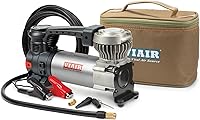
The Airmoto carries an internal rechargeable battery. The VIAIR 88P and EVC88P draw power through clamps attached directly to a 12V vehicle battery.
“Corded” also covers other designs, including pumps that connect to a vehicle outlet or household power. Neither VIAIR model here uses a dashboard outlet, so don't buy one expecting to plug it in beside the driver's seat.
Direct vehicle power removes the need to recharge the inflator itself. It doesn't remove heat limits, hose-reach limits or the need for a suitable power connection.
Cordless vs corded tire inflator setup: what matters most?
Choose the setup you can prepare and use comfortably in your normal parking spot. Think through the whole job before choosing by size alone.
Cordless suits a driver who parks in a tight space, maintains bicycles away from the car or dislikes routing cables. Battery clamps suit someone who can open the hood, identify the correct connection points and arrange the hose safely.
If your vehicle has covered or remote battery connections, check its manual before choosing a clamp-powered pump. Don't assume every accessible metal point is an approved connection.
Which power source suits your tires and workload?
Choose by tire size, target pressure and the amount of air missing. A small pressure correction and a nearly empty tire ask very different things of a pump.
Airmoto says a full charge can top up 4 standard car tires from 28 to 35 PSI. It gives about 3 to 5 minutes for that single-tire adjustment, with results varying by tire size, weather and charge level.
Treat that example as a planning reference for routine upkeep. It isn't a promise that one charge will handle several larger tires or repeated fills from empty.
Both VIAIR models support tires up to 33 inches and have a 1.47 CFM free-flow rate. Their 25-minute duty cycle at 30 PSI is an operating limit to follow, not permission for unlimited running at every pressure.
All 3 pumps have a 120 PSI maximum. That number describes a pressure ceiling; it doesn't mean they move the same amount of air or finish the same job equally quickly.
For larger vehicles, start with our truck and SUV tire inflator guide. If your vehicle has high-pressure or heavy-load tires, use the truck and RV inflator sizing guide before choosing either power source.
Which model should you buy, and who should skip it?
Choose the Airmoto for small routine jobs, the 88P for manual vehicle-powered inflation, or the EVC88P for vehicle power with preset stopping. These are different fits rather than a single upgrade path.
Airmoto: for drivers who keep a small pump charged
The Airmoto fits drivers who want easy movement between tires and modest storage needs. It also includes Presta, needle and general adapters for compatible bicycle tires, sports balls and small inflatables.
Skip it if your main job involves heavy-load tires or large-volume items such as paddle boards and air mattresses. Airmoto excludes those uses, and a small rechargeable pump is a poor choice for work beyond its intended scope.
Its convenience also depends on your habits. If you routinely forget to recharge portable devices, vehicle power may fit your routine better.
VIAIR 88P: for drivers comfortable watching a gauge
The 88P suits car, SUV and truck owners who want direct vehicle power and straightforward manual controls. Its on/off switch and built-in gauge keep the process simple, provided you stay close and stop at the correct pressure.
Skip it if preset shutoff is a firm requirement. Also skip a clamp-powered model if your normal parking location doesn't allow safe battery access and outdoor engine operation.
VIAIR EVC88P: for drivers who want a preset target
The EVC88P suits drivers who want to enter a target pressure and let the pump stop there. It combines a digital gauge with battery-clamp power, so choosing automatic controls doesn't require choosing cordless.
Skip it if your main goal is eliminating setup around the hood. Its digital controls simplify pressure selection, but the vehicle connection still needs your attention.
For alternatives across both formats, see best portable tire inflators for cars, trucks and SUVs.
How do you set up either type correctly?
Start with the vehicle's recommended cold tire pressure and a safe place to work. Find the target on the tire placard or in the owner's manual, rather than using the sidewall maximum as your setting.
Check tires before driving when possible. If you have just driven, don't bleed a warm tire down to the cold-pressure target simply because the reading is higher.
Our guide to what PSI your car tires should be explains how to find the correct setting. Front and rear targets may differ, so check both.
Setting up the cordless Airmoto
Check the charge, choose the correct pressure unit and remove the valve cap. Connect the hose securely, set the target and start the pump.
Place the unit where the hose reaches without pulling sideways on the valve stem. Don't leave it hanging by the hose or block its ventilation while it runs.
Stay nearby until it stops, then check the pressure and replace the cap. Keep small adapters together so you can find them when switching between a car tire and a bicycle valve.
Setting up the battery-clamp VIAIR models
Park outdoors, secure the vehicle and follow the vehicle and inflator manuals for battery connections. Keep the compressor stable and route the cable and hose away from belts, fans and hot engine parts.
The operating sequence calls for connecting the clamps, starting the engine and attaching the tire chuck. Use the 88P's switch while watching its gauge, or set the EVC88P's digital target.
Never run the engine in a garage or another enclosed area. Once inflation is complete, switch the pump off and follow the manual's shutdown and disconnection steps.
For the full process, see how to use a portable tire inflator. If roadside space is unsafe, arrange help instead of setting up beside moving traffic.
Does automatic shutoff make a pump easier to use?
Preset shutoff reduces manual stopping, especially when you repeat the same pressure adjustment across several tires. It doesn't make the pump suitable for unattended use.
The Airmoto and EVC88P stop at a selected target. The manual 88P requires you to watch its gauge and switch it off yourself.
A preset also needs the right unit and number. Confusing PSI with another pressure unit can produce the wrong target even when the pump works correctly.
After inflation, check the tire with a separate gauge if a reading seems wrong. A poor hose connection or escaping air needs attention before you rely on the final pressure.
How do storage, charging and care compare?
Choose a complete kit you can store securely and keep ready. A pump left at home or buried beneath cargo won't help with an unexpected pressure warning.
The Airmoto measures 6.1 x 2.4 x 1.59 inches and weighs 1.2 pounds. Its hose stores inside the body, and a pouch keeps the unit and accessories together.
Each VIAIR compressor measures 9.8 x 3.2 x 5.6 inches and weighs about 4.8 pounds. The included carry bag also needs to hold a 16 ft hose, 10 ft power cord and clamps.
That extra reach helps around a vehicle, but lay out the kit before you need it. Confirm that the hose reaches the farthest valve from a safe compressor position.
Airmoto's 2,000 mAh battery takes about 90 minutes to charge from empty using its included USB-C cable. Plan charging before a trip rather than expecting an empty pump to be ready immediately.
Read how long a cordless tire inflator battery lasts for runtime planning. Our guide to whether cordless tire inflators are worth it helps weigh convenience against charging upkeep.
For either type, let hot parts cool before packing the kit away. Check the hose, chuck, cable and connectors for damage, keep them clean and dry, and follow the manual's storage-temperature limits.
What common mistakes should you avoid?
Avoid choosing by maximum PSI alone and treating an inflator as a tire repair. Good pressure control starts with matching the pump to the task.
- Ignoring lost air: If a tire repeatedly loses pressure, find the cause rather than making frequent top-offs your long-term plan.
- Expecting instant inflation: A nearly empty tire needs much more air than a small pressure correction.
- Skipping cooling instructions: Vehicle power doesn't protect a compressor from heat buildup.
- Pulling on the valve: Reposition the pump or hose instead of forcing a tight connection.
- Forgetting battery readiness: Cold weather can reduce cordless battery performance, so check charge before winter travel.
- Leaving the pump unattended: Preset stopping still requires the correct setting, a sound connection and supervision.
For seasonal pressure changes, read why the tire pressure light comes on in cold weather. If the pump won't start, follow our tire inflator troubleshooting guide rather than repeatedly switching it on.
Cordless vs corded tire inflator: make the final choice
Pick the Airmoto if you mainly correct car-tire pressure, value small storage and will keep it charged. Choose the VIAIR 88P for manual control or the EVC88P for preset stopping when your tires fit their limits and battery-clamp setup suits your vehicle.
Before ordering, make one final check: your largest tire, recommended pressure, battery access and storage spot should all match the pump. If any of those don't fit, change the model rather than planning to work around its limits.
For a wider cordless vs corded tire inflator shortlist, compare the best cordless tire inflators with the best 12V tire inflators.
Frequently asked questions
Is a cordless or 12V tire inflator better?
Choose cordless for routine top-offs if you can keep the pump charged; choose a suitable 12V model for larger tires or jobs where stored battery charge is a concern. The VIAIR models here use battery clamps, so you also need accessible terminals and a safe outdoor place to run the engine.
Can a cordless tire inflator fill a flat tire?
Airmoto says a full charge can inflate 1 empty standard car tire under optimal conditions, with results varying by tire size, weather and charge level. That capacity doesn't make a damaged tire safe: inspect the cause of the flat and arrange help if the tire cannot safely hold air.
Do 12V tire inflators plug into a car outlet?
Some do, but both VIAIR models in this comparison connect directly to the vehicle battery with clamps; their operating instructions call for a running engine, so check battery access before buying and use them outdoors. A dashboard-outlet connection and a battery-clamp connection are different setups.
Which tire inflator is easier to store?
The Airmoto is easier to fit into a small storage space because its hose stores inside its compact body; both VIAIR models include carry bags, but you need room for the compressor, hose, power cord and clamps. Choose a space where the complete kit stays secure and accessible.
Should you keep a cordless inflator charged?
Yes, check its charge before a planned top-off or road trip, and follow the charging and storage directions in its manual. Airmoto recommends a full charge before every use, while cold weather and larger or higher-pressure tires can reduce how much inflation you get from that charge.