What PSI Should My Car Tires Be?
Use the vehicle maker's recommended cold pressure to decide what PSI your car tires need. Find it on the driver-side doorjamb placard or in the owner's manual, and follow any separate front and rear targets.
On this page (9 sections)
- What PSI for car tires is right for your vehicle?
- How do you check car tire pressure accurately?
- Which inflator suits battery-clamp use and larger tires?
- How do you add or release air to reach the target?
- Which inflator works at home and from a car socket?
- Should you change tire pressure in cold weather or after driving?
- Which inflator suits quick top-ups away from home?
- What should you do if the pressure light comes on?
- How should you choose an inflator and set your car tire PSI?
The right PSI for car tires is the vehicle maker's recommended cold pressure, found on the driver-side doorjamb placard or in the owner's manual. Use that target rather than the maximum pressure molded on the tire.
If you're wondering what PSI your car tires need, start with your own vehicle's instructions. Front and rear targets can differ, and some vehicles specify another setting for heavier loads.
What PSI for car tires is right for your vehicle?
Set each tire to the cold pressure specified for its position and load. Don't copy another car's setting, even if its tires look similar.
Read the pressure row alongside the tire size and front or rear label. If your manual gives normal-load and full-load settings, choose the one that matches your trip.
Adding air doesn't increase the vehicle's permitted load. Stay within its passenger and cargo limits even when you follow a full-load pressure recommendation.
Check the spare separately because it may need a different pressure. Don't copy the road tires' target onto a temporary spare.
Where do you find the recommended PSI for car tires?
The driver-side doorjamb placard is the first place to look. The owner's manual can explain load settings, spare requirements, and any special instructions.
If the placard is missing or unreadable, ask the vehicle maker to confirm the target. Don't guess from a number saved in an inflator's car preset.
Different-size replacement tires or a changed load requirement may need professional guidance. For a straightforward replacement in the original size and specification, follow the vehicle's instructions.
Why isn't the tire sidewall PSI the right target?
The sidewall pressure is a tire limit, not your car's everyday setting. The vehicle recommendation accounts for the car and its intended use.
Don't inflate to the sidewall maximum simply because it's the easiest number to find. Excess pressure can change ride and handling, while too little pressure can cause excess heat and tire damage.
How do you check car tire pressure accurately?
Measure with a pressure gauge when the tires are cold, ideally before the day's first drive. For a cold reading, leave the vehicle parked for at least 3 hours.
Remove the valve cap and press the gauge squarely onto the valve stem. A continuing hiss means the connection isn't sealed, so reposition it and take another reading.
Check all 4 tires and record each result against its target. A tire can look normal while needing air, so appearance isn't a useful pressure gauge.
Keep the units consistent: a PSI target needs a PSI reading. Don't confuse a display in bar or kPa with the number on the placard.
If a reading seems unlikely, repeat it with the connection reseated, then compare with another trusted gauge. Our guide to tire inflators with a digital gauge explains which controls help with routine checks.
Which inflator suits battery-clamp use and larger tires?
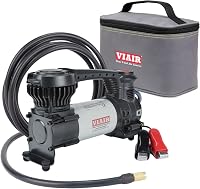
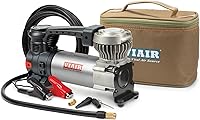
The VIAIR EVC88P suits drivers who accept an under-hood connection and want hose reach for tires up to 33 inches. Skip it if you want power from a cabin socket or a cordless unit.
Its 16-foot air hose and 10-foot power cord give you room to reach around the vehicle. Check the route to the farthest wheel before starting, keeping the hose away from hot parts and moving components.
VIAIR's setup calls for connecting the clamps to the 12V vehicle battery, starting the engine, attaching the brass twist-on chuck, and setting the target. Follow its connection instructions and run the engine only in an open, well-ventilated area.
The unit has a 120 PSI maximum and a stated 25-minute duty cycle at 30 PSI. Follow its cooling guidance during longer jobs; those figures aren't instructions to inflate your car to that pressure or run continuously under every condition.
How do you add or release air to reach the target?
Attach the hose securely, set the correct target, and stay nearby while the tire fills. Automatic shutoff helps control the process, but you still need to enter the right number.
Use this routine for each cold tire:
- Read its current pressure before adding air.
- Select PSI on the inflator and enter the vehicle's target.
- Attach the chuck so it seals without a steady hiss.
- Inflate, then stop the pump before checking the final reading.
- Release a little air if needed, measure again, and replace the valve cap.
Avoid repeated hose removal while filling, since each disconnection can release air. If you overshoot, use a gauge with a bleed function or a suitable valve tool to release small amounts.
Our portable tire inflator guide compares units for vehicle storage. For a fuller setup walkthrough, read how to use a portable tire inflator.
Which inflator works at home and from a car socket?
The Craftsman Dual Power Inflator suits drivers who want one unit for a garage outlet and a vehicle's accessory socket. Skip it if you need inflation without a connected power source.
It runs from a 120V home outlet or a 12V car plug, with a digital gauge and automatic shutoff. At home, outlet power avoids arranging the car around an under-hood connection.
Its 29-inch hose makes placement worth checking, especially when a valve sits near the top of a wheel. Set the unit on a stable surface without pulling against the valve stem.
Check your vehicle socket's electrical limits before use, and select the actual tire target rather than accepting a preset unchanged. For more socket-powered choices, see our best 12V tire inflators.
Should you change tire pressure in cold weather or after driving?
Keep the same recommended cold target unless your vehicle's instructions say otherwise. Cooler weather can lower pressure enough that you need to add air to restore it.
Don't add extra PSI as a winter buffer. Check after sharp temperature changes and before a long trip, particularly if the car has sat unused.
Driving warms the tires and raises their pressure. Don't bleed a warm tire down to the cold target, since it may then be underinflated after cooling.
If a warm tire needs air urgently, follow the vehicle manual's guidance and check again when cold. Our guide to the tire pressure light in cold weather explains why a warning can appear after an overnight drop.
Which inflator suits quick top-ups away from home?
The DeWalt 12V Digital Inflator suits drivers who want cordless access with a car-plug alternative. Skip it if you don't want to maintain a rechargeable battery or need a unit chosen specifically for repeated large-tire fills.
It has a built-in 2600mAh battery, a 12V accessory-plug option, and a digital gauge with automatic shutoff. This is a built-in battery design, so don't buy it expecting to attach a removable DeWalt tool battery.
The stated charge time is 6 hours, so charge ahead of trips rather than waiting for a low tire. Check the battery periodically during storage, keep the included cord with the unit, and leave cooling vents clear during use.
A 150 PSI maximum describes pressure capability, not how many tires one charge will fill. For help deciding whether charging fits your routine, read are cordless tire inflators worth it?.
What should you do if the pressure light comes on?
Stop safely and check every tire with a gauge. A warning needs attention even if the car still feels normal.
Look for visible damage before adding air. A bulge, exposed cord, severe pressure loss, or a tire that won't hold air calls for roadside help or professional inspection.
A tire that repeatedly drops below its target may have a puncture, valve leak, or wheel sealing problem. Repeated top-ups don't repair the cause.
After correcting pressure, follow the owner's manual for the warning system. Don't reset it merely to hide a warning, and don't use the light as a replacement for monthly gauge checks.
How should you choose an inflator and set your car tire PSI?
Choose VIAIR for battery-clamp use and longer hose reach, Craftsman for home-outlet and car-socket use, or DeWalt for cordless top-ups with a car-plug alternative. Power access is the clearest difference for this routine.
For what PSI to use for car tires, the decision comes from the vehicle placard, not the inflator's maximum or its default car mode. Enter the correct target, measure cold, and arrange an inspection if one tire keeps losing pressure.
Before buying, check that the hose and power lead will reach every wheel from your intended power source. Our guide to how to choose a tire inflator covers the other features worth comparing.
Keep the unit secured in its bag, avoid trapping or sharply bending the hose, and inspect cords and connectors before use. For your next pressure check, follow the steps for using a portable tire inflator.
Frequently asked questions
What PSI should my car tires be?
Use the cold tire pressure on your vehicle's doorjamb placard or in its owner's manual. There is no single correct PSI for every car, and front and rear targets can differ; check each tire before driving, and follow any separate guidance for heavier loads or the spare.
Should I use the PSI printed on the tire?
No, use your vehicle's recommended cold pressure rather than the maximum pressure molded on the tire sidewall. The sidewall number describes a tire limit, not the correct everyday setting for your car; if you changed tire size or load requirements, ask a qualified tire professional to confirm the target.
Do tires need more PSI in cold weather?
Add air only as needed to reach the vehicle maker's recommended cold pressure, without adding a winter buffer. Cooler temperatures can lower the reading, so check again after a weather change; don't release air from warm tires just because their pressure is above the cold target.
How often should I check car tire pressure?
Check at least once a month and before long trips, with the tires cold. Also check after a sharp temperature change or a pressure warning, and include the spare where accessible; a tire that repeatedly loses pressure needs inspection rather than a place on your regular top-up schedule.