Best Portable Tire Inflators for Cars, Trucks and SUVs
The VIAIR 88P 12V Compressor is the best portable tire inflator here for drivers who want vehicle-powered inflation for tires up to 33 in. Choose Airmoto for compact cordless top-offs, ETENWOLF Vortex S6 for repeated truck-tire inflation, or Fanttik X10 APEX for inflation with phone charging.
On this page (9 sections)
- Which is the best portable tire inflator for your needs?
- How do you match an inflator to your vehicle?
- Should you choose battery clamps or a cordless inflator?
- Which specifications and features deserve attention?
- How do you set up a portable tire inflator correctly?
- What mistakes should you avoid when inflating tires?
- How do you store and care for a portable tire inflator?
- When is a portable tire inflator the wrong choice?
- Which portable tire inflator should you buy?
The VIAIR 88P 12V Compressor is the best portable tire inflator here for drivers who want vehicle-powered inflation and have tires up to 33 in. Choose a cordless pump instead if easy setup matters more than avoiding a rechargeable battery.
For occasional car-tire top-offs, Airmoto offers the smallest body of these choices. The ETENWOLF Vortex S6 suits repeated work on larger tires, while the Fanttik X10 APEX adds phone-charging features to a cordless inflator.
The right choice starts with the job you expect to do. Adding a few PSI to a commuter car is different from refilling several truck tires after a trail drive.
If you're comparing cordless options in more depth, see our best cordless tire inflators guide. For a direct-power setup, our best 12V tire inflators roundup focuses on plug-in and vehicle-powered models.
Which is the best portable tire inflator for your needs?
Choose VIAIR for direct vehicle power, Airmoto for compact top-offs, ETENWOLF for repeated truck-tire inflation, and Fanttik for inflation plus phone charging. Match that starting point to your tire size and how you plan to store and power the pump.
ElegantEasel compared power connections, tire-size guidance, operating limits and everyday features. The scores reflect those differences, with the highest-scoring option first.
| Product | Best for | Our score |
|---|---|---|
| VIAIR 88P 12V Compressor | 9.2 | |
| Airmoto Tire Inflator | 8.8 | |
| ETENWOLF Vortex S6 | 8.7 | |
| Fanttik X10 APEX | 8.0 |
VIAIR 88P: best portable tire inflator for vehicle-powered use
Best for road-trip drivers.
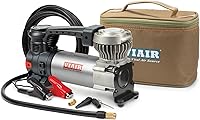
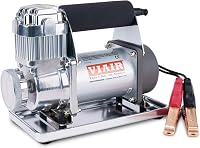
The VIAIR 88P suits drivers who want a compressor that draws power from the vehicle battery. It avoids a separate inflator battery to recharge, making it a useful choice for people who prefer a vehicle-based emergency kit.
Its 10 ft power cord works with the hose to give you room to position the compressor. Before buying, consider the path from your battery compartment to the farthest wheel, including any trailer or spare tire you expect to reach.
The compressor has a 120 PSI maximum working pressure, a built-in gauge and a simple on/off switch. You watch the pressure and stop inflation yourself, so it suits someone comfortable staying beside the pump throughout the fill.
VIAIR specifies 1.47 CFM free-flow output and a 25-minute duty cycle at 30 PSI. Follow its instructions for run time and cooling rather than treating that figure as permission to run continuously under every load.
At about 4.8 lb, it comes with a carry bag, LED work light, 3 inflation tips and a Presta adapter. Keep those small parts together so the pump remains useful for a bicycle or ball as well as vehicle tires.
Skip it if battery access is awkward, your vehicle manual restricts this type of connection, or you want preset automatic shutoff. A cordless option is easier to move between tires without routing a power cord.
For more truck-focused choices, see our heavy-duty tire inflators for trucks and SUVs guide.
Airmoto Tire Inflator: compact help for routine top-offs
Best for occasional car top-offs.
Airmoto suits drivers who want a small cordless pump for routine pressure checks and modest refills. Its 6.1 x 2.4 x 1.59 in body and 1.2 lb weight make it easier to fit into a small storage space than the larger cordless choices here.
You set the target with the plus and minus buttons, then start inflation. Automatic shutoff, a digital gauge and a deflate button help with small pressure adjustments, while the flashlight helps you find the valve in low light.
Airmoto says a full charge can top up 4 standard car tires from 28 to 35 PSI, with each top-off taking about 3 to 5 minutes. Tire size, temperature and battery charge affect those examples, so leave extra capacity for unexpected work.
The pump has a 2,000 mAh battery, USB-C charging and a 120 PSI maximum pressure. Airmoto gives about 90 minutes for a full recharge and recommends charging fully before use.
The hose stores inside the body, and the included adapters cover Schrader valves, Presta valves, sports balls and small compatible inflatables. Its short hose makes valve position worth checking so you can support the pump without pulling on the stem.
Skip Airmoto for heavy-load tires or large-volume inflatables, which the brand excludes. It fits a commuter's occasional top-off routine better than a plan to refill several large, deeply deflated tires.
For more detail on charge planning, see how long an Airmoto battery lasts.
ETENWOLF Vortex S6: cordless capacity for larger jobs
Best for truck tire refills.
The ETENWOLF Vortex S6 suits drivers who expect several larger tires to need air in one session. Its dual-cylinder design, dedicated cooling system and 19,200 mAh battery make repeated inflation its main reason to buy.
ETENWOLF says it can top up 18 F-150 tires sized 245/70 R17 from 30 to 35 PSI on a full charge. The brand also gives a 1-minute example for adding that pressure to a 31 in tire.
For a larger refill, ETENWOLF specifies a 100% duty cycle and says the S6 can inflate 4 of those F-150 tires from 0 to 35 PSI without breaks. Those are defined examples, so match them to your tires rather than extending them to every truck or RV.
The S6 has a 160 PSI maximum, 1.5 CFM airflow at 0 PSI and stated gauge accuracy of plus or minus 1 PSI. Automatic stop, 7 preset modes and pressure memory reduce the controls you need to adjust for familiar tasks.
A 45W two-way USB-C port supports charging and device power, and a charger is included. The 1,000-lumen light can also serve as a camping lantern.
Skip it if small storage size is your main goal. At 6 lb and 11.8 x 5.5 x 9.45 in, it asks for more space than a compact car top-off pump.
It can also inflate pool floats and air mattresses, but ETENWOLF excludes stand-up paddleboards. That broader use can matter for camping, provided you keep enough charge available for tires.
Fanttik X10 APEX: tire inflation with phone charging
Best for connected road trips.
The Fanttik X10 APEX suits drivers who want a cordless inflator and convenient phone charging in one unit. Its retractable charging cable is useful when a separate cable might otherwise get left behind.
Fanttik says it can take a 195/55 R15 tire from 28 to 33 PSI in 35 seconds. For a 265/70 R17 pickup tire, the brand gives 1 minute 16 seconds from 30 to 35 PSI.
Those examples help define its role as a top-off tool for cars and pickups. They do not tell you how long a full refill will take or how many large tires you can refill without recharging.
Fanttik says the battery can inflate 6 car tires sized 195/55 R15 per charge, but does not specify the pressure change for that figure. Use the timed examples to judge top-off speed, and avoid building a full-flat recovery plan around the tire-count claim.
The X10 APEX has preset automatic shutoff, a color display, a 200-lumen work light and a 150 PSI maximum. It weighs about 1.39 kg and includes a storage pouch, hose, Presta adapter and ball needle.
The retractable phone-charging cable extends 29.5 in, and the unit supports 27W bidirectional charging. Reserve battery capacity for inflation before using it to charge other devices.
Skip it if phone charging adds little value to your kit. For repeated larger-tire work, the S6 provides more specific multi-tire operating examples.
How do you match an inflator to your vehicle?
Match tire size, cold pressure and the amount of air you expect to add before comparing convenience features. Maximum PSI is only one part of that choice.
Write down your tire size and the recommended pressures before shopping. Include your spare if you want the pump to cover it, since a temporary spare can have a different pressure requirement.
Start with cold tire pressure and load instructions
Use the vehicle's tire information placard or owner's manual for the correct target. Front and rear pressures may differ, and some vehicles give separate instructions for heavier loads.
Cold pressure generally means checking before driving or after the tires have rested for several hours. Pressure rises as tires warm, so avoid bleeding a warm tire down to the cold target simply because the reading is higher.
For help finding and reading the target, see what PSI your car tires should be.
Separate a top-off from a substantial refill
A top-off replaces a small amount of missing air. A substantial refill asks the compressor to move much more air, uses more battery or run time, and creates more heat.
Think about the likely job at home and the hardest job you expect away from home. Someone checking a sedan monthly has different needs from someone airing down truck tires for suitable off-road conditions.
If all 4 tires may need a large refill, choose around that workload. A pocket-size body is less useful if it leaves you waiting to recharge partway through the task.
Check tire volume as well as maximum PSI
A large tire needs more air than a small tire at the same pressure. A pump's pressure ceiling does not tell you whether it is well suited to that volume.
Look for an example close to your tire size, starting pressure and target pressure. A passenger-car top-off is a poor basis for judging a high-pressure RV tire.
Do not assume a product described for trucks covers every truck configuration. Confirm suitability for your actual tire and use, especially with larger tires or higher pressure needs.
Should you choose battery clamps or a cordless inflator?
Choose battery clamps for direct vehicle power and cordless for easier movement and setup. The better option is the one you can power and connect confidently when a tire needs air.
Battery-clamp operation avoids keeping a separate inflator battery charged. It still depends on a suitable vehicle power source, correct clamp connections and following both the vehicle and compressor instructions.
Cordless operation removes the power cable running back to the vehicle. You can carry the pump to each wheel or bicycle, but readiness depends on its charge and storage conditions.
Check battery access before choosing clamps
Find the approved connection points in your vehicle manual. Do not assume the battery terminals are easy to reach or that visible terminals are approved for powering accessories.
This matters with covered batteries, remote connection points, EVs and hybrids. Never connect a compressor to high-voltage components, and follow vehicle-specific instructions for any low-voltage connection.
The VIAIR's operating steps call for starting the engine. Use that setup outdoors, with cables and hoses kept away from moving or hot parts.
Treat cordless charge as part of vehicle care
A cordless inflator needs a charging routine, just as a flashlight needs working batteries. Check it before long trips and after any inflation session that uses a meaningful amount of charge.
Cold conditions can reduce battery performance, while larger pressure changes use more energy. A pump left untouched for months may not have the reserve you expect.
Phone charging also draws from that reserve. If tire inflation is the main reason you carry the unit, charge your phone elsewhere when practical.
Which specifications and features deserve attention?
Prioritize useful inflation capacity, operating limits, a readable gauge and a secure connection. Lights, storage and charging extras matter after the pump fits your tires.
A long feature list cannot compensate for a pump that is awkward to connect or too small for the amount of air you need.
Compare inflation times under similar conditions
A useful time comparison needs the same tire size and pressure change. Adding 5 PSI to a small car tire is different from adding 5 PSI to a pickup tire.
Also separate top-off times from empty-to-full times. A quick top-off claim does not describe the work needed to fill a deeply deflated tire.
The examples for these pumps use different tires and pressure changes. Use them to identify the kind of job each brand describes, rather than declaring a speed winner from unlike figures.
Read airflow and duty cycle together
Airflow describes how much air a pump moves under stated conditions. Free-flow output is measured without tire back pressure, so delivery can change as pressure rises.
Duty cycle describes operating limits under defined conditions. Read the manual for required rest periods and any limits tied to pressure or temperature.
A bigger battery does not remove those limits. Likewise, direct vehicle power does not mean a compressor can run indefinitely.
Choose controls you can read beside the wheel
A clear gauge and simple pressure controls are useful when you are crouching near a tire valve. Confirm the selected unit before entering a target, especially if the pump switches among PSI, bar and kPa.
Automatic shutoff helps prevent overshooting the number you entered. It cannot correct the wrong target, a poor connection or an incorrect pressure unit.
For a closer look at display and control options, see our tire inflators with a digital gauge guide.
Check hose reach and valve position
Think about where the pump will sit when the valve is near the top of the wheel. The hose should reach without pulling the pump into the air or straining the valve stem.
Long hoses help with positioning but take more space to pack. Short hoses keep a kit small, though you may need to move the vehicle slightly or support the inflator to make a comfortable connection.
A light helps you see the valve and controls. It does not make an unsafe roadside location suitable for inflation.
How do you set up a portable tire inflator correctly?
Start with a safe location, the correct cold-pressure target and a secure hose connection. Then follow the operating sequence for your pump and its power source.
Read the manual before the first time you need the inflator. Learning the controls at home is easier than figuring them out beside a low tire in poor light.
1. Park safely and inspect the tire
Park on firm, level ground, apply the parking brake and keep clear of traffic. If reaching the tire puts you in a traffic lane or another unsafe position, arrange roadside help.
Check for obvious cuts, bulges, a tire coming off the rim or signs of severe damage. A compressor is for adding air to a suitable tire, not making damaged rubber safe.
Find the correct pressure for that wheel before removing the valve cap. Put the cap somewhere secure so it does not roll away.
2. Position the pump and connect its power
Place the inflator on a stable surface with its vents clear. Keep the hose away from sharp edges and leave space around parts that may become hot.
For a cordless model, check its charge and select the tire mode if the instructions call for it. Do not assume a saved preset matches the tire you are filling.
For the VIAIR, follow the specified clamp connection, engine-start and hose-attachment sequence. Identify polarity carefully and keep cords clear of belts, fans and hot engine parts.
3. Attach the chuck without straining the valve
Fit the chuck straight onto the valve stem and secure it as directed. A brief hiss during attachment can happen, but continued hissing suggests a poor seal.
Stop and reconnect if air keeps escaping. Do not compensate for a leak by running the compressor longer.
Read the starting pressure, check the unit and enter the target if the pump supports presets. Keep the body supported throughout inflation.
4. Stay nearby and check the final pressure
Watch the pump during operation, even with automatic shutoff. Stop if the hose disconnects, a fault appears or operation becomes abnormal.
With a manual pump, monitor the gauge and switch it off at the target. Recheck with a separate tire gauge when practical, especially if a reading seems unexpected.
Disconnect as the manual directs, replace the valve cap and check the other tires. Allow the equipment to cool before packing it away.
For the full process, read how to use a portable tire inflator. If the unit will not start, our guide to why a tire inflator won't turn on covers common checks.
What mistakes should you avoid when inflating tires?
Avoid the wrong pressure target, poor connections and workloads beyond the pump's limits. These mistakes can waste air, drain a battery or leave a tire incorrectly inflated.
Most are easy to prevent with a pressure check and a few minutes of preparation.
Using sidewall pressure as the everyday target
The maximum pressure on the tire sidewall is not your vehicle's recommended daily setting. Use the vehicle placard or manual for the correct cold pressure and load instructions.
Do not assume every wheel takes the same amount. Check front, rear and spare requirements separately.
Trusting a preset without checking it
A saved setting may belong to a different vehicle or an earlier task. Confirm both the target number and pressure unit each time.
Bicycle, ball and car modes are convenient starting points. The correct pressure still comes from the item or vehicle you are inflating.
Treating automatic shutoff as permission to walk away
Remain close enough to see the hose and controls. A loose chuck can let air escape while the pump continues working.
Stay clear of traffic and keep children away from the compressor. Hot components and loose cords deserve attention even during a short top-off.
Extending a claim beyond its stated conditions
A tire-per-charge figure based on modest top-offs does not promise the same count from empty. A maximum pressure figure does not promise quick inflation at that pressure.
Plan extra time and battery reserve for unfamiliar jobs. Follow operating limits rather than waiting for the pump to stop itself from heat.
Repeatedly adding air without finding the leak
A tire that keeps losing pressure needs inspection. Frequent refills may hide a puncture, valve problem or wheel leak without solving it.
If a tire has been driven while severely underinflated, have its condition assessed. Restoring pressure cannot reverse damage caused by driving on it.
How do you store and care for a portable tire inflator?
Store the inflator cool, dry and protected from movement, with its hose and adapters together. Follow the manual's storage and charging limits, especially for rechargeable models kept in a vehicle.
Let the compressor and hose cool before closing the pouch or bag. Avoid tight bends that kink the hose, and keep dirt out of the chuck and adapters.
Check the hose, cord and connections for wear before use. Stop using equipment with damaged insulation, cracked fittings or other visible faults.
Keep vents clear and clean the outside as the manual directs. Do not add oil or take the compressor apart unless its instructions call for that work.
Secure the kit so it cannot slide around the cabin or trunk. Store small adapters in a closed pocket so they are available when a bicycle or ball needs air.
Before a trip, check charge, cables and the presence of all needed parts. Carry a separate tire gauge when possible, since it gives you another way to confirm pressure.
When is a portable tire inflator the wrong choice?
A portable inflator is the wrong tool when the tire is damaged, the location is unsafe or the job exceeds the pump's intended use. In those cases, choose roadside help or equipment suited to the task.
An inflator cannot repair a puncture, reseat every tire or make a badly damaged tire safe. Stop if air escapes as quickly as you add it or the tire has visible structural damage.
Large-volume inflatables also need the right type of pump. A high-pressure tire inflator is not automatically a good match for an air mattress or paddleboard.
Check the specific exclusions for your chosen model. Adapters change the connection, not the compressor's capacity or intended workload.
For a truck or RV, compare tire size, pressure needs and the number of tires you may refill. Our truck and RV tire inflator size guide explains what to consider before choosing a compact model.
Continuous air-tool use is another separate job. A tire inflator should not be chosen as a substitute for a compressor designed around that workload.
Which portable tire inflator should you buy?
Buy the VIAIR 88P if direct vehicle power fits your setup and you are comfortable monitoring inflation yourself. It is the strongest starting point here for a vehicle-based kit with accessible battery connections.
Choose Airmoto if your usual job is adding a few PSI to car tires and small storage size matters most. Keep it charged and stay within its intended top-off role.
Pick the ETENWOLF Vortex S6 when repeated cordless inflation of larger tires is the priority. Give it the storage space its larger body needs, and compare its operating examples with your own tire size.
Choose the Fanttik X10 APEX if you value its display and retractable phone-charging cable alongside tire inflation. Reserve enough battery for the tires before sharing power with other devices.
The best portable tire inflator is the one that covers your likely refill job and stays ready between uses. Before ordering, confirm your pressure targets, storage space and power access, then use our cordless tire inflator guide if a rechargeable model fits your routine.
Frequently asked questions
What is the best portable tire inflator for most drivers?
The VIAIR 88P is the best portable tire inflator here for drivers who want vehicle-powered inflation and can access their battery terminals. Choose Airmoto instead for occasional cordless car top-offs, or ETENWOLF Vortex S6 when repeated inflation of larger tires matters more than compact storage.
Are cordless tire inflators good for cars?
Yes, cordless tire inflators suit routine car-tire top-offs when their capacity matches the job. Check tire-size examples, starting pressure and charging needs before choosing.
A small pump is easier to carry, while a larger battery can better suit several tires.
Keep the inflator charged before trips.
Should I choose a 12V tire inflator or a cordless model?
Choose cordless for quick setup without a power cable between the pump and vehicle. Choose a 12V battery-clamp model if you prefer direct vehicle power and can follow its connection steps.
Consider battery access, hose reach and operating limits, especially if you drive an EV or hybrid.
Can a portable tire inflator fill a completely flat tire?
Some can fill an intact flat tire, but adding air cannot repair damage or make every flat safe to drive on. Airmoto says it can inflate 1 standard car tire from empty on a full charge under optimal conditions.
Arrange help for visible damage, an unseated tire or continued air loss.
What tire pressure should I use with a portable inflator?
Use the recommended cold tire pressure on your vehicle's tire information placard or in its owner's manual. Front and rear targets may differ, and load can affect the instructions.
Do not use the tire sidewall maximum as your everyday target.
Check the selected pressure unit before starting inflation.