VIAIR 88P vs 300P: Which Compressor Fits You? (November 2026)
Pick the VIAIR 88P for most cars and light trucks because it weighs about 4.75 lb and is easier to carry. Pick the 300P for heavier tires and repeated fills, where its 2.30 CFM and 33% duty cycle do more work.
On this page (9 sections)
- VIAIR 88P vs 300P: which one should you buy?
- The two compressors side by side
- Pressure: why 120 vs 150 PSI matters
- Airflow and duty cycle: how fast and how long
- Portability and storage: weight and footprint
- Hose reach and gauge setup
- Which VIAIR compressor fits your vehicle?
- Where each compressor fits in your kit
- The verdict: 88P for most drivers, 300P for heavy-duty use
Pick the VIAIR 88P for most cars and light SUVs because it weighs about 4.75 lb and is simpler to carry. Pick the VIAIR 300P when you fill truck tires often or need longer run times; its 150 PSI ceiling and 2.30 CFM airflow do more work per minute.
The viair 88p vs 300p question comes down to how much air you need and how much weight you'll carry. Both are 12V compressors that clamp to your battery and inflate tires up to 33 inches.
The 88P is the lighter kit; the 300P is the heavier-duty one.

VIAIR 88P vs 300P: which one should you buy?
The 88P wins for most readers because its lighter weight and simpler kit make everyday tire fills easier. The 300P is the better choice when pressure and run time matter more than portability.
The 88P delivers up to 120 PSI and 1.47 CFM free flow. The 300P goes to 150 PSI and 2.30 CFM.
That gap shows up when you're filling a big truck tire or topping off several tires in one stop.
Weight separates them just as clearly. The 88P weighs about 4.75 lb and measures 9.8 x 3.2 x 5.6 inches.
The 300P weighs about 8.7 lb and measures 9 x 4.9 x 7.5 inches. For a glovebox or trunk kit you'll rarely notice the 88P; the 300P is closer to a small toolbox.
The electrical side differs too. The 88P draws up to 20 A at 276 watts with a 0.37 hp motor.
The 300P draws up to 30 A at 414 watts. That means the 300P asks more of your vehicle's charging system, which is another reason VIAIR wants the engine running for either unit.
Both units run off your vehicle's 12V battery through alligator clamps. The engine needs to be running during use.
Neither has its own battery, so you aren't charging one at home.
The two compressors side by side
The table below lines up the numbers that decide the choice: pressure, airflow, duty cycle, reach and weight. Read across each row to see which kit fits your vehicle.
| Spec | VIAIR 88P | VIAIR 300P |
|---|---|---|
| Max working pressure | 120 PSI | 150 PSI |
| Free flow | 1.47 CFM | 2.30 CFM |
| Duty cycle | 25 minutes at 30 PSI | 33% |
| Max tire size | 33 inches | 33 inches |
| Hose length | 16 ft | 25 ft |
| Power cord | 10 ft | 8 ft |
| Gauge | Built-in pressure gauge | 5-in-1 inflator/deflator inline gauge |
| Weight | About 4.75 lb | About 8.7 lb |
| Dimensions | 9.8 x 3.2 x 5.6 in | 9 x 4.9 x 7.5 in |
| Power source | 12V battery clamps | 12V battery clamps |
The first three rows carry most of the decision. Pressure sets the ceiling for what you can fill.
Airflow sets how fast you get there. Duty cycle sets how long the motor can run before it needs a break.
The 300P's 25 ft hose is a real advantage on a longer wheelbase, because you can reach all four tires without moving the vehicle. The 88P's 16 ft hose handles most cars and short SUVs from one clamp point.
Materials and body design round out the table. The 88P uses a mild steel body with a brass chuck, while the 300P lists an aluminum body.
The 300P's kit also includes an anti-vibration tray in its dual-compartment bag. Both carry the same one-year manufacturer defect warranty.
Pressure: why 120 vs 150 PSI matters
The 300P's 150 PSI ceiling gives it more room for heavy truck tires and higher inflation targets. The 88P's 120 PSI covers most passenger cars and many SUVs, but it leaves less headroom.
Tire pressure requirements vary by vehicle. A light pickup might call for 35 PSI, while a heavier truck or trailer tire might call for 50 PSI or more.
Both compressors reach those everyday targets. The difference shows up when you're inflating from empty or working toward the upper end of the 88P's range.
A compressor working near its maximum pressure tends to run hotter and slower. The 300P's extra ceiling means a typical fill sits further below its limit.
If you drive a heavy truck or tow a trailer, that headroom matters.
For a sedan, a crossover or a Jeep with stock-size tires, 120 PSI is more than enough. You won't gain much from the 300P's extra pressure unless your tires or equipment call for it.
Our VIAIR 88P review covers how the 120 PSI kit performs in everyday use.
When the extra 30 PSI actually helps
The 300P's headroom earns its keep in three situations. The first is inflating a large tire from flat, where the compressor spends the whole fill near its working limit.
The second is a trailer or truck tire with a high placard pressure. The third is repeated fills in one session, where the motor has less recovery time.
On a standard passenger car, none of those situations apply. The 88P reaches normal car pressures without strain.
The extra ceiling only pays off when your tire sizes and pressures run high.
Airflow and duty cycle: how fast and how long
The 300P moves air faster and runs longer before cooling, which suits multi-tire fills and truck tires. The 88P's lower airflow and shorter duty cycle fit occasional top-offs on lighter vehicles.
Free flow measures how much air the compressor can move. The 88P lists 1.47 CFM, the 300P 2.30 CFM.
Higher free flow means less waiting when a tire is low, and less motor strain on bigger tires.
Duty cycle is the share of time a compressor can run before it needs to cool. The 88P's is 25 minutes at 30 PSI.
The 300P lists a 33% duty cycle. For a single tire top-off, both are fine.
For airing down and back up on an off-road trip, the 300P's longer run time keeps you moving.
VIAIR says the 88P fills a 225/60/18 tire in 50 seconds or less. That's a typical passenger-car size.
If your tires are larger or you're filling from very low pressure, expect more time from either unit. The 300P's 2.30 CFM shortens those longer fills, which is where the airflow gap shows up most.
If you're weighing a compressor against a garage tank unit, our tire inflator vs air compressor guide explains when a portable 12V kit is the smarter buy.
Portability and storage: weight and footprint
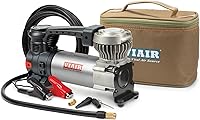
The 88P is the easier kit to carry and store, at about 4.75 lb in a compact carry bag. The 300P weighs about 8.7 lb and takes more trunk or shelf space.
Both come with a carry bag. The 88P's bag is a durable canvas case with a top handle.
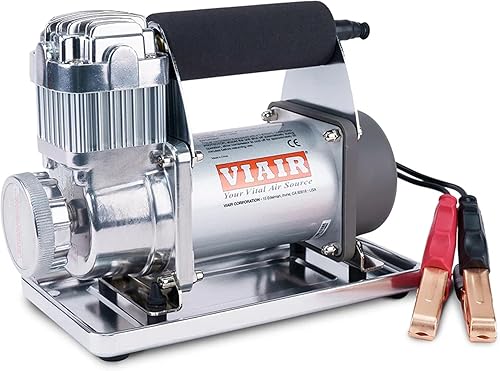
The 300P uses a deluxe dual-compartment bag with an anti-vibration tray. The 300P's extra bulk comes from the bigger motor and longer hose.
For a daily commuter car, the 88P fits in a trunk corner or under a seat. The 300P is better suited to a truck bed box, an SUV cargo area or a garage shelf where weight and size matter less.
If you switch vehicles or pack light for road trips, the 88P's weight is the deciding factor. If the compressor lives in one truck and rarely moves, the 300P's extra heft costs you little.
Hose reach and gauge setup
The 300P's 25 ft hose and inline 5-in-1 gauge suit long wheelbases and deflating for off-road use. The 88P's 16 ft hose and built-in gauge keep the kit simpler for cars.
The 88P includes a 16 ft air hose, a 10 ft power cord, a built-in pressure gauge, a solid brass twist-on tire chuck and an LED work light. The light helps when you're filling a tire at night or on a trail.
Its kit also packs three inflation tips and a Presta valve adapter, so you can top off bike tires and sports balls with the same unit.
The 300P includes a 25 ft hose with an inline 100 PSI gauge in a 5-in-1 inflator/deflator tool. That tool lets you deflate tires as well as fill them, which matters if you air down for sand or trails.
Its power cord is 8 ft.
The 88P's shorter power cord means you clamp closer to the battery. Its 16 ft hose still reaches around a typical car from one clamp point.
The 300P's longer hose gives more slack on a long truck or a trailer. On a long-wheelbase truck, the extra nine feet of hose can save you from rerouting the power cord around the body.
Neither gauge replaces a separate tire pressure gauge for precise checks. Use the built-in gauge to watch the fill, then confirm with a handheld gauge.
The 88P's gauge reads in PSI to its 120 PSI ceiling; the 300P's inline gauge tops out at 100 PSI. Our guide on tire pressure basics covers how to check and set pressure correctly.
The deflator edge for off-road use
The 5-in-1 tool is the one feature with no 88P equivalent. If you air down before sand, mud or rock trails, you need to let air out as well as put it back in.
The 300P's tool does both jobs in one hose. The 88P kit has inflation tips and an adapter but no dedicated deflator.
For a commuter car that never leaves pavement, that difference doesn't matter.
Which VIAIR compressor fits your vehicle?
Choose the 88P for cars, crossovers, SUVs and light Jeeps. Choose the 300P for heavy trucks, trailers and off-road rigs that see frequent airing sessions.
Vehicle weight and fill frequency decide more than brand loyalty.
If you drive a sedan or a small SUV and want a kit that lives in the trunk, the 88P is the natural pick. It's light, it reaches all four tires on most cars, and its 120 PSI ceiling covers normal passenger tire pressures.
If you drive a heavy pickup, tow a trailer or air down for trails, the 300P earns its extra weight. The 150 PSI ceiling and 2.30 CFM shorten fills, and the 33% duty cycle lets you work through several tires without long waits.
Its 30 A draw at full load also suits a truck's larger battery and alternator better than a compact car's.
If you own both a car and a truck, the 300P covers both. The 88P covers the car well but works harder on the truck.
Our roundup of the best VIAIR air compressors compares the wider lineup if you want more options.
Where each compressor fits in your kit
The 88P suits a minimal emergency kit; the 300P suits a truck or overland setup that already carries tools and gear. Match the compressor to the space and weight your vehicle can spare.
An emergency kit in a commuter car needs to be small and light. The 88P fits that role with its carry bag, LED light and built-in gauge.
You clamp it to the battery, start the engine, attach the chuck and watch the gauge.
A truck or overland build usually has room for a heavier kit. The 300P's dual-compartment bag keeps the hose and tool organized, and the 25 ft hose reaches trailer tires and distant wheels.
The 5-in-1 tool handles deflating for sand or soft ground.
If you're comparing cordless inflators for quick top-offs, our DeWalt vs Milwaukee tire inflator comparison covers battery-powered options that skip the clamp-on setup.
The verdict: 88P for most drivers, 300P for heavy-duty use
The VIAIR 88P is the better overall pick for most readers because it does everyday car and SUV tire fills at about half the weight. The VIAIR 300P is the right compressor for truck owners and off-road drivers who need 150 PSI and a longer duty cycle.
The viair 88p vs 300p decision is really about your vehicle and how often you fill tires. The 88P's 120 PSI, 1.47 CFM and 25-minute duty cycle cover normal passenger use.
It weighs about 4.75 lb, includes a built-in gauge and LED light, and stores easily in a trunk or under a seat.
The 300P's 150 PSI, 2.30 CFM and 33% duty cycle make it the stronger tool for heavy tires and multi-tire sessions. Its 25 ft hose and 5-in-1 inflator/deflator gauge add reach and versatility.
The cost is weight: about 8.7 lb versus 4.75 lb.
Pick the 88P if you drive a car, crossover or light SUV and want a kit you barely notice until you need it. Pick the 300P if you drive a truck, tow a trailer or air down for trails and want faster fills with less cooling downtime.
Both inflate tires up to 33 inches, so tire size alone won't decide it for many drivers.
If you're still unsure, start with the 88P for a daily driver. It's the lighter, simpler kit and the higher-scored pick here.
Move up to the 300P when your vehicle or your trips demand more air.
Frequently asked questions
Is the VIAIR 300P worth it over the 88P?
The 300P is worth it if you fill truck or SUV tires often or need longer run times. Its 150 PSI ceiling and 2.30 CFM beat the 88P's 120 PSI and 1.47 CFM, but you carry about 8.7 lb instead of 4.75 lb.
Which VIAIR compressor is better for a Jeep or truck?
The 300P fits truck and Jeep tires better because it reaches 150 PSI and runs a 33% duty cycle. The 88P tops out at 120 PSI and a 25-minute duty cycle at 30 PSI, so it's better suited to lighter vehicles.
Do both compressors need the engine running?
Both connect to the battery with alligator clamps, and VIAIR says the engine needs to be running during use. Plan to start the vehicle before you switch either compressor on.
What size tires can each VIAIR inflate?
Both are rated for tires up to 33 inches in overall diameter. That covers many car, SUV, Jeep and light truck tires, but the 300P's higher pressure ceiling gives it more headroom for heavier loads.
How long can each compressor run without cooling?
The 88P has a 25-minute duty cycle at 30 PSI. The 300P lists a 33% duty cycle, so it runs longer before it needs to cool.
Follow VIAIR's cooling guidance between fill sessions.