VIAIR 88P Portable Air Compressor Review: Worth It? (October 2026)
The VIAIR 88P suits drivers who want direct battery power and manual pressure control for compatible tires up to 33 inches. Choose the EVC88P for automatic shutoff, the Craftsman for home outlet power, or the EVC85P for accessory-outlet top-ups.
On this page (10 sections)
- The VIAIR 88P at a glance
- What does the VIAIR 88P include?
- How does the 88P compare with the digital EVC88P?
- Is the battery-clamp connection right for your car?
- How should you judge tire size, pressure and airflow?
- How useful are the hose and gauge?
- How do you set up and use the VIAIR 88P?
- What mistakes should you avoid, and how should you store it?
- What are the alternatives to the VIAIR 88P?
- Is the VIAIR 88P worth choosing?
The VIAIR 88P is a compact tire compressor for drivers who prefer direct battery power and manual control. Choose it for compatible car, truck or off-road tires if you're comfortable connecting clamps and watching a gauge throughout inflation.
The main buying decision is how you want to power the inflator and stop it. The digital EVC88P adds automatic stopping, while the Craftsman and EVC85P offer alternatives for drivers who prefer a plug connection.
The VIAIR 88P at a glance
The 88P suits occasional tire inflation with a vehicle nearby, rather than jobs that need continuous compressed air. Check tire size, required pressure and battery access before choosing it.
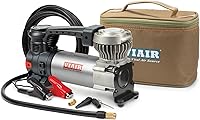
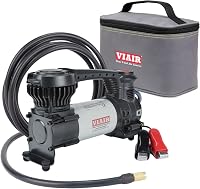
VIAIR 88P 12V Compressor: Best for manual tire top-ups

- 120 PSI maximum working pressure
- 16 ft air hose
- Built-in pressure gauge
- Battery-clamp power
Choose the 88P if you want to watch the gauge and control inflation with a simple switch. Its direct battery connection suits drivers comfortable setting up under the hood.
Pros
- Simple on/off control
- Long hose for reaching around a vehicle
- Brass twist-on chuck
- Carry bag and inflation adapters included
Cons
- Requires manual stopping at the target pressure
- Needs access to a compatible vehicle battery
- Requires cooling breaks according to operating conditions
| Detail | VIAIR 88P |
|---|---|
| Power | 12V vehicle battery clamps |
| Maximum working pressure | 120 PSI |
| Free-flow rate | 1.47 CFM |
| Duty cycle | 25 minutes at 30 PSI |
| Maximum supported tire size | Up to 33 in |
| Air hose | 16 ft |
| Power cord | 10 ft |
| Gauge | Built-in pressure gauge |
| Controls | On/off switch |
| Chuck | Solid brass twist-on tire chuck |
| Included accessories | LED work light, carry bag, 3 inflation tips, Presta valve adapter |
| Dimensions | 9.8 x 3.2 x 5.6 in |
| Weight | About 4.75 lb |
Who should choose the VIAIR 88P?
The VIAIR 88P fits drivers who want to manage each tire themselves. Its switch and gauge give you a direct routine: connect, inflate, check and stop.
It's also a sensible choice for a vehicle kit when you don't want another rechargeable battery to maintain. You still need a suitable vehicle battery connection and enough room to work safely.
Skip it if opening the hood feels like too much work for regular pressure checks. Choose a preset model if you'd rather enter a target than watch the pressure climb.
Our best 12V tire inflators guide compares other plug-in choices, and our VIAIR compressor guide covers more models from the brand.
What does the VIAIR 88P include?
The 88P includes the connections and accessories needed for compatible tire inflation, plus a bag to keep them together. The useful distinction is the long hose, which lets the compressor stay near its power source while you work farther away.
Before buying, think about where your battery sits relative to the farthest tire. Hose and cord lengths serve different purposes, so don't treat their combined length as guaranteed reach in every vehicle.
The brass twist-on chuck stays attached while you inflate. Start it straight by hand, avoid forcing the threads and reposition it if air escapes at the connection.
The Presta adapter helps with compatible bicycle valves, while the other tips support suitable balls and inflatables. Match both the connector and pressure needs to the item, and use short bursts for small items that fill quickly.
An inflator for tires isn't automatically the best tool for large, low-pressure inflatables or air tools. Our tire inflator versus air compressor guide explains how those jobs differ.
How does the 88P compare with the digital EVC88P?
Choose the 88P for manual control or the EVC88P for preset pressure. Their shared pressure capability, airflow, hose length and supported tire size make the controls the main difference.
The EVC88P lets you select a target and stops inflation when that pressure is reached. That suits routine maintenance when you want to repeat a known pressure across several tires.
Automatic shutoff still requires supervision. Stay nearby, watch for a loose connection and confirm the final pressure before moving to the next tire.
The manual 88P suits someone who prefers a switch over setting a digital target. It also makes sense when you're happy to pause inflation, check pressure and add a little more as needed.
Neither model uses a standard accessory plug. If that connection matters more than the control style, compare the best 12V tire inflators before settling on either one.
Is the battery-clamp connection right for your car?
Battery clamps work best when you have safe, straightforward access to a compatible 12V battery connection. Check this before buying, especially if the battery is covered, tucked away or difficult to reach.
Use the vehicle manual to identify approved connection points, then follow the compressor's instructions. Don't assume that every exposed terminal or remote jump point is suitable for powering an accessory.
The 88P calls for the engine to run during use. Operate outdoors, keep the vehicle secure and route the leads away from fans, belts and hot engine parts.
A battery-clamp inflator also isn't a cordless tool you can carry away from the car. For the practical differences, read our cordless versus battery-clamp inflator guide.
Skip this setup if you need an inflator mainly for bicycles stored far from your vehicle. A power source that's awkward to reach can turn a simple pressure check into a chore.
How should you judge tire size, pressure and airflow?
Choose by your tire's needs and the amount of air you expect to add, rather than maximum PSI alone. A pressure ceiling tells you the upper limit, not how quickly a compressor fills a particular tire.
The 88P's tire-size limit matters even when your normal pressure is well below its maximum. Larger tires hold more air, so replacing a small pressure loss takes more work than it does on a smaller tire.
Its free-flow figure describes airflow without tire back pressure. Don't turn that figure into a fill-time estimate for a loaded tire or compare it directly with airflow measured at a stated pressure.
The duty-cycle figure also has a stated pressure condition. It isn't permission to run for the same length of time under every load, temperature or starting pressure.
For occasional top-ups, focus on fit and convenient setup. If you regularly refill several heavily deflated tires, or service a truck or RV, use our truck and RV inflator sizing guide to assess the workload.
How useful are the hose and gauge?
The hose helps with reach, while the gauge helps you decide when to stop. Neither removes the need to plan where the compressor sits and check the final tire pressure.
Lay the hose out before switching on and keep it clear of traffic, sharp edges and places where it could be pinched. Leave enough slack at the valve so the hose doesn't pull sideways on the stem.
A valve near the top of a wheel can change where you need to place the compressor. Move the unit onto a stable surface rather than suspending it by the hose.
Follow VIAIR's instructions for reading the gauge, and check pressure with airflow stopped as directed. For other display and control options, see our guide to tire inflators with a gauge.
How do you set up and use the VIAIR 88P?
Start with the correct cold tire pressure and a safe place to work. The vehicle's door-jamb label or owner's manual gives the normal target; the maximum molded on the tire sidewall isn't your routine setting.
- Park securely outdoors and inspect the tire for obvious damage.
- With the compressor off, arrange the hose and leads so they reach without tension.
- Connect the battery clamps in the sequence specified by the vehicle and compressor instructions.
- Start the engine as directed, then attach the chuck squarely to the valve.
- Switch on and monitor pressure, pausing near the target to check the reading.
- Stop at the required pressure, verify it and replace the valve cap.
- Follow the required cooling and disconnection steps before packing away.
Check the spare when doing routine tire care, since its target pressure may differ from the road tires. Don't copy the front tire setting to every tire without checking the vehicle's guidance.
For more detail, read how to use a portable tire inflator and our guide to recommended car tire PSI.
What mistakes should you avoid, and how should you store it?
Avoid overinflation, forced connections and running beyond the operating limits. Most routine problems are easier to prevent with a careful setup than to correct after inflation starts.
Don't bleed air from a warm tire just to match its cold target. Recheck when the tires are cold, and follow the vehicle's guidance if you must adjust pressure during travel.
Don't keep adding air to a visibly damaged tire or treat repeated pressure loss as normal maintenance. An inflator replaces air; it doesn't repair the cause of a leak.
Avoid using one long session to work through several low tires without tracking run time. Follow the manual's cooling instructions, and stop if operation seems abnormal.
Let the compressor cool before putting it in the bag. Wipe away loose dirt, inspect the hose and leads for damage, and coil them loosely so storage doesn't strain the fittings.
Keep the adapters together and the kit dry. The maintenance-free motor doesn't remove the need to check external parts before use.
What are the alternatives to the VIAIR 88P?
The EVC88P is the closest substitute, while the Craftsman and EVC85P suit different power preferences. Choose the alternative that removes a real obstacle in your routine.
VIAIR EVC88P: for drivers who want preset inflation
Choose the EVC88P if you like the 88P's battery connection but want digital pressure control. Its automatic shutoff is useful when repeating known targets across several tires.
Skip it if battery access is the reason you're hesitating about the manual model. It retains that same setup requirement.
Craftsman Dual Power: for a shared garage and vehicle kit
Choose the Craftsman for 120V home outlet or 12V car plug power. You can handle garage inflation without connecting clamps under the hood, then use the vehicle connection on the road.
Its 29 in hose means the unit needs to sit close to the valve, and its housing takes more storage space than the 88P. Skip it if long hose reach and a smaller package are your priorities.
Confirm its pressure capability before choosing it for higher-pressure tires. For this comparison, its clear advantage is the choice of power sources.
VIAIR EVC85P: for routine car pressure checks
Choose the EVC85P if your tire needs fit within its 60 PSI maximum and you prefer an accessory-outlet connection. Its digital presets suit everyday top-ups without battery clamps.
Check that your vehicle outlet supports its 15 A requirement. The 3 ft hose also calls for moving the compressor near each wheel, so skip it if extended reach is central to your choice.
Is the VIAIR 88P worth choosing?
Choose the VIAIR 88P when manual inflation fits your routine, your tires meet its limits and battery access is easy. It's a practical match for someone willing to stay beside the tire and control the switch.
Choose the EVC88P when preset stopping matters most, the Craftsman for home outlet use, or the EVC85P for compatible accessory-outlet top-ups. Before ordering, check your power connection, farthest tire and storage space.
If your tires or workload fall outside this group, use our VIAIR compressor guide to find a better match.
Frequently asked questions
Does the VIAIR 88P shut off automatically?
No, the VIAIR 88P uses a manual switch, so you watch the built-in gauge and stop inflation at the target pressure. Stay beside it throughout use and check the final pressure after stopping; choose the digital EVC88P if you want preset pressure and automatic shutoff.
How does the VIAIR 88P connect to a vehicle?
The 88P connects directly to a compatible 12V vehicle battery with alligator clamps; check the vehicle and compressor manuals for suitable connection points and the correct sequence. Start the engine outdoors as directed, attach the tire chuck and keep the cables clear of belts, fans and hot parts.
What comes with the VIAIR 88P?
The VIAIR 88P kit includes a 16 ft air hose, 10 ft power cord, built-in pressure gauge, brass twist-on chuck, LED work light and carry bag. It also includes 3 inflation tips and a Presta valve adapter for compatible bicycles, sports balls and other inflation tasks.
Is the VIAIR 88P better than the digital EVC88P?
Choose the 88P for manual control and the EVC88P for preset inflation. Both use battery clamps and support tires up to 33 inches, so the digital model mainly changes how you manage pressure; neither choice removes the need to stay nearby and follow operating and cooling instructions.