DeWalt vs Milwaukee Tire Inflator: Which Should You Buy? (October 2026)
For a DeWalt vs Milwaukee tire inflator choice, pick DeWalt for mixed tire and inflatable jobs, Milwaukee M18 for an existing M18 tire-care kit, or Milwaukee M12 for compact car-tire storage.
On this page (9 sections)
- DeWalt vs Milwaukee tire inflator: which should you buy?
- Which power setup fits your garage or roadside kit?
- What do the pressure limits and speed claims mean?
- How do size, hose reach and accessories affect daily use?
- When does DeWalt's high-volume mode make a difference?
- How should you set up and use these inflators?
- Which common mistakes cause poor results?
- How do you keep a tire inflator ready between uses?
- Your DeWalt vs Milwaukee tire inflator decision
In this DeWalt vs Milwaukee tire inflator comparison, choose DeWalt for mixed household inflation jobs, Milwaukee M18 for an existing M18 tire-care kit, or Milwaukee M12 for compact car-tire storage. Your batteries, tire requirements and storage space matter more than the brand name.
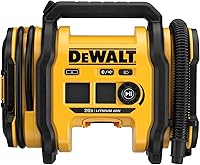
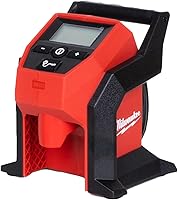
The DeWalt DCC020IB combines several power options with modes for tires and larger inflatables. Milwaukee's M18 2848-20 and M12 2475-20 suit drivers who want cordless tire inflation within a matching tool-battery system.
Start with the jobs you need done, then check what makes each setup ready to use. If your choice is already narrowed to Milwaukee, our Milwaukee M12 vs M18 inflator comparison goes deeper into those two models.


DeWalt vs Milwaukee tire inflator: which should you buy?
Choose DeWalt for a shared garage and travel kit, M18 for tire work within an M18 setup, or M12 for occasional car-tire top-offs in a smaller package. Each solves a different buying problem.
DeWalt makes the most sense when one unit must move between tires, sports equipment and air mattresses. It also suits someone who wants a wired fallback instead of depending entirely on a charged tool battery.
The M18 fits an owner who already keeps compatible batteries ready and mainly needs to maintain passenger or light truck tires. Its tire-focused design is a stronger reason to buy than its pressure ceiling alone.
The M12 suits a driver who values a smaller storage footprint and wants to maintain car tires between regular service visits. It can handle light truck tires too, but compact size should be your main reason for choosing it here.
Before buying any of them, separate routine top-offs from roadside recovery. Adding a few PSI to a sound tire is a different job from filling a large, nearly empty tire or dealing with a puncture.
DeWalt vs Milwaukee tire inflator choices to skip
Skip DeWalt if your only job is car-tire maintenance and its extra inflation modes would sit unused. A matching Milwaukee setup may fit your routine better if you already keep those batteries charged.
Skip M18 if storage space is tight and occasional car-tire top-offs are your main task. Its larger body needs a clear place in your vehicle or garage.
Skip M12 if you expect frequent work across several large tires and compact storage offers little benefit. Compare the workload with a larger inflator or compressor before committing to the smaller unit.
For any model, stop short of buying solely because you own the brand's tools. Confirm the battery platform, required pressure and intended workload first.
Which power setup fits your garage or roadside kit?
The DeWalt gives you the widest choice of power sources, while either Milwaukee works best when its matching battery is already part of your routine. Think about where the inflator will live and how you'll keep it ready.
DeWalt accepts a 20V MAX battery, 12V DC or 110V AC power. The 12V cord is included, but the battery, charger and AC adapter are sold separately.
That distinction matters if you expect to open the box and plug it into a household outlet. Plan the complete setup, including the accessory needed for your preferred power source.
For a vehicle kit, a wired connection avoids relying on a stored tool battery. Check the vehicle socket requirements and follow both manuals for the correct operating procedure.
The Milwaukee models use separate M18 and M12 platforms. Don't assume batteries are interchangeable because both tools carry the Milwaukee name.
If you move batteries between tools, decide where the inflator's battery will be when you need it. A shared pack is convenient at home but less useful if it stays on a drill while the inflator travels in your trunk.
Our cordless vs corded tire inflator guide explains that choice. For DeWalt-specific compatibility questions, see what battery a DeWalt tire inflator uses.
What do the pressure limits and speed claims mean?
The pressure limit tells you whether a job is within range, while inflation speed depends on the tire's size and pressure change. A higher maximum isn't proof of a faster everyday top-off.
DeWalt's maximum is 80 psi, compared with 150 psi for the M18 and 120 psi for the M12. Check your vehicle's required pressure before treating any model as suitable.
Use the vehicle placard or owner's manual for the recommended cold tire pressure. The tire sidewall maximum isn't the target for routine inflation; our guide explains what PSI your car tires should be.
Milwaukee says the M18 can top off a 33 in light truck tire in under 1 minute. Without a stated starting and ending pressure, that claim doesn't support a direct speed comparison with these other models.
For the M12, Milwaukee claims a car-tire top-off from 28 to 35 psi in under 1 minute. It also claims a light truck tire fill from 30 to 45 psi in under 4 minutes.
Those are different jobs, so keep the pressure change attached to each claim. None gives you a reliable prediction for filling every tire from empty.
For truck or RV use, tire size, required pressure and repeated operation all matter. Read our guide to tire inflators for trucks and RVs before choosing by maximum PSI alone.
How do size, hose reach and accessories affect daily use?
The M12 is easiest to fit into a small storage space, while the M18's longer hose offers more freedom beside a wheel. Measure the space you actually plan to use.
The M12 measures 6.5 x 6.5 x 7.5 in and weighs 3.5 lb. The M18 measures 14.7 x 7 x 8.3 in and weighs 7.7 lb.
DeWalt measures 12.97 x 10.22 x 5.59 in and weighs 6.4 lb. Its lower profile may suit a shallow shelf, but check both width and depth before choosing a storage spot.
The M18 has a 36 in hose, compared with the M12's 26 in hose. A longer hose helps when the valve sits high on the wheel and you want the inflator resting securely on the ground.
Don't hang an inflator from its hose or stretch the connection to reach a valve. Reposition the unit so the hose has slack and the chuck meets the valve without sideways strain.
DeWalt includes a tapered nozzle, inflation needle and Presta adapter, with onboard accessory storage. The M18 includes a brass Schrader chuck, needle, nozzle and Presta chuck; the M12 has a brass Schrader chuck.
Match accessories to the valves you use, especially for bikes and sports equipment. Keep small adapters together so a missing piece doesn't leave an otherwise ready inflator unable to do the job.
When does DeWalt's high-volume mode make a difference?
Choose DeWalt for air mattresses and other large inflatables as well as tire maintenance. Its separate high-volume inflation and deflation modes give it a useful role beyond vehicle care.
Tires need pressure, while a large soft inflatable needs a substantial volume of air. A high maximum PSI doesn't replace a mode designed to move air into those larger items.
DeWalt uses its high-volume hose for inflation, then a separate deflation port to help empty the item for storage. That makes it a practical choice for a household kit shared between the garage and trips.
Use the correct hose and mode for each task, and follow the inflatable's own instructions. Don't carry a car-tire pressure target over to an air mattress or another low-pressure item.
If those jobs are rare, give them less weight in your decision. Our DeWalt DCC020IB review covers its broader uses, while the Milwaukee M18 review focuses on the tire-care alternative.
How should you set up and use these inflators?
Start with cold tire pressure, a secure valve connection and a stable place for the inflator. Follow the exact model's manual for controls, power connections and stopping instructions.
Check tires before driving, or under the cold-pressure conditions in your vehicle manual. Don't release air from a warm tire simply to bring it down to the cold target.
Read the front and rear recommendations separately, since they may differ. If the vehicle has different guidance for a heavy load, use the instructions that match your trip.
Inspect the tire before adding air. A damaged sidewall, badly deflated tire or tire that repeatedly loses pressure needs attention beyond another top-off.
Place the unit on a firm surface with room around its air openings. Keep the hose and any power cord away from traffic, sharp edges and parts that could pinch them.
DeWalt's threaded chuck should connect straight onto the valve without forcing it. With any chuck, correct a persistent hiss or unstable reading before continuing.
DeWalt provides target-pressure control and automatic shutoff in high-pressure mode. The M12 also has automatic shutoff, plus an illuminated display showing target and current pressure.
Follow the M18 manual for its pressure controls and stopping procedure. Stay beside the unit rather than assuming every model operates the same way.
After stopping, disconnect the chuck and confirm the final pressure with a separate gauge. Refit the valve cap, then check the remaining tires instead of stopping after the dashboard warning disappears.
For model-specific steps, read how to use a DeWalt tire inflator or how to use a Milwaukee tire inflator. Our portable tire inflator use guide covers the full routine.
Which common mistakes cause poor results?
The most common mistakes are using the wrong target, ignoring leaks and expecting continuous operation. Avoiding them matters more than choosing the larger pressure number.
Don't guess pressure from how the tire looks. A tire can appear normal while needing air, and the correct target comes from the vehicle's instructions.
Don't keep adding air through a leaking connection. Stop, check the chuck and reconnect it squarely before deciding the inflator is slow or inaccurate.
Don't assume a compact inflator can run without breaks across several tires. Follow the model's run-and-rest instructions, and allow cooling time when required.
The M12 has a stated 50% duty cycle. That isn't permission for nonstop operation; use its manual to determine the correct operating and rest intervals.
Don't treat automatic shutoff as a reason to walk away. Watch the connection and pressure, and stop if the hose, sound or gauge behavior changes unexpectedly.
A cold-weather warning also deserves a pressure check across all tires. Our explanation of why the tire pressure light comes on in cold weather helps you respond without guessing.
How do you keep a tire inflator ready between uses?
Keep the hose clean, accessories together and power source ready. An inflator buried under loose cargo or separated from its battery is harder to use when a tire needs attention.
After use, switch off and disconnect the unit as directed, then let it cool before packing it away. Store the hose without sharp bends and avoid trapping it beneath heavy objects.
Wipe away dirt around the chuck and inspect the hose and cable for damage. Keep air openings clear, and don't wash the unit by spraying water into it.
The M12 has a reinforced cage with weather and impact resistance, but storage care still matters. Protect all 3 models from standing water and loose cargo that can damage controls or connections.
Follow the battery maker's charging and storage guidance, especially if the kit stays in a vehicle. Before a long trip, check the battery charge, adapters and power cord while you still have time to fix a missing item.
Your DeWalt vs Milwaukee tire inflator decision
Choose DeWalt when your kit needs to cover both tires and large inflatables, particularly when a wired fallback matters. Make sure the complete power setup fits where you'll use it.
Choose M18 when you already use compatible batteries and want a tire-focused unit for passenger or light truck care. Leave enough storage space for its larger body and keep a charged pack available.
Choose M12 when compact storage and routine car-tire top-offs come first. Its smaller size is the reason to accept the shorter hose rather than moving up by default.
If none matches your storage, power access or workload, compare our best portable tire inflators for cars, trucks and SUVs before adding another battery platform to your kit.
Frequently asked questions
Is DeWalt or Milwaukee better for a tire inflator?
DeWalt is the better fit for mixed inflation jobs and several power options. Milwaukee suits drivers already using a matching battery platform: choose M18 for passenger and light truck tire work, or M12 when compact storage matters most; check your required tire pressure before deciding.
Which inflator has the highest maximum pressure?
The Milwaukee M18 2848-20 has the highest maximum pressure at 150 psi, followed by the M12 at 120 psi and DeWalt at 80 psi. Those figures describe each inflator's ceiling, not your tire's target pressure or how quickly the unit can fill a large tire.
Can the DeWalt tire inflator run without a battery?
Yes, the DeWalt DCC020IB can use 12V DC or 110V AC power without a battery; its 12V DC cord is included, while the AC adapter is sold separately. Choose the correct connection and follow the inflator and vehicle instructions before starting a wired inflation session.
What is the difference between Milwaukee M12 and M18 inflators?
The M18 is the larger tire-focused choice, with a higher pressure ceiling and a longer hose; the M12 takes less storage space and includes a target/current pressure display with automatic shutoff. They use different Milwaukee battery platforms, so an existing M12 battery doesn't make an M18 setup complete.
Can these inflators set a target tire pressure?
The DeWalt and Milwaukee M12 let you set a target pressure and use automatic shutoff; DeWalt's shutoff applies to high-pressure mode. Follow the M18 manual for its controls and stopping procedure; stay beside any inflator during use, and confirm the final pressure with a separate gauge.