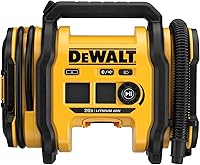
DeWalt DCC020IB 20V MAX Inflator Review: Worth It? (October 2026)
The DeWalt DCC020IB is a strong choice for drivers who want flexible power and inflatable care in one tool. It handles tire top-offs and larger inflatables, but the battery, charger and AC adapter are separate purchases.
On this page (9 sections)
- What makes the DeWalt DCC020IB worth considering?
- Which power setup should you choose?
- Who should buy this inflator, and who should skip it?
- How does it compare with other tool-battery inflators?
- What does the pressure limit mean for your tires?
- How should you set up the DCC020IB for a tire top-off?
- How do you avoid common inflation mistakes?
- What care does the inflator need between uses?
- Should you buy the DeWalt DCC020IB?
The DeWalt DCC020IB is a useful tire inflator for drivers who want one tool for tire top-offs and larger inflatables, with power options for home and travel. It makes the most sense if you already use DeWalt batteries or want a vehicle-powered backup.
Its appeal goes beyond filling car tires: separate high-volume functions handle jobs such as inflating an air mattress and removing air before packing. Before buying, match its pressure ceiling to your equipment and decide how you'll power it.
What makes the DeWalt DCC020IB worth considering?
The DCC020IB earns its place through power flexibility and two kinds of inflation. It suits a garage-to-car routine where the same tool may maintain tires during the week and fill camping gear on the weekend.
DeWalt DCC020IB 20V MAX Inflator: Best for garage and travel

- 20V MAX battery, 12V DC or 110V AC power
- High-pressure mode with automatic shutoff
- High-volume inflation and deflation
- LED light and onboard accessory storage
A practical choice for tire care at home and away, with separate modes for larger inflatables. Plan your power setup before buying because the battery, charger and AC adapter are sold separately.
Pros
- Battery, vehicle and household power options
- Automatic shutoff in high-pressure mode
- High-volume inflation and deflation
- Threaded chuck and onboard accessory storage
Cons
- Battery, charger and AC power adapter are sold separately
- 80 PSI ceiling rules out items needing higher pressure
The high-pressure hose serves tires and other items that need a set pressure. The high-volume hose moves air into larger, low-pressure items, with a separate port for deflation.
These jobs require different approaches: a tire needs a pressure target, while an air mattress needs the firmness and fill guidance its maker specifies. Having both functions saves you from choosing a tire-only tool when inflatable care is part of your routine.
A threaded chuck secures the tire connection, and onboard storage gives the small adapters a place to live. The included accessories cover a tapered nozzle, a sports-ball needle and a Presta valve adapter.
Which DeWalt DCC020IB features matter during tire care?
The digital pressure setting and automatic shutoff are the main tire-care features. Set the right target before starting, then remain nearby while the inflator runs.
The LED light helps you see a valve in dim conditions, while rubber feet help reduce movement. Put the unit on a firm surface with the hose relaxed rather than stretched tight.
A screw-on connection takes a little care when attaching and removing it. Start the chuck straight, avoid forcing the threads and have the valve cap ready when you're done.
Which power setup should you choose?
Choose battery power for freedom of placement, vehicle power for trips, or household power for a regular garage setup. Buy the accessories for the way you'll actually use the inflator.
The DCC020IB supports a 20V MAX battery, 12V DC or 110V AC. Its vehicle cord is included; the battery, charger and AC adapter are sold separately.
For an existing DeWalt user, a compatible charged pack makes this an easy addition to a tire-care routine. Check battery compatibility rather than assuming any yellow tool battery will fit.
For occasional vehicle use, the included cord gives you a starting point without buying a battery system. Check your vehicle outlet's instructions and the inflator manual before use, including whether the engine should be running.
For home use, the separate AC adapter can spare you from managing a charged pack. Measure the route from the outlet to your usual parking spot so the hose and cord won't need to cross a walkway.
Our guide to DeWalt tire inflator batteries explains the battery choice in more detail. If you rarely charge tool batteries, a corded routine may fit your habits better.
Who should buy this inflator, and who should skip it?
Buy the DCC020IB if you want routine tire maintenance plus inflatable care and can make use of its power choices. Skip it if your equipment exceeds its pressure limit or your main goal is the smallest tire-only kit.
It fits households that move between a garage, driveway and campsite. Existing compatible batteries strengthen the case, but you can also build a routine around corded power.
At 6.4 pounds, the unit needs a deliberate storage spot rather than a small glove-box space. Check the compartment or shelf where you intend to keep it, allowing room for cords and accessories.
A driver who only wants occasional car-tire top-offs may get little benefit from the larger-inflatable functions. Our guide to the best cordless tire inflators helps narrow the choice around portability and tire use.
Don't choose any inflator solely because its maximum pressure is high. Tire size, the amount of air missing and operating limits all affect whether it suits the job.
How does it compare with other tool-battery inflators?
Choose among these models by battery system and the jobs beyond a basic tire top-off. The DeWalt favors flexible power, Milwaukee favors a compact tire-care setup, Makita adds speed choices, and EGO combines inflatable functions with saved settings.
| Inflator | Power | Maximum pressure | Main reason to choose it |
|---|---|---|---|
| DeWalt DCC020IB 20V MAX Inflator | Battery, vehicle or household connection | 80 PSI | One tool for garage and travel |
| Milwaukee M12 2475-20 Inflator | M12 cordless | 120 PSI | Compact tire-care setup |
| Makita DMP181ZX Inflator | 18V LXT battery | 160 PSI | Speed control across different inflation jobs |
| EGO Power+ IF1600 Inflator | EGO 56V ARC Lithium battery | 160 PSI | Camping inflatables and repeat pressure settings |
Milwaukee M12: choose it for a compact tire-care kit
The Milwaukee suits drivers who already use M12 tools and want to keep tire maintenance within that system. Its body measures 6.5 by 6.5 by 7.5 inches, with a 26-inch hose and a backlit display showing target and current pressure.
Milwaukee's TrueFill system controls shutoff, and the tool has a reinforced cage. Skip it if your main reason for considering the DeWalt is the choice of corded connections or large-inflatable functions.
Makita DMP181ZX: choose it for varied inflation tasks
The Makita fits an LXT household that maintains vehicle tires, bike tires and sports balls. High, medium and low speed settings let you choose the pace, while an air-release button helps correct pressure overshoot.
Its auto-stop function ends inflation at the preset target, and the backlit gauge and work light help with visibility. Skip it if you don't own compatible batteries and won't use the added control often enough to justify another battery setup.
EGO IF1600: choose it for camping and repeat jobs
The EGO suits existing EGO battery owners who fill tires and larger inflatables. Four saved PSI settings help with repeat tasks, although you should still confirm the correct target each time.
Its removable magnetic light also has a hook, giving you more placement choices around an awkward valve. Skip it if you only need occasional tire top-offs and have no other use for the EGO battery system.
The tool-battery tire inflator guide compares choices by battery family. For the closest brand matchup, see our comparison of DeWalt and Milwaukee tire inflators.
What does the pressure limit mean for your tires?
The DCC020IB's 80 PSI ceiling is a buying limit, not a tire-pressure recommendation. Use the vehicle's specified cold pressure and choose another inflator if your required target exceeds that ceiling.
Find the target on the vehicle's tire placard or in its owner's manual. Front and rear recommendations can differ, so check each position rather than setting every tire alike.
The maximum printed on a tire's sidewall is not the vehicle's normal inflation target. Raising pressure to that number can leave you well above the vehicle maker's recommendation.
Check tires cold according to the vehicle's guidance. Don't bleed a warm tire down to a cold-pressure target simply because the reading rose after driving.
Our guide to what PSI your car tires should be explains how to find the right number. For trucks, trailers or other demanding equipment, confirm both the pressure requirement and suitability for the volume of air needed.
How should you set up the DCC020IB for a tire top-off?
Start with a sound tire, the correct cold-pressure target and a secure hose connection. Automatic shutoff helps control inflation, but it doesn't replace checking the setup.
- Park safely. Use a firm, level spot away from moving traffic, and secure the vehicle before working around its wheels.
- Inspect the tire and valve. Stop if you see damage or suspect a serious leak; adding air doesn't repair the cause.
- Prepare the power source. Follow the manual for your chosen connection and keep cords clear of tires and walkways.
- Attach the chuck straight. Leave slack in the hose so it doesn't pull sideways on the valve stem.
- Set the pressure and start. Use high-pressure mode for the tire, confirm the target and stay close enough to stop the unit if needed.
- Check and disconnect. Confirm the final pressure with a suitable tire gauge, remove the chuck and replace the valve cap.
If air escapes steadily at the connection, stop and reseat it before continuing. Increasing the target won't solve a leaking chuck connection.
Our DeWalt tire inflator instructions cover the operating sequence in more detail. For general valve and inflation guidance, see how to use a portable tire inflator.
How do you avoid common inflation mistakes?
Use the mode and adapter that match the item, then follow its pressure or firmness guidance. The easiest mistakes are choosing a tire setting for a low-pressure inflatable or assuming every item needs a numeric PSI target.
For an air mattress, use the high-volume connection and follow the mattress instructions. Stay with it as it fills, and stop at the required firmness instead of trying to make it feel as rigid as a tire.
For sports balls, check the marked pressure range before inserting the needle. Follow the ball maker's valve-care instructions and keep the needle straight to avoid bending it or straining the valve.
Don't confuse a small tire top-off with filling a fully flat tire. A flat tire may have damage that needs attention before inflation, and a large refill places a different demand on the pump.
Follow the inflator manual's run and rest limits during repeated jobs. Don't invent a continuous operating time or keep restarting the pump to work around a required cooling break.
What care does the inflator need between uses?
Keep the hose, connections and accessories clean and protected, and store the tool according to its manual. A tidy storage routine also makes it easier to spot missing parts before a trip.
Let the unit cool before packing it away. Coil hoses and cords loosely, avoiding sharp bends and pinched sections that can strain them over time.
Check the chuck and adapters for dirt before connecting them. Return small pieces to onboard storage, especially the needle and Presta adapter that are easy to lose.
If you rely on battery power, check the charge before travel and follow the battery maker's storage guidance. A cordless tool left untouched for months should be checked before you need it beside a tire.
DeWalt backs the inflator with a 3-year limited warranty. Keep your receipt and warranty information together so service details are easy to find.
Should you buy the DeWalt DCC020IB?
Buy the DeWalt DCC020IB for a garage-and-travel routine that includes tires and larger inflatables. Before ordering, settle 3 things: your required pressure, your power setup and where the tool will live.
Choose Milwaukee for a compact M12 tire-care kit, Makita for speed control within an LXT setup, or EGO for camping tasks when you already use its batteries. Staying with a battery family you use regularly can make charging and storage simpler.
If portability still matters more than the extra functions, compare the best cordless tire inflators before deciding. The right choice is the one you'll keep ready, with the correct adapter and a usable power source.
Frequently asked questions
Can the DeWalt DCC020IB run without a battery?
Yes, the DCC020IB can run from 12V DC or 110V AC without a tool battery; the 12V DC cord is included, while the AC adapter is sold separately. Choose the connection that fits where you inflate, and follow the manual's instructions for that power source.
Does the DeWalt DCC020IB shut off automatically?
Yes, the high-pressure mode stops inflation when the preset pressure is reached; set the correct target before starting and stay nearby while it runs. The high-volume inflation and deflation functions serve larger inflatables, so don't assume the tire-pressure shutoff works the same way in those modes.
What is the maximum pressure of the DeWalt DCC020IB?
The DCC020IB has a maximum pressure of 80 PSI; your required operating pressure must fit within that limit, but the limit is not your tire's target. Use the vehicle's cold-pressure recommendation, and consider a different inflator if your equipment requires a higher pressure.
Can the DCC020IB inflate air mattresses?
Yes, its high-volume hose and inflation mode suit air mattresses and other compatible large inflatables; use the connection and firmness guidance in the inflatable's instructions. For packing, move the hose to the deflation port only when the item allows pump-assisted deflation, and keep its valve clear.