Best 12V Tire Inflators: Top 8 Picks (October 2026)
The best 12V tire inflators include the VIAIR 88P 12V Compressor for road trip kits, the VIAIR EVC88P Digital 12V Inflator for frequent tire top-offs, and the Craftsman Dual Power Inflator for shared garage use.
On this page (6 sections)
- Which is the best 12V tire inflator for your setup?
- What should you check before choosing a 12V air compressor?
- How do you set up a 12V tire inflator correctly?
- Which inflation mistakes should you avoid?
- How should you care for an inflator kept in the car?
- Which best 12V tire inflator should you take home?
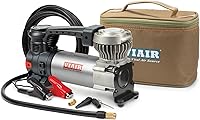
The VIAIR 88P 12V Compressor is the best 12V tire inflator for drivers who want direct battery power, a long hose and simple manual controls. Choose the digital EVC88P if you prefer setting a target pressure and letting the compressor stop itself.
Your power connection should guide the choice before maximum PSI does. A compressor that needs battery access won't suit every driver, and a plug-in pump needs an accessory outlet that can handle its electrical load.
For a wider choice of power sources, start with the best portable tire inflators. Drivers with larger tires can narrow the search through our heavy-duty tire inflators guide.
Find your required pressure before comparing pumps, using our tire pressure guide if needed.
Our picks at a glance
-
1

-
2

-
3

Which is the best 12V tire inflator for your setup?
Choose the 88P for manual battery-clamp use, the EVC88P for automatic shutoff, or Craftsman for a mix of home and vehicle power. Smaller rechargeable models suit drivers who value easy carrying, while the larger VEVOR and ALL-TOP kits need more storage space.
We compared power connections, pressure controls, hose reach and operating limits. A higher maximum pressure didn't move a compressor ahead of one that better fits routine car maintenance.
Use the table to rule out unsuitable connections first. Then compare the controls and the space each kit needs.
| Product | Best for | Power | Max pressure | Hose | Our score |
|---|---|---|---|---|---|
| VIAIR 88P 12V Compressor | road trip kits | 12V vehicle battery clamps | 120 PSI | 16 ft | 9.2 |
| VIAIR EVC88P Digital 12V Inflator | frequent tire top-offs | 12V vehicle battery clamps | 120 PSI | 16 ft | 7.9 |
| Craftsman Dual Power Inflator | shared garage use | 12V DC or 120V AC | Confirm 125 or 150 PSI limit with Craftsman | 29 in | 7.7 |
| DeWalt 12V Digital Inflator | mixed outdoor activities | 12V car plug or built-in battery | 150 PSI | 7.6 | |
| VIAIR EVC31 PRO Wireless | small emergency kits | Built-in batteries or 12V backup cable | 150 PSI | 30 in | 7.6 |
| VIAIR EVC85P Digital 12V | everyday car maintenance | 12V vehicle accessory outlet | 60 PSI | 3 ft | 7.3 |
| VEVOR 12V Portable Inflator | larger vehicle kits | 12V | 150 PSI | 26 ft | 6.9 |
| ALL-TOP Dual Cylinder Kit | multi-tire trail stops | 12V | 150 PSI | 26 ft | 6.7 |
VIAIR 88P 12V Compressor: Best for road trip kits
- Up to 120 PSI
- 16-foot air hose
- Built-in pressure gauge
- Battery clamps and carry bag
A direct-battery compressor for drivers who want simple controls and enough hose to work around a vehicle. Choose it if you're comfortable watching the gauge and stopping inflation yourself.
Pros
- Long hose for working around a vehicle
- Direct battery connection
- Gauge, work light and carry bag included
Cons
- Requires manual shutoff
- Needs access to suitable battery terminals
The VIAIR 88P suits a driver who wants a straightforward compressor kept in the vehicle. Its on/off switch and built-in gauge make the process clear: connect it, watch the pressure and stop at the target.
Its 16-foot hose helps you work around the vehicle without placing the compressor beside every valve. Both this model and the digital EVC88P support tires up to 33 inches, with a 120 PSI ceiling.
VIAIR specifies a 1.47 CFM free-flow rate and a 25-minute duty cycle at 30 PSI for both models. Those are useful operating references, but follow the manual's rest requirements as pressure and workload change.
The brass twist-on chuck needs to sit squarely on the valve threads. Screw it on gently, and reposition it if air keeps escaping.
Buy this model if you prefer manual controls and can reach suitable battery terminals. Skip it if you want preset shutoff or would avoid opening the hood during routine maintenance.
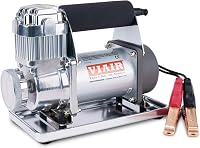
VIAIR EVC88P Digital 12V Inflator: Best for frequent tire top-offs
- Digital pressure display
- Preset controls with automatic shutoff
- 16-foot hose
- Battery clamps
Choose this digital compressor for routine pressure adjustments with direct battery power. Preset shutoff removes the need to time the stop yourself.
Pros
- Stops at the selected pressure
- Long hose for reaching multiple wheels
- Work light and carry bag included
Cons
- Needs access to suitable battery terminals
- No cordless operation
The VIAIR EVC88P is the better fit for drivers who want battery-clamp operation with a preset stop. Enter the required pressure on the digital controls, then remain nearby while the compressor works.
Its main advantage over the standard 88P is the control method. Choose it because you want less manual stopping and checking during a round of tire top-offs.
The kit includes a work light, carry bag, inflation tips and a Presta adapter. Keeping those small parts in the bag makes the compressor more useful when a trip involves bikes as well as the car.
Automatic shutoff is convenient when you move between front and rear tires with different recommended pressures. Remember to change the target where needed instead of carrying the first setting around the vehicle.
Choose the EVC88P for frequent pressure maintenance when battery access is easy. Skip it if your preferred routine starts at a cabin outlet, since the digital controls don't change the need for clamps.
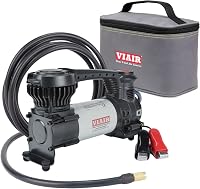
Craftsman Dual Power Inflator: Best for shared garage use
- 12V DC and 120V AC power
- Digital gauge and preset modes
- Automatic shutoff
- LED work light
A practical choice for households that inflate tires and sports equipment near a home outlet. Vehicle power also lets it travel with the car.
Pros
- Runs from home or vehicle power
- Digital presets and shutoff
- Adapters, spare fuse and carry bag included
Cons
- Conflicting maximum-pressure figures need clarification for high-pressure tires
- Short hose requires placement near each valve
The Craftsman Dual Power Inflator fits a household that wants one pump for the driveway and garage. It runs from a 120V home outlet or a 12V vehicle plug, so home inflation doesn't depend on vehicle power.
That setup makes sense if bikes, balls and car tires share the same storage area. Digital modes and automatic shutoff help you switch tasks, but check the selected unit and target each time.
The 29-inch hose requires placing the body near each valve. Before starting, find a stable spot where the hose can connect without pulling against the valve stem.
Clarify the pressure ceiling with Craftsman before buying it for high-pressure tires: its stated limits conflict at 125 and 150 PSI. That distinction matters less for ordinary car top-offs than for an application approaching either limit.
Choose it for household flexibility. Skip it if you mainly want a small travel pump or need a long hose to leave the compressor in one position.
DeWalt 12V Digital Inflator: Best for mixed outdoor activities

- 12V car plug and built-in battery
- Five presets
- Digital pressure display with automatic shutoff
- USB-C charging
This compact inflator suits drivers who also carry bikes or sports equipment. Its built-in battery lets you work away from the vehicle, with car-plug power as another option.
Pros
- Corded and cordless operation
- Separate modes for several inflation tasks
- LED light and storage bag included
Cons
- Long battery recharge time
- Using its power-bank function draws on the same battery
The DeWalt 12V Digital Inflator suits drivers who carry bikes, balls and other outdoor gear along with their car emergency supplies. Its built-in 2600mAh battery allows cordless use, with a car accessory plug as another power option.
Its 5 modes cover cars, motorcycles, bikes, balls and a custom target. The display offers several pressure units, so confirm that it shows the unit matching your vehicle's pressure label.
This is the DXIF1201 with a built-in battery. Choose it for that self-contained setup rather than assuming it uses a removable tool battery.
Plan ahead for its 6-hour recharge time. It can also act as a power bank, but charging a phone uses energy you might want for inflation later.
Buy it for varied small inflation jobs and the freedom to move away from the car. Skip it if your main need is repeated large-tire inflation, where tire compatibility and sustained operating limits deserve more weight than presets.
VIAIR EVC31 PRO Wireless: Best for small emergency kits

- Three built-in rechargeable batteries
- 12V backup cable
- Preset digital pressure control
- 30-inch hose
A compact rechargeable choice for routine tire maintenance and vehicle emergency kits. Keep its backup cable packed so a low battery doesn't remove your other power option.
Pros
- Cordless operation with vehicle-power backup
- Preset pressure and automatic shutoff
- Weighs 1.9 lb
Cons
- Short hose requires placement beside each wheel
- Cordless readiness depends on battery charge
The VIAIR EVC31 PRO Wireless fits drivers who want a compact emergency-kit inflator with a vehicle-powered fallback. At 1.9 lb, it is easier to carry between storage and a wheel than the larger compressors here.
Its rechargeable design uses 3 built-in lithium-ion batteries. The included 11-foot backup power cable belongs in the same bag, even if you expect to use cordless power most of the time.
The 30-inch hose means the inflator stays close to the tire. Position it so the body rests securely rather than hanging from the valve or dragging the hose tight.
Preset pressure and automatic shutoff suit routine top-offs. For an occasional-use emergency kit, battery upkeep becomes part of the job: check its charge before travel and follow VIAIR's storage guidance.
Choose this model when storage space and easy carrying matter most. Skip it if you want to leave a compressor near its power source and reach every wheel with a long air hose.
VIAIR EVC85P Digital 12V: Best for everyday car maintenance

- 12V vehicle accessory plug
- Preset pressure and automatic shutoff
- Digital display
- LED work light
Choose this digital compressor for car tires within its pressure range and a vehicle with a compatible accessory outlet. It avoids battery-clamp setup while retaining preset shutoff.
Pros
- Cabin-outlet connection
- Preset shutoff and digital display
- Adapters and carry bag included
Cons
- Lower pressure ceiling than the other picks
- Requires an outlet that supports its current draw
The VIAIR EVC85P is a sensible choice for routine car tire care without battery clamps. It plugs into a compatible vehicle accessory outlet and gives you digital pressure selection with automatic shutoff.
Check the electrical fit before buying: this model has a maximum current draw of 15 A. Your vehicle's manual should identify the outlet's permitted load, and a plug that physically fits doesn't confirm compatibility.
Its 60 PSI maximum makes the pressure requirement another early check. Choose it for tires comfortably within that range, rather than buying it for a higher-pressure application because it looks similar to another VIAIR.
The kit combines a 3-foot hose with a 10-foot power cord. Check that arrangement against your outlet position and farthest wheel, particularly in a longer vehicle.
Buy it if an accessory plug makes tire maintenance easier for you. Skip it if the outlet cannot support the load or your tires need pressure beyond its operating range.
VEVOR 12V Portable Inflator: Best for larger vehicle kits

- 26-foot air hose
- Mechanical pressure gauge
- 150 PSI maximum
- Thermal cut-off protection
A substantial compressor for buyers who have room for a larger vehicle kit. The long hose allows more freedom around the wheels while the compressor stays near its power source.
Pros
- Long hose with mechanical gauge
- Thumb-lock adapter and nozzle adapters included
- Thermal cut-off protection
Cons
- Weighs 19.8 lb
- High current demand requires a suitable power connection
The VEVOR 12V Portable Inflator suits buyers who can dedicate space to a larger vehicle inflation kit. Its 26-foot hose lets you move around the wheels while keeping the compressor close to a suitable power source.
VEVOR gives it a 150 PSI maximum and a 7.06 CFM airflow figure. Don't turn that airflow number into a promised fill time, since tire volume and working pressure also affect the job.
The mechanical gauge requires you to manage the stopping point. Thermal cut-off protection protects against overheating, but it isn't permission to keep restarting a hot compressor.
At 19.8 lb, this is a deliberate cargo choice rather than a small glove-box addition. Its 6.5-foot power cord and 45 A maximum current demand also need planning; don't connect it through an ordinary accessory outlet.
Choose it for the long-hose setup and roomier vehicle storage. Skip it if light carrying, preset shutoff or quick cabin-plug setup is your priority.
ALL-TOP Dual Cylinder Kit: Best for multi-tire trail stops

- Dual-cylinder compressor
- 26-foot air hose
- Digital pressure inflator
- 150 PSI maximum
A truck, 4x4 and RV kit for buyers who prefer controlling airflow at a separate inflator handle. Its weight makes dedicated vehicle storage more practical than frequent carrying.
Pros
- Airflow control at the inflator handle
- Long hose and digital pressure gauge
- Thermal cut-off and pressure safety valve
Cons
- Weighs 11.72 kg
- Power requirements and tire compatibility need confirmation
The ALL-TOP Dual Cylinder Kit suits truck and trail users who want airflow control at the tire. Squeeze the separate digital inflator's handle to add air, then release it to stop without returning to the compressor switch.
That handle control is different from preset automatic shutoff. You still choose when to stop based on the pressure reading.
The kit includes a 26-foot hose, thermal cut-off switch and pressure safety valve. ALL-TOP explains that releasing the handle can cause the compressor to stop through the safety-valve arrangement, so learn that behavior before using it away from home.
Its 11.72 kg weight favors dedicated vehicle storage. Confirm the power requirements and compatibility with your tires before choosing it for a truck or RV.
Buy it when working from wheel to wheel with a separate inflator handle matches your routine. Skip it for occasional passenger-car top-offs if carrying and storing the larger kit would discourage regular use.
What should you check before choosing a 12V air compressor?
Check electrical compatibility, tire requirements and practical reach before comparing extra modes or lights. The right compressor must work with your vehicle and complete the inflation job within its operating limits.
Should your 12V tire inflator use battery clamps or an accessory plug?
Choose clamps when suitable battery terminals are accessible, or an accessory plug when your vehicle outlet supports the required current. A direct connection and a cabin plug involve different setup steps, so choose the one you'll be comfortable using.
Check the vehicle manual for approved connection points, especially if its battery is hidden or the vehicle has a hybrid or electric powertrain. Don't assume every visible terminal is a suitable place to attach an accessory.
For plug-in models, compare the outlet's current or wattage limit with the inflator's requirements. Never fit a larger fuse to overcome a mismatch.
Follow the compressor and vehicle instructions about engine operation. Never run an engine in a garage or other enclosed space, even if you're only topping off one tire.
Read cordless versus 12V plug-in tire inflators for more on the connection tradeoffs. Our best cordless tire inflators roundup helps if reaching a vehicle power source would be inconvenient.
How much pressure and airflow do your tires need?
Choose an inflator rated for your tire's required pressure and size, with operating limits that suit the amount of air you need to add. Maximum PSI describes pressure capability, not how quickly it will fill a large tire.
A small pressure correction in a passenger-car tire is a different job from restoring several large tires after trail use. Larger tires contain more air, so give more weight to tire-size guidance, airflow at working pressure and cooling requirements.
Free-flow CFM describes air movement without the same resistance present inside an inflated tire. Use it as context, rather than ranking unlike compressors by that single number.
For higher-pressure truck or RV tires, also consider access to inner wheels and valve extensions. Our truck and RV inflator sizing guide explains which requirements deserve priority.
Will the cord and hose reach every tire?
Check reach from the actual power point to the farthest valve, allowing slack for safe routing. Power-cord length and hose length do different jobs, and their combined length isn't a guarantee that the kit fits your vehicle.
A short power cord can still work well with a long air hose if the compressor has a stable place near its connection. A long power cable doesn't solve a hose that forces the inflator to hang from a valve.
Picture the route around bumpers and doors before choosing. Keep cables away from exhaust parts, belts, fans and areas where they could be pinched.
Is automatic shutoff worth choosing?
Choose automatic shutoff if you want to enter a target rather than judge the stopping point yourself. It's especially useful for regular top-offs, though you still need to stay beside the inflator.
Check the selected pressure each time, including differences between front and rear tires. A saved setting or task mode isn't a substitute for the vehicle's pressure label.
Manual controls suit drivers who prefer watching a gauge and stopping airflow themselves. A digital gauge alone doesn't mean the compressor offers preset shutoff.
How do you set up a 12V tire inflator correctly?
Start with cold tires, the correct target pressure and a compatible power connection. A calm setup at home makes the equipment easier to use later at a roadside stop.
- Park safely. Use level ground, apply the parking brake and keep the work area clear of traffic.
- Read the pressure label. Check whether front, rear and spare tires have different targets.
- Inspect the equipment. Look for cracked hoses, damaged insulation, loose fittings or dirty connectors before applying power.
- Make the power connection. Follow the exact manual sequence, including clamp polarity and any engine-start instruction.
- Attach the chuck. Keep a twist-on fitting straight on the threads, or seat a locking chuck fully before securing it.
- Inflate and monitor. Select the correct units and target, or watch the gauge and stop manually.
- Verify and pack away. Check final pressure with a separate gauge, replace valve caps and let the equipment cool.
A brief hiss while attaching or removing a chuck can happen. Continuous leaking means you should stop and reseat the connection instead of forcing the pump to work against the leak.
If the target is reached but a separate gauge shows a small difference, make a careful correction. Avoid chasing tiny changes caused by repeatedly attaching and removing the chuck.
The guide to using a portable tire inflator covers the process in more detail.
Which inflation mistakes should you avoid?
Avoid using the wrong pressure target, ignoring heat or treating a damaged tire as a routine top-off. Those errors matter more than choosing between a mechanical and digital display.
Don't use the sidewall maximum as your target
Use the vehicle maker's recommended cold pressure from the door label or manual. The number on the tire sidewall serves a different purpose.
Driving warms tires and can raise the reading. Don't bleed a warm tire down to the cold target simply because the number has risen after a trip.
Don't ignore a recurring pressure loss
A tire that repeatedly loses air needs attention to the tire, wheel or valve. An inflator helps manage pressure but doesn't repair the source of the leak.
Don't keep inflating a tire with visible sidewall damage, a bulge or signs of having been driven flat. Use roadside help when damage or location makes continuing unsafe.
Don't treat thermal protection as a work schedule
Follow the stated run and rest limits before the compressor overheats. Protection devices are a fallback, and a stopped motor needs time to cool.
Avoid touching hot compressor parts or fittings while packing up. Keep air openings clear and place the unit where loose dirt won't be drawn into them.
Don't keep resetting a power fault
Stop if a plug becomes unusually hot, a fuse blows or the unit repeatedly cuts out. Check compatibility and the instructions before trying again.
Our guide to why a tire inflator won't turn on walks through common connection, fuse and power problems.
How should you care for an inflator kept in the car?
Store the inflator cool, dry and fully packed after use, with its cables loosely coiled. A kit is only useful on a trip if the hose, power lead and required adapters stay together.
Wipe away dirt before storage and check fittings for damage. Avoid sharp cable bends, and don't force a hot hose into a tight bag.
For rechargeable models, follow the brand's storage and charging guidance rather than leaving the battery unchecked for months. Include the backup power lead in your pre-trip check.
Occasionally confirm that your separate gauge and inflator give reasonably consistent readings. If they differ enough to affect your pressure setting, resolve that before relying on the kit away from home.
Which best 12V tire inflator should you take home?
Choose the VIAIR 88P if accessible battery terminals and manual controls fit your routine. Move to the EVC88P when preset shutoff would make regular maintenance easier.
Choose Craftsman for home-outlet flexibility, or the EVC85P for compatible accessory-outlet use. DeWalt and the EVC31 PRO suit buyers who want cordless movement with vehicle power available as a fallback.
Consider VEVOR or ALL-TOP when a larger kit and long-hose workflow match your vehicle and tire needs. Confirm the electrical requirements before committing cargo space to either compressor.
The best 12V tire inflator is the one that fits your power source, reaches every wheel and handles your normal inflation job within its limits. If you're leaning toward the top pick, read our VIAIR 88P review before deciding.
Our top 3 picks at a glance
-
1
-
2
-
3
Frequently asked questions
What is the best 12V tire inflator for most cars?
The VIAIR 88P is the best 12V tire inflator here for drivers comfortable with battery clamps and manual pressure control; pick the EVC88P for automatic shutoff instead. If opening the hood is a barrier, choose an accessory-plug model after checking your vehicle's outlet capacity and the tire's required pressure.
Should a 12V tire inflator plug into the car or battery?
Choose an accessory plug for convenient setup when the vehicle outlet supports the inflator's current draw; choose battery clamps when you have accessible, suitable terminals and prefer a direct connection. Neither connection makes an inflator suitable for every tire, so also check its pressure range, operating limits and tire-size guidance.
Do 12V tire inflators shut off automatically?
Some stop at a preset pressure, including the digital VIAIR models here, Craftsman and DeWalt; the standard VIAIR 88P needs manual shutoff, while ALL-TOP's handle controls airflow rather than selecting a target pressure. Stay beside any inflator and check the finished pressure with a separate, reliable tire gauge.
Can a 12V inflator handle truck tires?
Some can, but match the compressor to the tire's size, required pressure and amount of air needed; both VIAIR 88P models support tires up to 33 inches. Larger truck and RV applications need closer attention to operating limits, especially when inflating several tires or starting with very low pressure.
What tire pressure should I use?
Use the vehicle manufacturer's recommended cold tire pressure, usually on the driver-side door label or in the owner's manual; don't use the tire sidewall maximum as your target. Our guide to what PSI your car tires should be explains the label check and how temperature affects pressure readings.